For many avid gamers, the dream of immersing themselves in sprawling Japanese Role-Playing Games often clashes with the reality of limited free time, yet a select few titles skillfully bridge this gap. Traditional JRPGs typically require dozens, if not hundreds, of hours, often interrupting gameplay with frequent battles that make quick pauses difficult. However, there exist ingenious games within the genre that adapt to a busy schedule, offering features like chapter-based storytelling, options to disable random encounters, accelerated combat, or ubiquitous saving capabilities. For instance, in Dragon Quest 11: Echoes of an Elusive Age, a game that can extend over eighty hours, its episodic narrative allows the silent hero, a Luminary raised in Cobblestone, to tackle local issues one self-contained chapter at a time. To streamline progression, players can boost battle speeds threefold and save at designated Sacred Stones, treating each stop as a natural break point. It is also advised to maintain a consistent visual mode, either 2D or 3D, for optimal progress tracking.
Several contemporary and classic JRPGs empower players with unprecedented control over their gameplay pace, allowing for highly customizable experiences that respect a busy schedule. Bravely Default: Flying Fairy HD Remaster, for example, directly hands players the reins, letting them adjust encounter rates from fifty to two hundred percent, speed up battles fourfold, and use an auto-battle feature that repeats previous actions. This flexibility is crucial as players guide Tiz, a lone survivor of a great chasm, on a quest to restore elemental crystals alongside Agnes and her companions. Similarly, the Final Fantasy Pixel Remasters series, encompassing the first six installments, solves the common issue of random encounters by providing an on/off toggle. Players can embark on the journey of four heroes saving the world by recovering elemental crystals, utilizing a Boost menu to multiply EXP, gil, and ability points up to four times, thus facilitating focused progression or grinding. Furthermore, Fantasian Neo Dimension, notable for its over 160 handcrafted diorama locations, introduces the ingenious Dimengeon Machine. This device stores fought enemies, allowing players to reach objectives without constant interruptions and enabling a strategic approach of exploration first, combat later, as Leo battles a mechanical infection while recovering his memories.
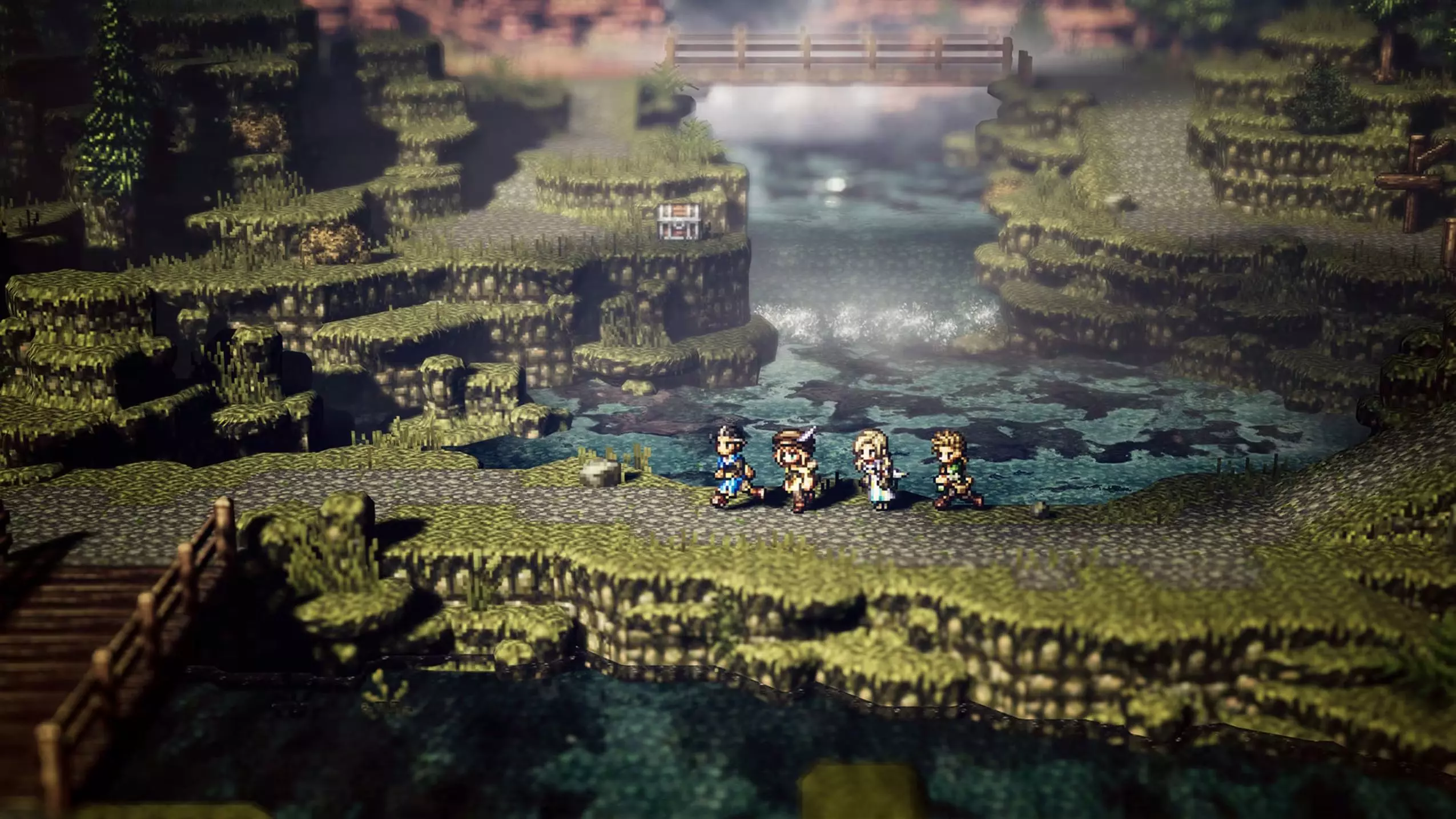
Beyond customizable battle mechanics, some JRPGs are inherently designed with fragmented narratives or streamlined exploration, making them perfect for gamers seeking episodic adventures. Chained Echoes, a 16-bit-style JRPG, offers a concise story of mercenaries and princesses in Valandis, where enemies are visible on the map, health regenerates between fights, and free fast travel coupled with anywhere-saving means players can easily pick up and put down their adventures. The combat is turn-based and quick, with an Overdrive gauge encouraging thoughtful skill use. Chrono Trigger, a relatively shorter JRPG spanning about 26 hours for its main story, benefits from generous saving mechanisms, including dedicated points, automatic saves upon quitting, and continuous saves as players traverse the map. Crono's time-traveling quest to avert planetary disaster is made manageable by these features, allowing players to pause and resume their epic journey with ease. Octopath Traveler distinguishes itself with eight individual character stories, each divided into four chapters following a distinct pattern of town exploration, dungeon clearing, and boss battles. This structure, along with recommended level gates that encourage rotating characters, makes each boss fight a natural stopping point for a session. Lastly, Live A Live offers seven completely standalone scenarios across different historical and futuristic eras, from a martial arts tournament to a Wild West adventure. Each chapter presents unique gameplay and varying lengths, making it ideal for those who prefer diverse, self-contained narratives that can be completed in short bursts or longer sessions depending on the chapter's design.
These innovative approaches to game design demonstrate a thoughtful consideration for modern players' lifestyles. By offering flexibility in pacing, combat, and narrative structure, these JRPGs prove that deep, immersive storytelling and strategic gameplay are not exclusive to those with endless hours to spare. They serve as a powerful reminder that even in a fast-paced world, it’s possible to carve out meaningful moments for passion and adventure, showing that adaptability and thoughtful design can make cherished pastimes accessible to everyone, enriching lives through digital exploration and heroic deeds.
About the author
Richard Garfield
Mathematician and game designer who created "Magic: The Gathering," revolutionizing collectible games.