Jane Schoenbrun's Debut Novel: A Deep Dive into Digital Obsession
ByAmy Hennig
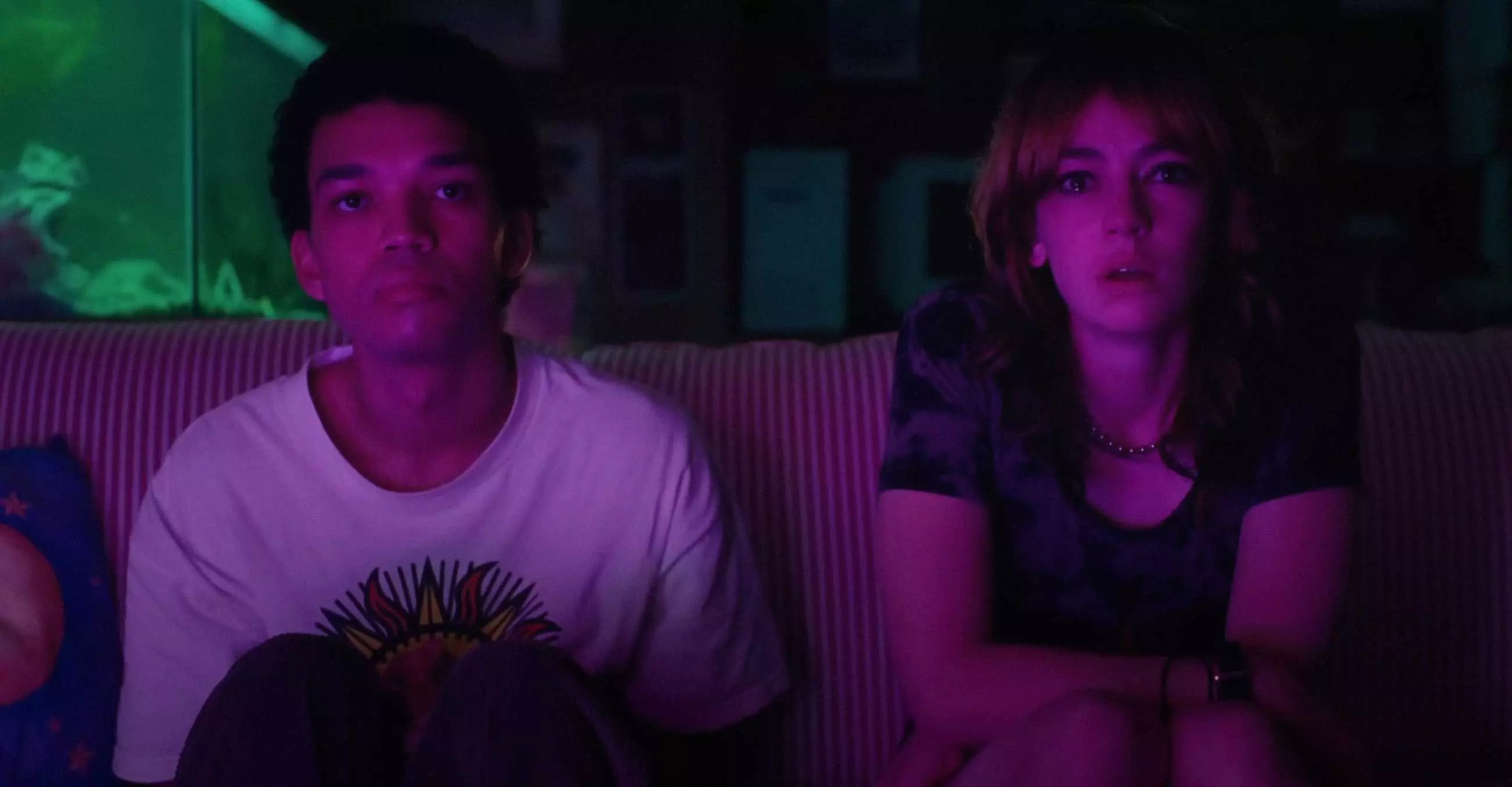
Jane Schoenbrun, a prominent voice in independent cinema known for their introspective exploration of identity and digital culture, ventures into the literary world with their debut novel, 'Public Access Afterworld.' This expansive narrative builds upon the thematic foundations established in their critically acclaimed films, such as 'I Saw the TV Glow' and 'We're All Going to the World's Fair.' The novel embarks on a journey through the surreal and the mundane, where the boundaries between reality and digital fantasy blur, challenging characters and readers alike to question their perceptions. Schoenbrun's distinctive approach to storytelling, characterized by a unique blend of familiar tropes and innovative arrangements, remains a magnetic force for their devoted audience.
At its heart, 'Public Access Afterworld' delves into the compelling yet often disorienting impact of digital obsession on individual lives. The narrative intertwines two distinct timelines: one set in 2009 with a mysterious analog TV broadcast, and another in 2026, where a content moderator confronts the unsettling realities of the internet. Through these interconnected stories, Schoenbrun examines the allure of escapism, the search for belonging in online communities, and the potential pitfalls of an existence consumed by virtual worlds. The novel, while ambitious in scope and occasionally verbose in its thematic exposition, offers a profound reflection on contemporary anxieties and the human desire for connection in an increasingly fragmented digital landscape.
The Enigmatic Signals of 'Public Access Afterworld'
Jane Schoenbrun's first novel, 'Public Access Afterworld,' extends the director's unique thematic exploration of digital alienation and the search for identity, mirroring the narrative depth found in their acclaimed films. The story initiates in 2009 with David Sawyer, a high school student, and his friend Erin Morrison, as they witness the final analog TV broadcast. Erin becomes captivated by a surreal program, 'Public Access Afterworld,' which she believes to be a portal, leading her down an obsessive path. David, despite not understanding her obsession, feigns interest to maintain their bond. This early encounter with the mysterious broadcast sets the stage for a sprawling narrative that examines how digital media can shape perception and reality.
The novel then fast-forwards to 2026, introducing Bethany Peters, a transgender woman living in a rapidly gentrifying Austin. Bethany, feeling adrift, finds employment as a content moderator for GlobalVill, a major video-sharing platform. Her work exposes her to a constant stream of bizarre and disturbing content, ultimately leading her to 'Public Access Afterworld.' As Bethany delves deeper, she uncovers a vast conspiracy linked to the broadcast, meeting individuals whose lives have been irrevocably altered by it. Grappling with a mysterious 'screen sickness,' Bethany is forced to confront her role as a chosen participant in a struggle far greater than herself, highlighting Schoenbrun's recurring themes of predestination and the overwhelming power of media influence.
Navigating Digital Realities and Escapism
Schoenbrun's 'Public Access Afterworld' leverages the unbounded potential of the literary format to expand on themes previously explored in their cinematic works, such as the profound sense of isolation and the yearning for connection within the digital realm, reminiscent of 'We're All Going to the World's Fair.' The novel also delves into television as a conduit for escape from mundane existence, echoing the central premise of 'I Saw the TV Glow,' and critiques the tendency to dissect art intellectually rather than experiencing it viscerally. This ambitious scope allows for a narrative that traverses time and dimensions, featuring a diverse cast of characters, giving the novel a cinematic feel across its many chapters.
A core idea within Schoenbrun's narrative is the portrayal of characters whose lives become consumed by their obsessions, leading them to neglect their present realities. 'Public Access Afterworld' illustrates how characters relentlessly pursue the next distraction—a new job, a fresh connection, or an enigmatic signal from beyond. The novel provocatively suggests that fantasy can be as detrimental as reality, and that no single escape can lead to genuine happiness. Schoenbrun injects moments of dark humor, interrupting dramatic scenes with unexpected comedic elements, to underscore the narrative's underlying self-awareness. Despite its occasional over-explanation of ideas, the novel remains a vital piece for anyone wishing to understand Schoenbrun's artistic vision, offering a comprehensive look at the complex interplay between media, identity, and the human condition.
About the author
Amy Hennig
Renowned video game writer and director, known for her narrative work on the "Uncharted" series.