Filmmakers Reject Specialized Oscar Category for Exiled Artists Amidst Tokyo Film Fund Launch
ByMindy Kaling
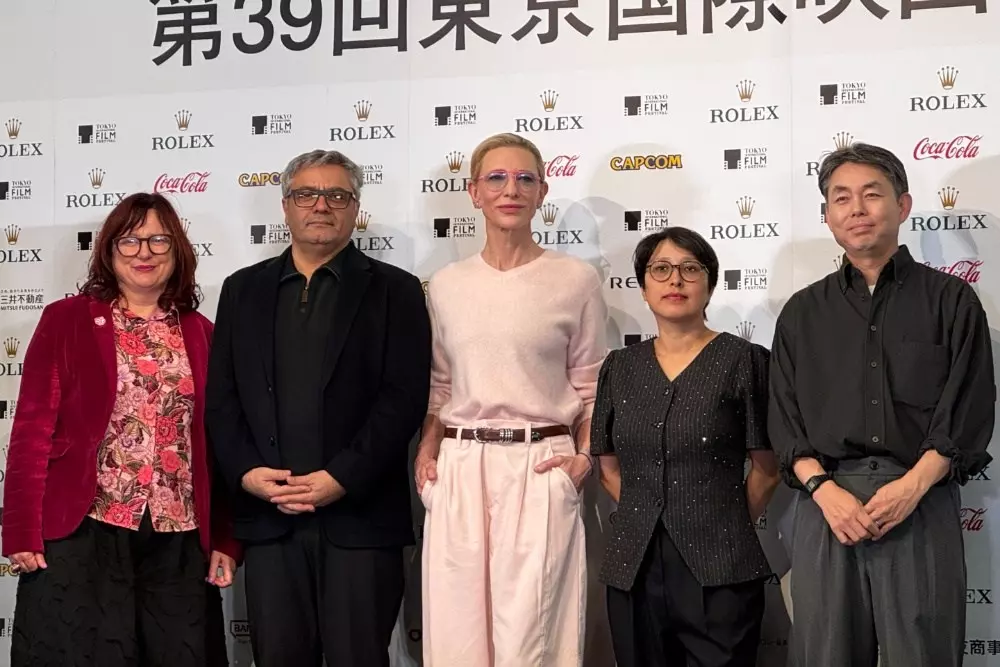
Prominent exiled filmmakers, Mohammad Rasoulof and Shahrbanoo Sadat, recently expressed their disapproval of establishing a separate Academy Award category for displaced artists. Their statements were made at the Tokyo International Film Festival, coinciding with the premiere of the first short films supported by Cate Blanchett's Displacement Film Fund. This discussion arises after the Academy's recent amendment to its rules, allowing exiled filmmakers to be eligible for the Oscars, a move largely welcomed by industry professionals.
Shahrbanoo Sadat, an Afghan director born in Iran, candidly articulated her reservations, stating that she doesn't wish to be defined solely by her displacement. She humorously remarked on the irony of being labeled a 'displaced filmmaker' and questioned the necessity of such a category, even if it were to lead to an Oscar win. Her short film, "Super Afghan Gym," was among those premiered, underscoring her artistic output despite her personal journey.
Echoing similar sentiments, Iranian filmmaker Mohammad Rasoulof, whose film "The Sense of Water" also premiered, stressed his focus on the craft of filmmaking. He suggested that creating specific categories could inadvertently lead to issues, advocating for efforts that bridge divides rather than create them. Rasoulof's film, "The Seed of the Sacred Fig," was among the first to benefit from the Academy's rule change, representing Germany in the last Oscar cycle, as noted by Clare Stewart, managing director of the International Film Festival Rotterdam (IFFR).
Clare Stewart, whose Hubert Bals Fund oversees the Displacement Film Fund, questioned the broader implications of such a category, asking what kind of dialogue it would foster about the role of displaced filmmakers in society. She personally believes there is no inherent need for a separate classification. Cate Blanchett, co-founder of the Displacement Film Fund, acknowledged the Academy's ruling as a profound recognition of the challenges artists face globally due to conflicts and displacement. She highlighted that these rule changes, though seemingly minor, are deeply significant in validating the interrupted careers of many artists.
Blanchett also mentioned that the films from the first cohort have already undergone Academy qualifying screenings in Los Angeles, with further screenings planned for New York. The primary goal, she emphasized, is to ensure these exceptional films reach a wider American audience. She drew parallels between the film industry's history of international co-productions and cultural diplomacy, suggesting that governments could learn from the communication models within their industry.
The Displacement Film Fund, conceptualized at the UNHCR's Global Refugee Forum in December 2023, aims to support filmmakers who are either displaced themselves or have a history of authentically portraying displacement. Blanchett, a UNHCR goodwill ambassador, collaborated with Yanai Koji, an executive at Uniqlo's parent company, to establish the fund. They sought to integrate stories of displacement into mainstream narratives, counteracting harmful stereotypes. The fund, launched in January 2025, allows filmmakers complete creative freedom, not requiring their stories to directly address displacement.
The inaugural group of filmmakers, introduced at Cannes in 2025, included Rasoulof, Sadat, Mo Harawe, Hassan Fazili, and Maryna Er Gorbach. Their works have since screened at several international festivals. Rasoulof's "The Sense of Water" explores a migrant's solitude and the challenges of learning a new language, reflecting his personal experiences of displacement. Sadat's "Super Afghan Gym" delves into feelings of unease within one's own body and homeland, a theme she explored after being approached by the fund during the editing of her romantic comedy "No Good Men." Japanese star Yakusho Koji, a collaborator on Uniqlo's charity project, praised both films for their emotional depth and narrative power.
About the author
Mindy Kaling
Actress, writer, producer, and author of humorous essays on Hollywood and life.