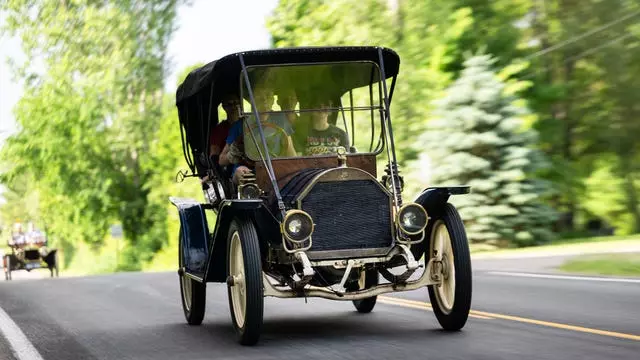
American Classic: Recreating the Historic London-to-Brighton Veteran Car Run in Michigan
ByMichele Acquaragia
The article delves into an imaginative recreation of the iconic London-to-Brighton Veteran Car Run, transplanting its spirit to the American landscape of Michigan. This ambitious endeavor brought together a vibrant community of vintage car aficionados, each contributing their meticulously preserved early 20th-century American automobiles, including rare Fords, Oldsmobiles, and Buicks. The chosen 57-mile route, winding through picturesque country roads from London Township to Brighton, deliberately echoed the historical 60-mile British course, aiming to capture the essence of early motoring challenges and triumphs. This journey was more than just a drive; it was a living museum on wheels, a testament to automotive evolution, and a celebration of the era when driving was an immersive, hands-on adventure. The narrative beautifully captures the passion of these collectors, who not only maintain these mechanical marvels but also actively engage in a supportive network, sharing knowledge, parts, and a profound love for these historic vehicles.
Beyond the logistical planning and the parade of classic machinery, the core of the experience lay in the unique interaction between driver, machine, and road. Operating these early automobiles demands a level of engagement far removed from modern driving, offering a visceral connection to the dawn of motoring. Participants shared insights into the specificities of these cars, from their horsepower-centric performance metrics to the inherent charm of their mechanical quirks, including the inevitability of minor breakdowns that are embraced as part of the authentic historical experience. The story emphasizes the welcoming nature of the vintage car community, where experienced owners readily mentor new enthusiasts, ensuring the continuation of this rich hobby. It highlights that the thrill isn't about speed, but about the profound sensory experience and the camaraderie fostered by a shared passion for preserving and enjoying automotive heritage.
A Michigan Homage to Automotive Heritage
Inspired by the storied British London-to-Brighton Veteran Car Run, a unique event unfolded across Michigan, mirroring the historical route with its own distinct American flair. This ambitious undertaking saw a dedicated group of vintage car owners gather their prized early 20th-century vehicles for a nostalgic journey. The chosen path spanned 57 miles, connecting London Township to Brighton, a distance meticulously selected to parallel the original 60-mile English run. Far from being a mere drive, this was a vibrant celebration of the early days of motoring, where carefully restored Fords, Oldsmobiles, and Buicks traversed scenic country lanes, offering a glimpse into an era when automobiles were emerging marvels. The organizers found enthusiastic participation within Michigan's robust community of antique car collectors, who were eager to showcase their historic machines. This event underscored the deep appreciation for automotive evolution and the commitment to preserving the tactile, engaging experience of early driving. It highlighted how historical traditions can be adapted and cherished in new contexts, fostering a shared passion for the mechanical ingenuity of the past.
The Michigan rendition of the classic London-to-Brighton event was meticulously planned to replicate the spirit and challenges of its British predecessor. Participants were keen to embrace the essence of the original Emancipation Run, which marked a significant increase in speed limits for early automobiles. The 57-mile course was chosen not only for its comparable length to the UK's 97-kilometer route but also for its abundance of picturesque, tree-lined country roads, ideal for vehicles whose top speeds are a far cry from modern highway velocities. This thoughtful route planning ensured that the vintage machines could be enjoyed safely and authentically. A key success factor was the enthusiastic response from Michigan's rich community of early 20th-century car collectors. These individuals readily brought forth their treasured Fords, Oldsmobiles, Pullmans, and REOs, showcasing a diverse array of American automotive history. The process of coordinating schedules among these dedicated hobbyists, often booked with numerous other antique car rallies and tours, became a testament to their passion. Ultimately, the event successfully cultivated a unique bridge between historical precedent and contemporary enthusiasm, creating a memorable experience that honored the roots of motoring while forging new traditions in the heart of America. The journey demonstrated that the allure of these early vehicles transcends geographical boundaries, finding a passionate home in the American landscape.
The Enduring Spirit of Vintage Motoring
The experience of driving these early automobiles proved to be a profound immersion into a bygone era, far removed from the automated ease of contemporary vehicles. Operating a vintage car demands a complete physical engagement, from manually cranking engines to managing multiple levers and pedals simultaneously, creating a visceral connection between driver and machine. This intricate process transforms a simple drive into an adventure, where the thrill isn't derived from speed but from the sheer act of controlling and coaxing these mechanical marvels along the road. The event underscored the remarkable camaraderie within the vintage car community, where owners share a collective understanding of the unique demands and joys of their hobby. Breakdowns, far from being frustrations, are accepted as an authentic part of the experience, fostering a supportive environment where participants readily assist one another. This shared passion extends to mentoring newer enthusiasts, ensuring the vibrant continuation of this rich automotive heritage. The genuine enthusiasm and helpfulness of these collectors highlight a deep respect for both the machines and the shared pursuit.
Engaging with these early 20th-century vehicles offers a distinct sensory and mechanical challenge that modern drivers rarely encounter. Conversations among participants revealed a different paradigm for automotive performance; instead of cubic inches, horsepower was the primary measure, reflecting the nascent stages of engine development. Owners like John Grace articulated how early car enthusiasts valued the actual power output over displacement figures, a subtle yet significant historical detail. The inherent vulnerability and hands-on nature of these cars—from the precise coordination required to manage throttle, spark, and gears to the palpable absence of modern safety features—contributes to an exhilarating, if at times precarious, driving sensation. As one participant noted, "It's a very specific thrill to be in a car you could fall out of." This shared vulnerability fosters a strong sense of community, where mutual support during inevitable mechanical issues is a given. Participants willingly share knowledge, tools, and even parts, embodying a collective spirit crucial for maintaining these complex machines. This spirit is vital for attracting younger generations, who find in these cars a captivating alternative to the insulated experience of modern driving. The profound engagement required to pilot a vintage automobile offers a unique, unfiltered connection to the road and the very act of motion, ensuring this fascinating hobby endures.
About the author
Michele Acquaragia
Fictional representative of the passionate journalists covering high-performance supercars and Italian design.