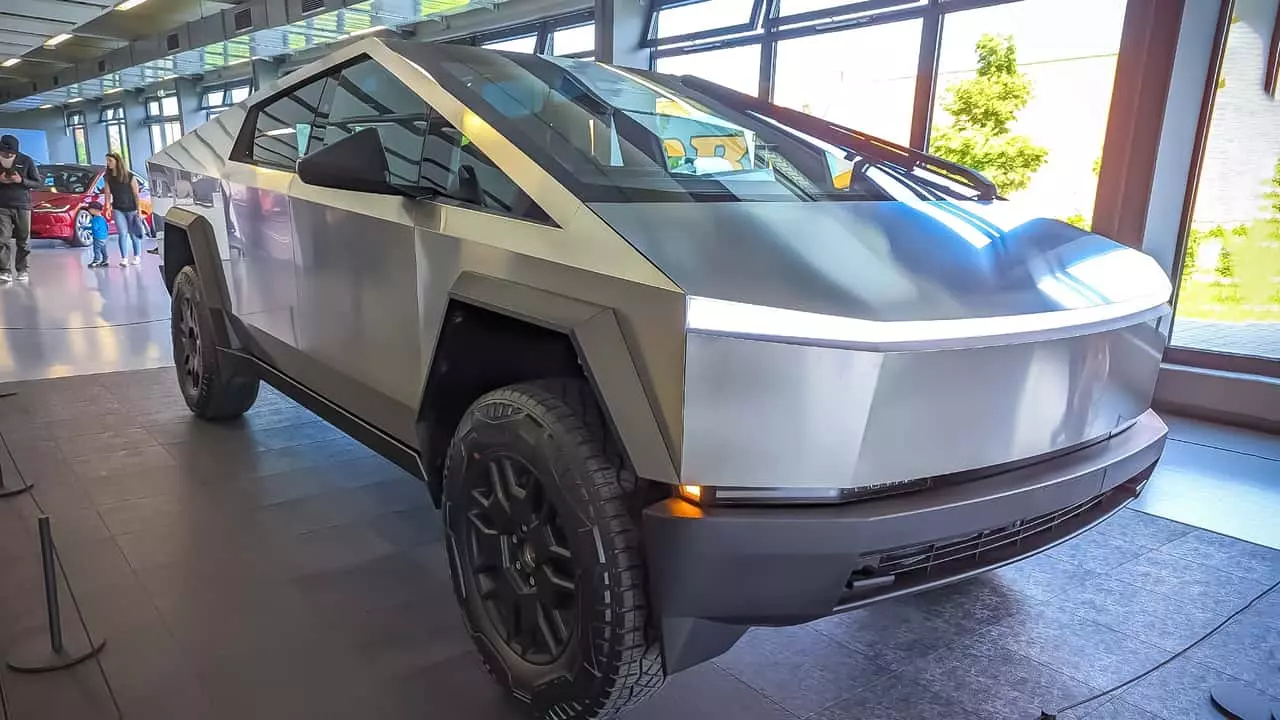
Cybertruck Dominates Used Truck Market Amid Production Wind-Down
ByJeremy Clarkson
The Tesla Cybertruck, despite its controversial design and the looming end of its production, has unexpectedly carved out a dominant position in the American used truck market. Recent analysis reveals that pre-owned Cybertruck units are being sold at an unprecedented pace, spending considerably less time on dealership lots compared to their gasoline-powered and hybrid counterparts. This rapid turnover underscores a fascinating shift in consumer preferences within the secondary vehicle market, where factors like depreciation and fuel efficiency are profoundly influencing purchasing decisions. The striking performance of the Cybertruck in this segment challenges conventional expectations, signaling a unique intersection of market dynamics and consumer demand for distinctive electric vehicles.
According to comprehensive data compiled by iSeeCars, a leading automotive research firm, used Tesla Cybertrucks were on dealer lots for an average of only 39.1 days during October 2026. This figure dramatically undercuts the overall average for used pickups, which stood at 65.5 days, positioning the Cybertruck as a standout performer. This swift market movement earned the electric pickup the 16th spot among all used vehicles sold across the United States in that period. Karl Brauer, an Executive Analyst at iSeeCars, pointed to a critical market shift: "The interplay of persistently elevated fuel prices and a substantial decline in market value essentially 'flips the script' for EVs as they transition from new to used status." Brauer further elaborated that value-conscious used car shoppers are increasingly drawn to electric options, especially when facing a 20 to 30 percent jump in their monthly fuel expenses, making the lower running costs of an EV an undeniable draw.
The study, which meticulously examined over 1.1 million sales of pre-owned vehicles ranging from one to five years old in October 2026, confirmed the Cybertruck's supremacy over all other pickups, regardless of their powertrain type. Its sales velocity surpassed even Tesla's own high-volume models, such as the Model 3, which averaged 39.5 days on the market, and the Model Y, at 39.8 days. This market triumph comes at a peculiar time, as Tesla has announced intentions to scale back Cybertruck manufacturing. The significant depreciation experienced by new Cybertrucks has ironically made used models more accessible to a wider array of buyers who might have previously found them unattainable at their original sticker prices. The appeal of a unique, technologically advanced truck at a more palatable price point, combined with its operational savings, creates a compelling value proposition in the used market.
The electric truck segment, in general, demonstrated strong performance, occupying four of the top ten fastest-selling positions among pickups, with three of those directly trailing the Cybertruck. The Ford Maverick Hybrid, for instance, nearly matched the Cybertruck's pace, selling in 43.3 days, followed by the Rivian R1T at 45.2 days, and the Ford F-150 Lightning at 47.4 days. Even traditional gasoline-powered trucks showed competitive strength, with the Toyota Tacoma leading its category by selling in 50.1 days, proving that established nameplates still hold significant appeal. However, not all electric trucks shared in this success; the Chevrolet Silverado EV lagged considerably, being the slowest-selling truck in the study at 107.5 days on lots. This disparity suggests that while the overall trend favors EVs, brand perception, initial pricing, and market positioning continue to play crucial roles in resale performance.
Beyond pickups, the broader used EV market showed robust activity, with electric vehicles across all segments averaging just 45.6 days on sale in October. This outpaced hybrids, which took 54.5 days to sell, and gasoline vehicles, which averaged 61.0 days. This represents a significant 25 percent faster turnover rate for used EVs compared to their gasoline counterparts. Indeed, 16 of the 25 fastest-selling used vehicles overall were fully electric, with the Audi A4 Allroad leading the pack at an impressive 33.7 days. Conversely, luxury and larger electric models faced slower sales, as evidenced by the Cadillac Escalade IQ, which was the slowest-selling vehicle overall at 134.3 days, followed by models like the Ford Escape Plug-In Hybrid and the Lincoln Corsair Hybrid. This data suggests that while demand for used EVs is high, pricing and segment continue to influence liquidity, with more affordable electric options generally moving faster.
The Cybertruck's unexpected ascendance as the quickest-selling used truck highlights a pivotal moment in the automotive industry. It showcases how a vehicle, even one facing production adjustments and significant initial depreciation, can capture a unique market niche and thrive in the secondary market. This trend is reflective of broader shifts in consumer behavior, where the promise of lower running costs and perceived value after initial depreciation are reshaping demand for electric vehicles. As the market continues to evolve, the performance of vehicles like the Cybertruck offers valuable insights into the future trajectory of EV adoption and resale dynamics.
About the author
Jeremy Clarkson
Journalist and former "Top Gear" host known for his outrageous, entertaining car reviews and writing.