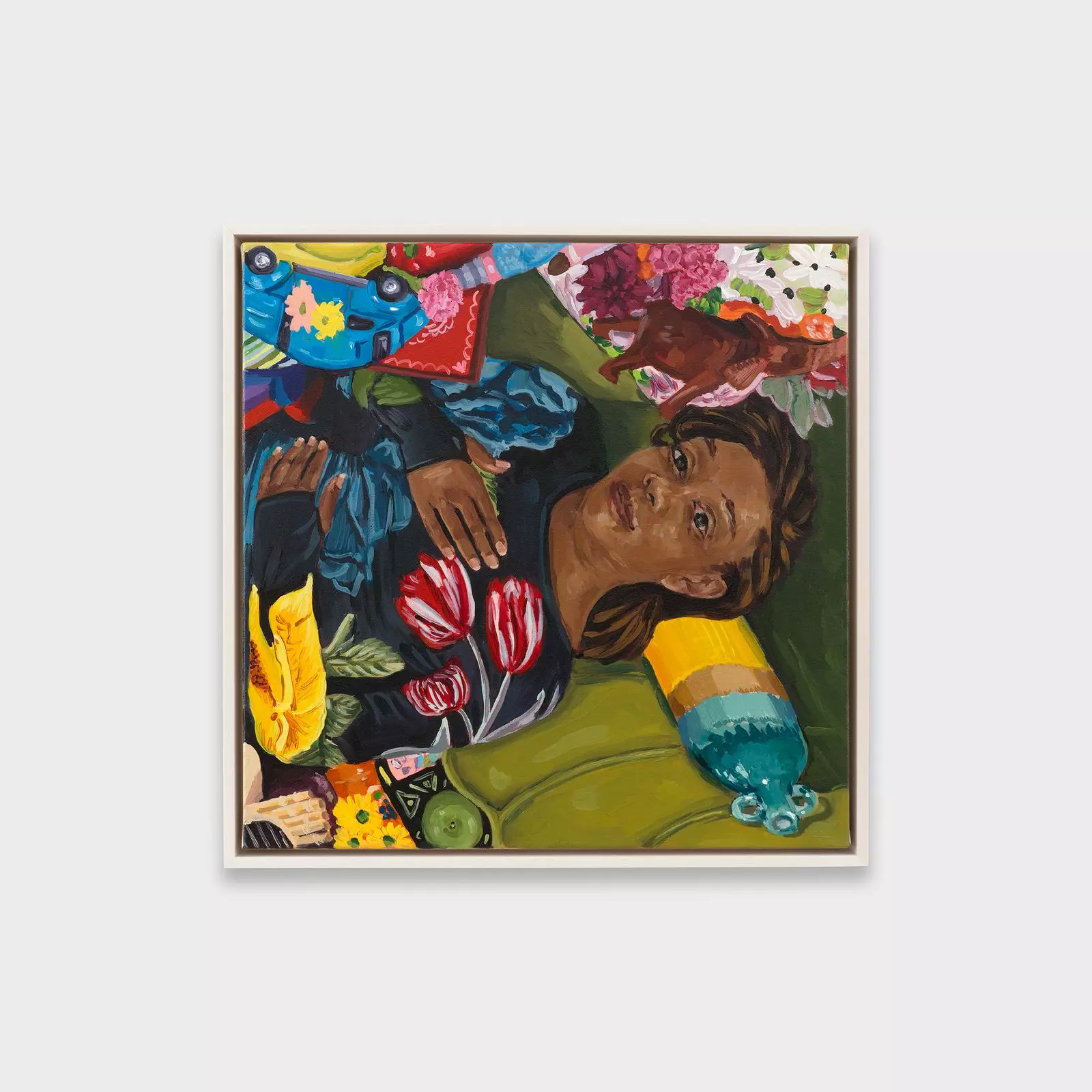
Wangari Mathenge's Art: Identity, Memory, and Cultural Reconnection
ByNaomi Campbell
Wangari Mathenge, an artist of Kenyan and British heritage, navigates the complexities of her dual identity through her compelling 'Re-membering' series. Her works, currently showcased at Lévy Gorvy Dayan, bridge personal narratives with broader historical and cultural contexts. Mathenge's artistic journey, deeply rooted in her experiences of feeling like an outsider in both Kenya and the UK, explores themes of belonging, the impact of colonialism, and the profound act of reclaiming ancestral memory. Through monumental paintings featuring robust Black figures and collaborative sculptures created with Kenyan elders, she not only questions but actively redefines the meaning of identity in a post-colonial world.
The exhibition highlights Mathenge's evolution from a legal professional to a celebrated artist, illustrating her dedication to using art as a medium for healing and cultural advancement. Her creations, inspired by Kenyan literature and historical research, delve into the collective and individual fragmented memories caused by colonial intervention. By engaging with these difficult questions, Mathenge's work offers a powerful commentary on how society and individuals can 're-member' their past to shape a resilient future, making her art a vital contribution to contemporary discourse on cultural identity and heritage.
Exploring Hybrid Identity Through Art
Wangari Mathenge's artistic endeavors are deeply personal, centering on her nuanced identity as a Kenyan-British individual. Having lived between Nairobi and London since infancy, she frequently found herself feeling like an outsider in both cultures. In Britain, she was considered a foreigner, while in Kenya, she was labeled a 'mzungu,' a Swahili term often used for white people or foreigners, highlighting her linguistic and cultural disconnection from her Gikuyu heritage. This profound sense of displacement and the inherent question of 'who am I?' became the driving force behind her distinctive multidisciplinary art practice. Her work primarily manifests as large-scale paintings that depict domestic scenes populated by self-assured Black figures, often serving as reflections of herself. These compositions are rich with intricate patterns and symbolism, resonating deeply with viewers as they explore the complex layers of hybrid identity and belonging.
Mathenge's artistic path was not straightforward; she initially pursued a career in law, adhering to her parents' expectations. However, a profound sense of unfulfillment led her back to her true calling. Encouraged to apply for an MFA program, she received an offer for her first solo exhibition at Roberts Projects just as she was about to begin her studies at the School of the Art Institute of Chicago. This pivotal moment solidified her conviction that she was on the right path, confirming art as her true vocation. Her debut at Lévy Gorvy Dayan with the exhibition 'Wangari Mathenge: Re-membering,' featuring five new paintings and her inaugural sculptures, marks a significant milestone in her career. These works, created in collaboration with her mother and her mother's friends in Nairobi, powerfully underscore her commitment to exploring identity and memory through an evolving artistic lens, making her journey and art both honest and fearlessly mature.
Reclaiming Ancestral Memory: The 'Re-membering' Series
Over the past decade, art has become an invaluable instrument for Wangari Mathenge in reconciling the various facets of her identity, a process vividly illustrated by her 'Re-membering' series, initiated in the fall of 2024. The fundamental concept of 're-membering' draws inspiration from Kenyan author Ngugi wa Thiong'o's 2009 work, Something Torn and New: An African Renaissance, which itself references Barbadian poet Kamau Brathwaite’s idea of 'nation language.' While these literary theories primarily address the linguistic and cultural shifts caused by colonial influences, Mathenge expands this notion to encompass creative and cultural aspects pertinent to both diasporic and continental Africans. Her philosophy is that newness can emerge from fragments, as she endeavors to recall the memories of her ancestors. She posits that without actively 're-membering'—as opposed to dismembering—societies and individuals risk being perpetually lost, unable to heal from historical wounds or critically advance their cultures.
To deepen her artistic inquiry, Mathenge undertook an extensive study of Kenyan colonial literature and cultural artifacts from 1900 to 1963, the year Kenya achieved independence from the United Kingdom. This research unveiled startling historical facts, such as the internment of Gikuyu people, which profoundly impacted her understanding of her own heritage. The initial 'Re-membering' paintings reflected this introspection, featuring contemplative figures surrounded by a multitude of books and objects. The newer works showcased at Lévy Gorvy Dayan, however, represent a shift from recalling to action. These pieces aim for timelessness while subtly incorporating 1960s influences through elements like shift dresses and psychedelic wallpapers, sometimes inspired by her family's old photographs. Mathenge also introduces 'psychic automatism' and a form of surrealism, creating densely composed works without preliminary sketches, where even the artist herself finds some objects' meanings obscure. This evolution in her practice signifies an ongoing exploration and engagement with her community, evidenced by collaborative sculptures with her mother and her friends, celebrating shared heritage and the transformative power of art.
About the author
Naomi Campbell
Iconic supermodel who has authored books on modeling and style, and advocates for diversity in fashion.