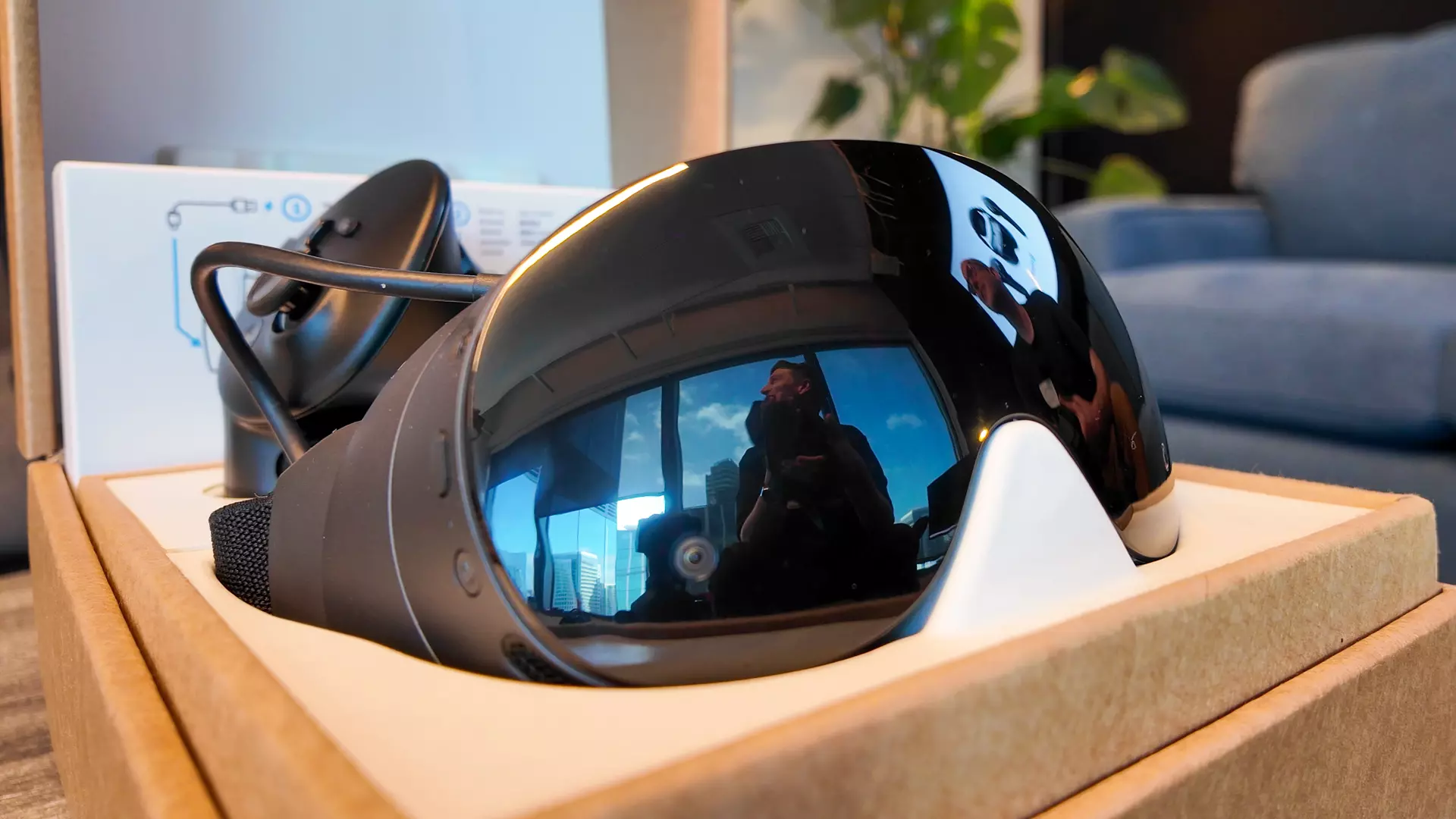
The virtual reality market is currently experiencing a downturn, with global VR headset shipments decreasing by 18% in the second quarter of 2026 compared to the previous year. This trend, highlighted by Counterpoint Research, could spell trouble for companies like Valve, especially with the anticipated release of its new Steam Frame VR headset. The primary factors contributing to this decline include a notable absence of new, compelling VR game titles and a general increase in hardware costs, which makes VR technology less accessible to the average consumer.
Despite the overall slowdown in the consumer VR sector, there's a contrasting picture in the enterprise and augmented reality (AR) markets. Businesses and government entities show consistent demand for VR technology, leveraging its capabilities for digital twin simulations and spatial computing to boost productivity and address operational complexities. Concurrently, AR devices, such as Meta's smart glasses, have seen remarkable growth, with shipments soaring by 138% year-over-year in the same period, driven by new product introductions and expanded market reach.
The Challenging Landscape for Consumer VR and Valve's Entry
The consumer virtual reality sector faces significant hurdles, primarily a lack of groundbreaking game releases and rising hardware prices. Six years after its launch, Valve's "Half-Life: Alyx" remains a benchmark, underscoring the scarcity of fresh, impactful titles that could drive consumer adoption. Furthermore, the broader economic pressures affecting consumer electronics, including memory supply chain issues that have led to price hikes for devices like Meta's Quest 3 and Quest 3S, are further dampening market enthusiasm. This environment creates a challenging entry point for new hardware, including Valve's Steam Frame, which will need to overcome these obstacles to gain traction.
Valve's potential entry into this "cooling" market with the Steam Frame is particularly scrutinized given these conditions. The company's previous struggles with hardware pricing, notably the Steam Machine during a similar memory supply crisis, suggest that competitive pricing will be critical. If Valve cannot offer the Steam Frame at an attractive price point, especially without a new flagship game to accompany its launch, it may struggle to carve out a significant market share. The success of the Steam Frame will largely depend on Valve's ability to innovate not just in technology, but also in market strategy and pricing, to re-energize consumer interest in VR.
Enterprise Adaptation and the Rise of Augmented Reality
In stark contrast to the consumer market, the enterprise sector continues to embrace VR technology, recognizing its value in professional applications. Businesses and government organizations, typically less sensitive to price fluctuations, are investing in VR for sophisticated uses such as digital twins and spatial computing. These applications help in solving operational challenges, improving efficiency, and enhancing overall productivity. Moreover, the burgeoning robotics industry, especially in China, is fueling demand for VR headsets used in data collection and remote control of robotic systems, indicating a robust and growing professional market for VR.
Adding another dimension to the XR landscape, augmented reality (AR) devices have experienced an unprecedented surge in shipments. This growth, evidenced by a 138% year-over-year increase in Q2 2026, is propelled by the introduction of new products, aggressive international expansion by manufacturers like Meta, and successful promotional campaigns. Meta, holding a dominant 54% share of the AR/VR OEM market outside of China, exemplifies the success in AR, despite ongoing discussions around privacy concerns and the substantial investments in its Reality Labs division. The success of AR points to a differentiated market where practical, real-world applications are driving rapid adoption and expansion.
About the author
Roberta Williams
Pioneer of graphic adventure games, co-founder of Sierra On-Line, and creator of "King's Quest."