The Unexpected Existential Puzzle in 'Big Walk' That Tests Patience and Teamwork
ByMark Rosewater
The game 'Big Walk' introduces a unique cooperative experience where players navigate an island filled with various challenges. Unlike typical puzzles that demand intricate solutions, one particular segment stands out for its profound simplicity and unexpected psychological impact on players. This narrative delves into an encounter with this puzzle, highlighting the humorous and thought-provoking reactions of the participants when confronted with forced inaction.
Beyond the Conventional: A Puzzle of Pure Patience
Unraveling the Nature of 'Big Walk' Challenges
The collaborative walking simulation, 'Big Walk,' features an array of intricate puzzles on its island landscape. These tasks inherently necessitate teamwork, as no single individual can conquer them alone. The game embodies true cooperation, where solo progression is an impossibility.
Diverse Mechanisms of Team Collaboration
From synchronizing switch activations to communicating across vast distances or through sound-impervious barriers, and even relaying sequences of hidden symbols to teammates for replication elsewhere, the puzzles vary widely. Successfully completing each puzzle yields a reward, which in turn facilitates further exploration and access to new challenges within the game's world.
The Peculiar Enigma: A Prize Without Action
Yet, the most perplexing challenge encountered in 'Big Walk' defies traditional puzzle definitions. Its reward is immediately visible upon discovery, but its solution demands no active input. This subtle design choice makes it exceptionally cunning.
The Room's Deceptive Simplicity
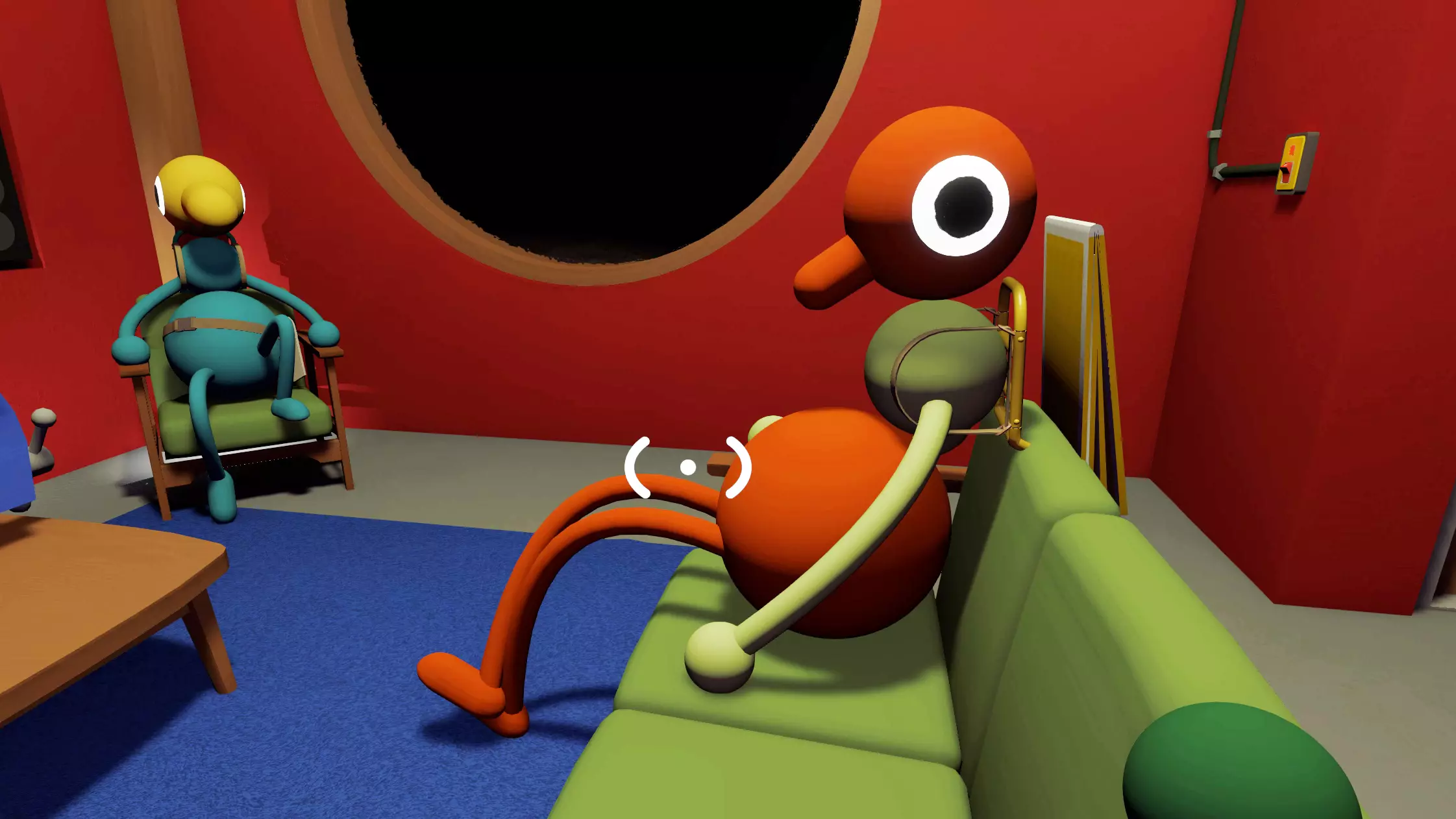
Approaching this particular challenge approximately six hours into gameplay, players discover a small room containing a door, windows, a seating arrangement (a couch and a chair), and a table holding the elusive prize. A prominent digital display on the wall initially reads “00:00.”
The Countdown Begins: A Trap of Time
Upon activating three buttons simultaneously, the room's door seals shut, and the digital display transforms into a timer, commencing a five-minute countdown from “05:00.” This realization shifts the atmosphere from a quest to a confinement, though without the typical perils of dangerous game traps.
Confronting the Inevitable: A Lesson in Waiting
After a fruitless search for additional interactive elements, the players grasp the true nature of the challenge: simply enduring the five-minute wait. The initial attempts at engagement quickly give way to the stark reality of forced idleness. An accidental button press merely resets the timer, reinforcing the singular objective.
The Trials of Inactivity: A Minute-by-Minute Chronicle
The subsequent five minutes unfold with a series of human reactions to forced inactivity. Discussions range from dinner plans to observations about game mechanics, punctuated by restless movements, playful antics, and moments of existential questioning about the nature of the “puzzle.”
Moments of Distraction and Reflection
Brief diversions, like retrieving a kicked flashlight from a high ledge, offer temporary relief from the monotony. These instances highlight the players' desperate need for engagement. As the countdown progresses, moments of genuine reflection emerge, prompting questions about the value of quiet contemplation versus constant stimulation.
The Concluding Revelation: Freedom Through Endurance
As the timer nears zero, a collective sense of anticipation builds, culminating in a New Year's Eve-like countdown. With the final tick, the door opens, the prize is released, and the players are liberated. The puzzle, designed to test patience and force self-reflection, successfully concludes, leaving behind a subtle commentary on modern human intolerance for stillness.
About the author
Mark Rosewater
Head designer for "Magic: The Gathering" and author of long-running insights on game design.