The True Meaning of 'Handmade' in Fashion: Craft, Authenticity, and Ethical Production
ByAndré Leon Talley
In contemporary fashion discourse, the assertion that 'all clothing is handmade' has gained traction, intending to highlight the human element in garment production. While it's true that human intervention is almost always present, even in highly mechanized processes, this statement often oversimplifies the intricate manufacturing landscape. The fashion industry, spanning from high luxury to fast fashion, increasingly leverages the allure of 'handmade' to distinguish products and imply ethical sourcing, a practice that sometimes blurs the lines into 'craft-washing'. This trend underscores a growing consumer desire for authenticity and human connection in an era dominated by technology and mass production.
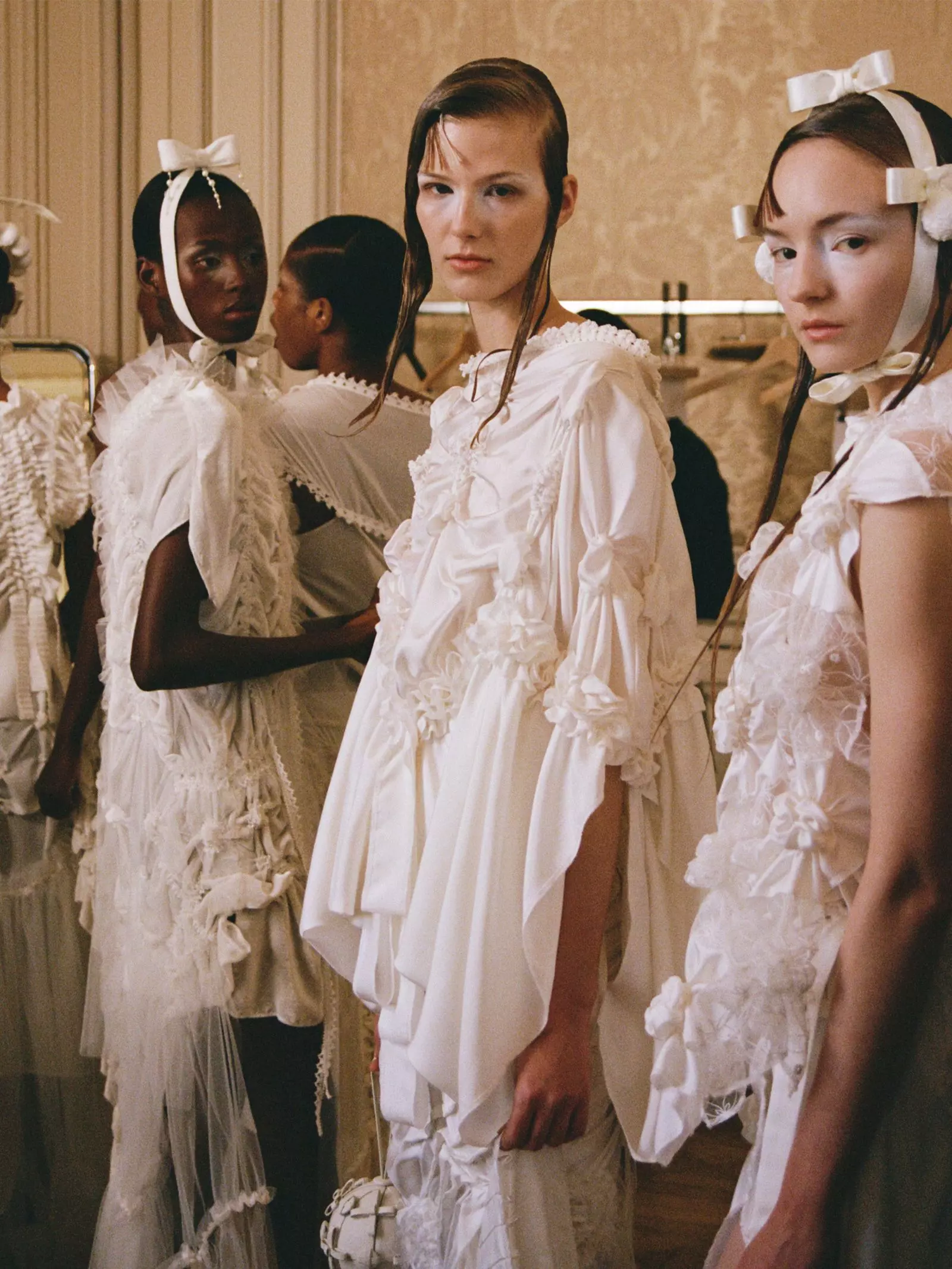
The luxury segment, facing a market slowdown, has actively emphasized the artistry and skill of craftspeople, utilizing techniques like beading and embroidery to justify premium pricing. Designers such as Róisín Pierce exemplify this by integrating complex handcrafts into their collections, blurring the distinctions between ready-to-wear and couture. Meanwhile, mid-market and mass brands have also adopted the aesthetic of handmade, particularly for techniques like macramé and crochet, which are difficult to replicate purely by machine. However, this often leads to products described as 'macramé-style' or 'crochet knitted,' indicating a machine-made facsimile rather than genuine handcraft. This widespread use of 'handmade' has prompted increased scrutiny and a call for more precise definitions within the industry.
To address the ambiguity, organizations like Nest and UNESCO have sought to establish clearer criteria for what constitutes 'handmade' or 'handcrafted.' Rebecca van Bergen of Nest notes that while machines are often involved in some stages, the crucial aspect lies in the significant manual contribution and the artisan's technical skill. Janhavi Dave of HomeNet International explains that a truly entirely hand-produced item would be exceptionally expensive, acknowledging that some machine involvement is reasonable, but manual operation of machines alone does not qualify a product as handmade. The documentary 'Handmade Future' further illustrates this distinction by showcasing artisans manipulating materials with hand tools, emphasizing the knowledge and labor behind unique craft variations, like the intricate block-printing process at Studio Bagru.
Craftmark in India categorizes specific handcrafted processes, detailing raw materials, tools, and methods for each. UNESCO's definition focuses on the artisan's direct manual contribution remaining the most substantial component. Nest, through its 'Nest Verified Handcrafted' program, verifies products based on the physical effort, dexterity, and technical skills applied, ensuring a clear differentiation between fully and partially handcrafted items. This verification process, launched in 2026, aims to bring transparency to consumers, allowing them to understand the true nature of a product's creation. Brands like Alémais are also proactively communicating their artisanal sourcing and commitments to responsible production through detailed labeling and social media.
Beyond defining the craft itself, the article emphasizes the importance of recognizing and fairly compensating the individuals behind these creations. Many artisans, particularly home-based workers, often remain invisible within complex supply chains. Organizations like HomeNet International advocate for these workers, who are predominantly women, ensuring they receive fair wages and social protections, even when paid on a piece-rate basis. Initiatives like ANAAR, a blockchain-based registry, are emerging to enhance transparency by mapping artisans, materials, and methods, creating a 'proof of making' that ensures proper attribution and protects intellectual property. This system aims to prevent the falsification of information and highlight the skilled labor involved in each product.
Ultimately, the resurgence of interest in handmade products offers an opportunity to revitalize traditional crafts. However, this must be coupled with a standardized vocabulary and an economic valuation that truly reflects the time, skill, and dedication of artisans. The practice of underpaying suppliers while hiking consumer prices undermines the integrity of 'handmade.' Instead, brands should either adopt simpler, less labor-intensive designs or commit to paying the true cost of complex handcrafts. As Róisín Pierce articulates, the handwork, skill, and dedication of craftspeople deserve profound respect and appreciation, not merely to be treated as a commodity.
About the author
André Leon Talley
Former creative director and editor-at-large at Vogue, a towering and influential figure in fashion journalism.