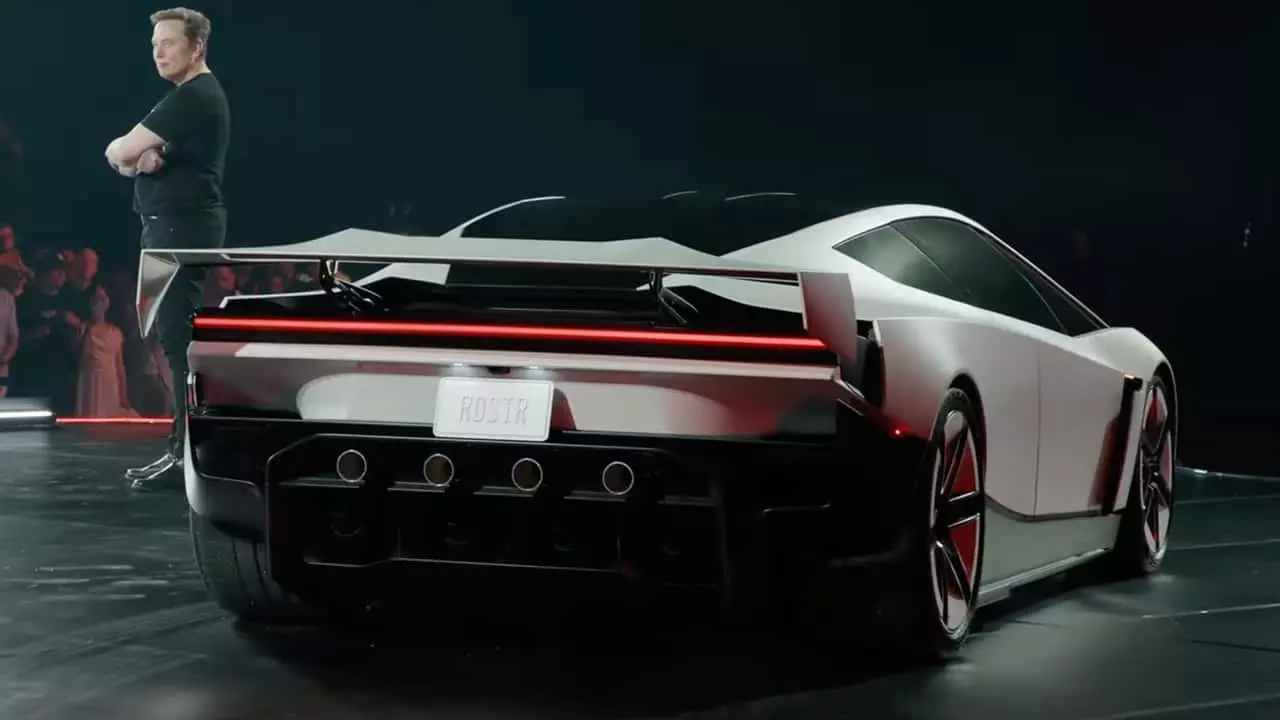
Tesla is embarking on a new era, committing to an autonomous future where human drivers will largely become a thing of the past. However, one iconic model is set to defy this trend: the revamped Roadster. Elon Musk, the CEO of Tesla, recently announced that this high-performance sports car will be the last of its kind that the company produces, offering an engaging driving experience for those who still appreciate direct control. This decision highlights a pivotal moment for the electric vehicle manufacturer, as it steers towards a fully self-driving fleet.
The current Model S and Model X, once flagships in Tesla's lineup, are gradually being phased out to make way for this autonomous vision. The Roadster, therefore, represents a nostalgic nod to traditional driving while simultaneously showcasing Tesla's cutting-edge engineering capabilities. It's poised to push the boundaries of electric vehicle performance, incorporating innovative technologies derived from aerospace expertise to deliver an unparalleled driving thrill. This strategic move underscores Tesla's dual commitment to advanced automation and the creation of a singular, driver-centric masterpiece.
The Final Manual Driving Experience
The new Tesla Roadster is positioned to be a monumental release, not just for its performance, but as a symbolic end to an era for the company. Elon Musk’s declaration that it will be Tesla's last car offering manual control signifies a dramatic shift towards fully autonomous vehicles. This move indicates that while Tesla is rapidly advancing its self-driving technology, it still acknowledges a segment of its market desires the visceral connection of driving a high-performance machine. The Roadster is designed to encapsulate the pinnacle of human-centric driving within Tesla's evolving portfolio, making it a unique offering before the brand transitions entirely to autonomous solutions.
With models like the Model S and Model X eventually being succeeded by autonomous counterparts, the Roadster stands out as the ultimate expression of Tesla's engineering prowess applied to a driver-focused vehicle. Musk's vision for this car is to transcend conventional limits, ensuring that the final manual Tesla is nothing short of extraordinary. This commitment extends to integrating advanced systems, promising a driving experience that is both exhilarating and a testament to the brand's ability to innovate across different automotive philosophies. The Roadster is set to become a collector’s item, representing the concluding chapter of manually operated vehicles from a company synonymous with future mobility.
Pioneering Performance and Innovation
Tesla is engineering the Roadster to be a benchmark for electric vehicle performance, with an ambitious goal of accelerating from 0 to 60 mph in under one second. This extraordinary claim is supported by the integration of state-of-the-art technologies aimed at maximizing speed, handling, and overall dynamic capabilities. The development team has drawn inspiration from SpaceX, incorporating aerospace-derived innovations such as a fan-based suction system. This system is designed to create up to 2 Gs of additional downforce, significantly improving the vehicle's cornering ability and stability at high speeds.
This blend of raw power and aerodynamic sophistication underscores Tesla's intent to deliver a vehicle that not only performs at an elite level but also showcases its innovative spirit. The advanced engineering features are meticulously crafted to ensure that the Roadster provides a driving experience that is both thrilling and remarkably precise. By leveraging technology from its sister company, Tesla is pushing the boundaries of automotive design and performance, making the Roadster a testament to what's achievable in the realm of electric sports cars. With production slated for 2028, enthusiasts eagerly await the opportunity to witness and experience this groundbreaking fusion of speed, technology, and driving artistry.
About the author
Henry Ford
Industrialist and founder of Ford Motor Company, whose autobiography outlines the creation of the automotive era.