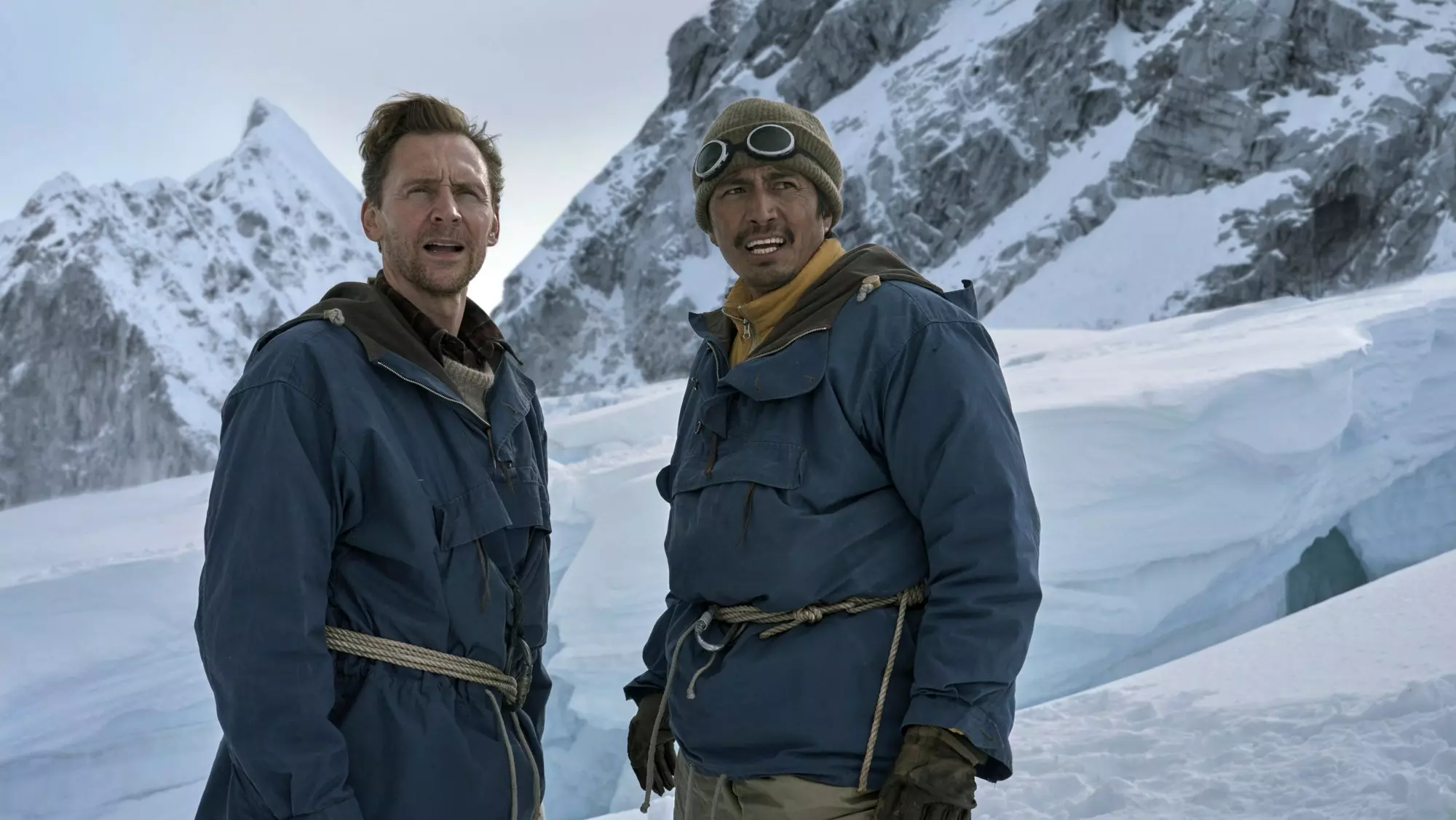
Jennifer Peedom's latest feature, 'Tenzing,' centers on the renowned mountaineer Tenzing Norgay, portraying his unique bond with Mount Everest, or Chomolungma as he calls it. Unlike the European perception of a challenge to be conquered, Tenzing views the formidable peak as a celestial guardian, a constant presence throughout his life's joys and sorrows, beckoning him home. This spiritual framing offers a refreshing counterpoint to the traditional narrative of conquest surrounding the 1953 expedition that saw Norgay and Edmund Hillary become the first to reach the summit.
The film, however, often adheres to a conventional biopic structure, resulting in a narrative that, while amiable, lacks profound dramatic impact. Luke Davies' script weaves together three distinct periods: Tenzing's boyhood fascination with the mountain in the 1920s, his early adulthood in Darjeeling aspiring to be a Sherpa, and the pivotal 1953 expedition. Despite the life-threatening conditions and interpersonal dynamics among the climbing team, the movie seldom creates genuine suspense. This is partly due to the well-known outcome of the historic climb, but also because the characters, including Tenzing himself, are depicted with broad strokes, preventing a deeper emotional connection.
While 'Tenzing' presents a commendable effort to acknowledge the Sherpa perspective and Tenzing's personal motivations, it ultimately falls short in capturing the complexity and depth of its protagonist's journey. The film portrays Tenzing's obstacles as easily overcome, diminishing the sense of struggle and triumph that defined his incredible feat. Consequently, his historic ascent appears less as a result of his courage and determination, and more as a preordained event, leaving the audience with a pleasant but ultimately forgettable viewing experience that may not fully honor its remarkable subject.
The cinematic exploration of human endeavors, especially those against the formidable forces of nature, serves as a powerful reminder of the indomitable spirit within us. Even when a narrative may not fully capture the profound complexities of a historical event, it can still inspire contemplation on courage, perseverance, and the deep, often spiritual, connections individuals form with their environment. Such stories, regardless of their dramatic intensity, reinforce the idea that every challenge overcome contributes to the collective human narrative of aspiration and achievement.
About the author
Mindy Kaling
Actress, writer, producer, and author of humorous essays on Hollywood and life.