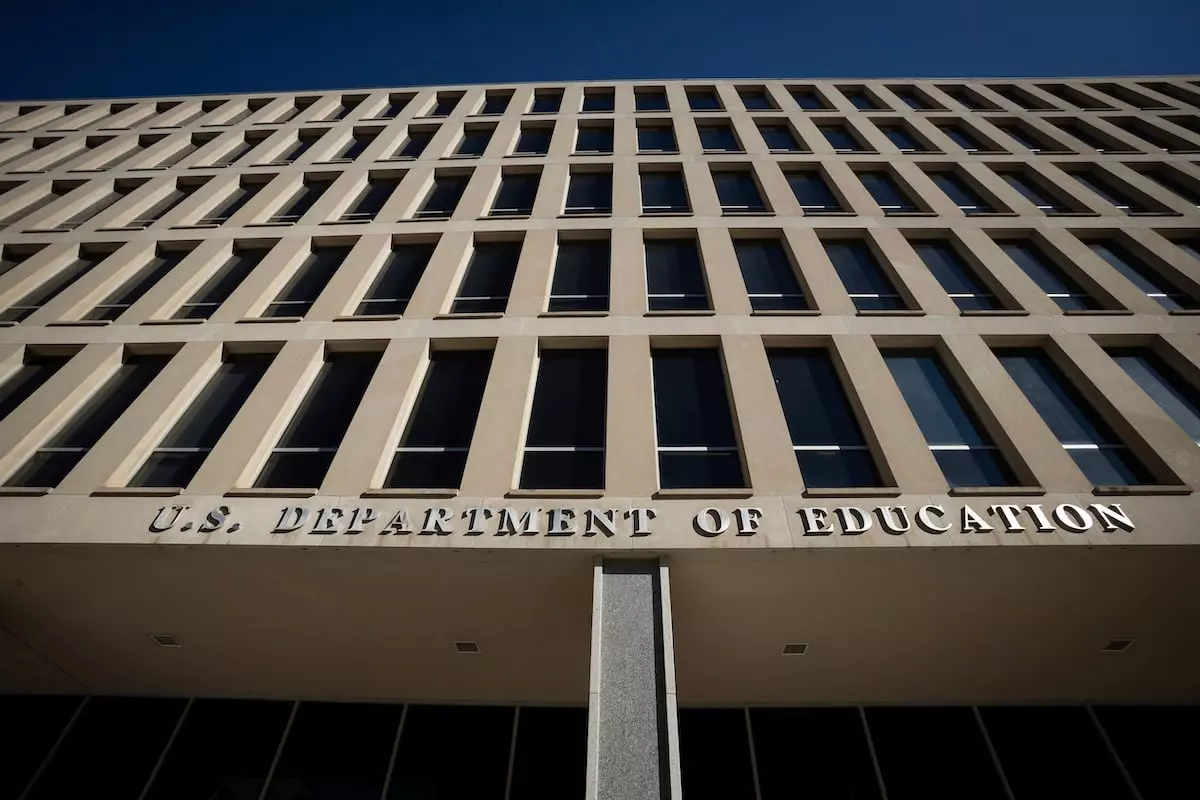
Recent legal developments in the realm of American student loan policy have brought both resolution and renewed contention. A significant lawsuit initiated by the American Federation of Teachers against the U.S. Department of Education has reached a joint dismissal, marking the culmination of efforts to enhance transparency and accelerate forgiveness processes for millions of borrowers. While this settlement addresses past grievances and establishes new reporting standards, it simultaneously underscores persistent challenges, prompting further legal action to protect student loan holders' entitlements.
Advocacy's Echo: Unpacking the Ongoing Fight for Student Loan Justice and Transparency
A Landmark Settlement Concludes: Key Achievements and Continuing Challenges in Student Loan Forgiveness
On November 18, 2026, the American Federation of Teachers (AFT) and the United States Department of Education reached a mutual agreement to close the union's prior legal action concerning student loan programs. This resolution was considered a success by the plaintiffs' legal representatives, as it significantly advanced their objectives. A central outcome of this case is the Department's pledge to provide public reports on the progress of Income-Driven Repayment (IDR) and Public Service Loan Forgiveness (PSLF) applications. These updates are slated for release on a quarterly basis, commencing in January 2027 and continuing until July 2028. However, the struggle for comprehensive borrower relief persists, with a new class-action lawsuit, known as Weingarten v. McMahon, now addressing critical issues such as delays in the PSLF Buyback initiative, the reversal of previously awarded credits, and inaccuracies in payment counts for student loan holders.
Unpacking the Reasons Behind the Resolution of the Initial AFT Student Loan Litigation
The American Federation of Teachers chose to withdraw its previous lawsuit regarding student loan forgiveness because, according to its legal team, the action had largely fulfilled its intended purposes. Both parties formally agreed to a stipulation for dismissal, effectively concluding the legal proceedings without a judicial ruling. The formal document itself did not elaborate on the specific rationale. This union initially filed its complaint in March 2025, following the Department of Education's removal of income-driven repayment applications from its online platforms. A subsequent agreement in October 2025 led to the reinstatement of Income-Based Repayment (IBR) forgiveness processing and mandated the release of six consecutive monthly reports detailing application backlogs, with the final report covering April 2026. The nature of this dismissal, being "without prejudice," signifies that the union retains the right to reintroduce similar legal challenges in the future, a tactic it has employed successfully in past cases, such as its 2019 Public Service Loan Forgiveness lawsuit that culminated in a 2021 settlement.
Tangible Victories for Student Loan Borrowers Achieved Through Legal Action
The previous legal challenge successfully secured several critical benefits for student loan holders, as highlighted by the plaintiffs' legal representatives. These include enhanced public access to processing data, the ability to claim Public Service Loan Forgiveness (PSLF) credit for periods spent in SAVE forbearance through a Buyback mechanism, and significant tax relief for Income-Driven Repayment (IDR) plan forgiveness earned by the close of 2025.
Crucially, the lawsuit mandated greater openness from the Department of Education, leading to the revelation of an overwhelming backlog of over 1.6 million IDR applications in April 2025. Subsequent court-mandated reports documented a progressive reduction in this backlog, eventually falling below 1.1 million by August 2025 and continuing to decrease into 2026. As part of the settlement, the Department committed to ongoing publication of quarterly status reports from the upcoming year. Furthermore, a court declaration confirmed that time spent under the SAVE forbearance could indeed count towards PSLF eligibility via the Buyback initiative, offering a vital pathway for public service professionals affected by the 2024 forbearance period. Lastly, the legal action ensured that borrowers who qualified for IDR forgiveness by December 31, 2025, would be exempt from federal income tax obligations on that forgiven amount, even if the formal discharge occurred later in 2026.
While these areas represent significant wins, other issues remain contested. Delays in the PSLF Buyback process, which saw approximately 88,000 requests outstanding by April 30, 2026, are still being litigated. Similarly, concerns over revoked PSLF credits and recent payments failing to be accurately recorded are also part of ongoing legal proceedings.
Anticipating Future Student Loan Backlog Disclosures and Their Scope
According to the counsel representing the plaintiffs, the inaugural quarterly report detailing student loan processing is anticipated in January 2027. The Department of Education has committed to regularly updating these reports on its official website each quarter through July 2028, taking the place of the previous monthly status reports submitted to the courts. The level of detail within these forthcoming online reports, compared to the comprehensive monthly court filings, remains uncertain. The court documents meticulously tracked various metrics, including applications for Income-Driven Repayment, IDR discharges, Public Service Loan Forgiveness discharges, and PSLF Buyback requests. It has yet to be determined whether all these specific data points will be incorporated into the new website-based reports. The most recent publicly available data indicated roughly 88,000 PSLF Buyback applications were awaiting processing as of April 30, 2026. Interestingly, a notable portion of these individuals may ultimately not require the Buyback option, as their standard payment accumulation could fulfill the 120-payment requirement sooner.
The Focus of the New Legal Challenge Against Student Loan Administration
A new significant legal action, Weingarten v. McMahon, has been initiated as a proposed class-action lawsuit, specifically targeting the administration of the Public Service Loan Forgiveness (PSLF) program. Filed on October 30, 2026, by AFT President Randi Weingarten alongside nine borrowers, this complaint highlights three primary systemic issues. Firstly, it addresses the extensive delays in the PSLF Buyback process; the number of pending requests almost doubled from 49,318 in April 2025 to 89,720 by March 2026, with an estimated clearance time exceeding 18 months. Although borrowers may alter their repayment plans during this waiting period, such actions do not expedite the processing of their Buyback applications. Secondly, the lawsuit confronts the problem of retroactively rescinded PSLF credits, where periods previously acknowledged as qualifying payments were later removed, often attributed by the Department of Education to "coding errors," leading to a reduction in borrowers' overall PSLF payment counts. Finally, the third concern involves the failure of recent payments to be recorded accurately. Many borrowers who have reached their 120th qualifying payment find their forgiveness process stalled, a persistent issue observed since July 2026, leaving numerous eligible individuals without the loan forgiveness they are legally entitled to receive.
Essential Actions for PSLF and IDR Borrowers Amidst Ongoing Legal Developments
As the new class-action lawsuit unfolds, it is highly advisable for borrowers under the Public Service Loan Forgiveness (PSLF) and Income-Driven Repayment (IDR) programs to proactively safeguard their interests. Diligently documenting all account activity and consistently making scheduled payments are crucial steps to preserve progress, regardless of the lawsuit's eventual outcome. A comprehensive strategy for borrowers should include several key practices:
Maintain Monthly Records of Your PSLF Tracker: Regularly capturing dated screenshots of your PSLF payment tracker provides concrete evidence, simplifying the process of disputing any discrepancies or removed payment counts. It is vital to be familiar with the official qualifying payment criteria to understand which months are eligible.
Submit Buyback Applications Upon Eligibility: Once you have accrued 120 months of qualifying employment, you should apply for the PSLF Buyback program. Understanding the specific cost calculation for Buyback is essential to determine your financial obligation.
Continue Payment Remittances During Waiting Periods: The Department of Education indicates that any payments made beyond the required 120 will be reimbursed once forgiveness is granted. Given that PSLF Buyback processing can extend beyond a year, maintaining payments is prudent.
Formally Document Any Credit Issues: Should you encounter problems with your payment counts or credits, submit a written complaint to your student loan servicer. This creates an official record, which is invaluable for addressing future disputes.
Verify Tax Reporting for 2025 Forgiveness: Borrowers who achieved IDR forgiveness by December 31, 2025, should not expect to receive a Form 1099-C for the discharged debt, confirming its tax-exempt status.
Answers to Common Questions Regarding Student Loan Forgiveness and Ongoing Legal Matters
Here are some frequently asked questions addressing the recent developments in student loan litigation and their implications for borrowers:
Will the Dismissal of the Previous Lawsuit Impact My PSLF or IDR Forgiveness Eligibility?
The resolution of the 2025 legal case does not alter your qualification for either Public Service Loan Forgiveness (PSLF) or Income-Driven Repayment (IDR) forgiveness. Decisions related to Income-Based Repayment (IBR) forgiveness and PSLF Buyback requests are continuing to be processed as before.
Is it Necessary for Me to Join the New AFT Lawsuit?
Borrowers are not required to formally enroll in the new AFT lawsuit. Should the court approve the proposed class definitions within the new PSLF Buyback lawsuit, individuals who meet those criteria will be automatically included in the class action's scope.
Where Can I Find the Upcoming Quarterly Reports on Loan Processing?
The attorneys representing the plaintiffs have stated that these reports will be made available on the official website of the Department of Education, with the first installment expected in January 2027. Until then, the most current figures on the Income-Driven Repayment backlog are those provided in the April 2026 report.
About the author
Ramit Sethi
Author of "I Will Teach You to Be Rich," focusing on psychology and systems for a rich life without guilt.