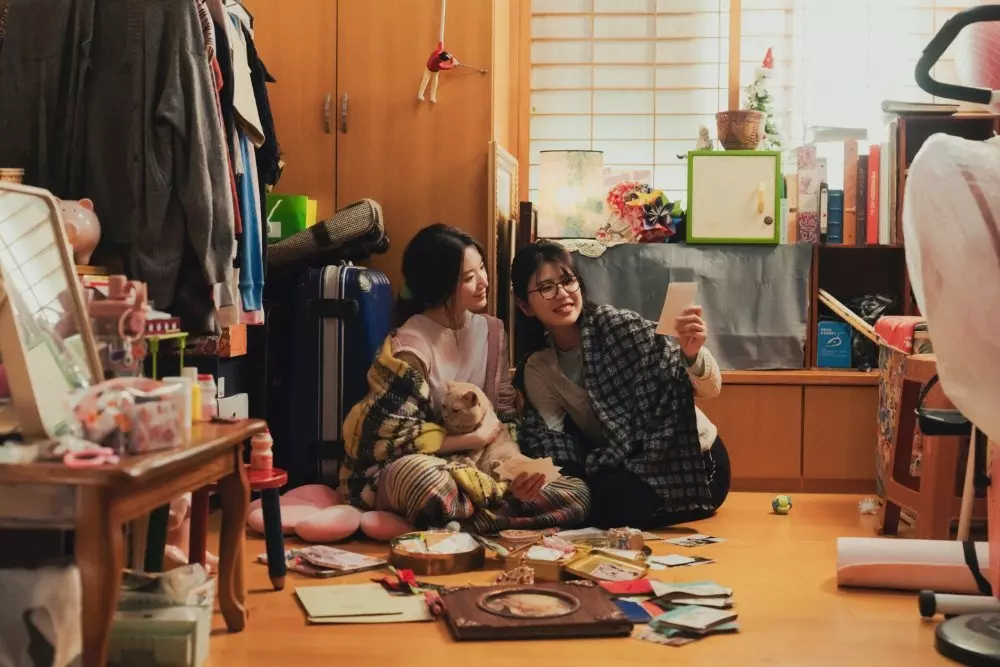
Shuhua's Breakthrough Performance and Director Feng-i Fiona Roan's Evolution with 'Happily Ever After'
ByMindy Kaling
Director Feng-i Fiona Roan's latest cinematic offering, 'Happily Ever After,' makes its global debut at the Toronto Film Festival, drawing significant attention following the critical acclaim of her first feature, 'American Girl.' This new film marks a pivotal moment for Roan as she deliberately moves away from the autobiographical elements that defined her earlier work. She candidly shares insights into the creative process, including the challenge of developing a second film, a sentiment echoed by Oscar-winning director Ang Lee. Roan's journey involved a conscious effort to broaden her narrative scope, culminating in a story that delves into the intricate emotional dynamics between two sisters, a narrative structure refined after studying the successful balance seen in 'Frozen.' The film also generated considerable buzz for featuring K-pop sensation Shuhua in her first acting role, a casting decision made spontaneously due to Shuhua's natural confidence. Roan's approach to directing Shuhua focused on fostering an authentic familial atmosphere on set, encouraging a deeper connection to her character. Beyond the film's production, Roan reflects on the evolving landscape of Taiwanese cinema, highlighting her generation's embrace of genre diversity and willingness to experiment with storytelling forms, drawing inspiration from international cinematic masters while aiming to provoke global conversations on universal human experiences like happiness.
Furthermore, Roan articulates her broader vision for the future of Taiwanese cinema, acknowledging the profound legacy of past masters like Hou Hsiao-hsien and Edward Yang, whose artistic achievements have secured their place in film history. However, she believes her contemporary peers are bringing a fresh perspective, characterized by a heightened awareness of genre and a bolder approach to experimental filmmaking. Roan views international film festivals as crucial platforms for this exchange, seeing them as 'social experiments' where diverse stories are presented to global audiences, allowing filmmakers to observe and understand varied responses. Her cinematic influences are wide-ranging, encompassing French New Wave icon Agnès Varda, Japanese masters Ozu Yasujirō and Kore-eda Hirokazu, and contemporary American director Greta Gerwig, all of whom explore profound human experiences and inner lives. This eclectic mix of inspirations, coupled with her deep dive into literature such as Kevin Chen's 'Ghost Town,' has enabled Roan to craft a fictional narrative that, while distinct from her personal history, retains the emotional honesty and depth that resonated with audiences in her debut film. Ultimately, 'Happily Ever After' is poised to initiate a global dialogue, inviting viewers to contemplate the film's central question: what does it truly mean to achieve happiness on one's own terms?
Director Feng-i Fiona Roan's Creative Evolution and Breaking New Ground
Director Feng-i Fiona Roan's latest film, 'Happily Ever After,' marks a significant evolution in her filmmaking journey, as she consciously moves away from the autobiographical storytelling that defined her acclaimed debut, 'American Girl.' Premiering at the Toronto Film Festival, this new feature demonstrates Roan's deliberate effort to expand her narrative horizons and explore fresh thematic territory. The transition was not without its challenges, as Roan recalls a poignant warning from Oscar-winning director Ang Lee about the inherent difficulties of making a second film. Despite this, she embraced the opportunity to create a fictional narrative that resonated with her own life's transitions, including her impending marriage, allowing her to explore universal emotional shifts experienced by herself and her peers. The film's development saw a shift from focusing solely on the younger sister to a more balanced dual-protagonist approach, a change inspired by her analysis of 'Frozen.' This strategic narrative restructuring underscores Roan's methodical approach to filmmaking, blending personal insights with keen observations of successful storytelling techniques. The project also garnered considerable attention for casting K-pop star Shuhua in her acting debut, a testament to Roan's intuitive casting decisions based on natural talent and personality.
'Happily Ever After' represents a deliberate step for Feng-i Fiona Roan to redefine her artistic identity beyond the 'American Girl' label, proving her versatility as a storyteller. The film, a product of a year-long intensive writing process, allowed Roan to delve into the complexities of sisterhood and personal growth, reflecting the emotional landscape she and her friends navigated during significant life changes. Her inspiration from diverse sources, including children's animation like 'Frozen,' highlights her innovative approach to narrative construction and character development. Roan's casting of Shuhua was a direct result of the K-pop star's authentic confidence during auditions, a quality Roan valued over extensive acting experience. To cultivate a genuine familial atmosphere on set, Roan fostered an environment where Shuhua was addressed as 'little sister' and even involved in naming the family pet within the film, creating a strong emotional connection for the actress. This immersive approach, coupled with Roan's directive for Shuhua to always find intrinsic motivation for her character's actions, aimed to elicit performances that were both believable and deeply moving for the audience. This new work is not just a film; it's a testament to Roan's growth as a director, her commitment to narrative innovation, and her ability to draw compelling performances from her cast, ultimately offering a fresh perspective on human relationships and personal identity.
Contemporary Taiwanese Cinema and Global Artistic Dialogues
Director Feng-i Fiona Roan's perspective on contemporary Taiwanese cinema reveals a dynamic landscape characterized by a strong awareness of genre and a willingness to experiment with diverse forms, setting it apart from the previous generation of acclaimed filmmakers. While acknowledging the monumental international visibility and artistic achievements of maestros like Hou Hsiao-hsien and Edward Yang, Roan emphasizes that her generation brings a fresh approach to storytelling. She perceives international film festivals as vital 'social experiments,' where filmmakers can gauge global audience reactions to different narratives and stimulate cross-cultural dialogues. This proactive engagement with global cinema is further reflected in her wide array of influences, which span from French New Wave pioneer Agnès Varda to Japanese masters Ozu Yasujirō and Kore-eda Hirokazu, as well as contemporary American director Greta Gerwig. These diverse inspirations underline a commitment to exploring universal themes of family, identity, and women's inner lives, while also pushing the boundaries of cinematic expression within the Taiwanese context. Her discussions on Taiwanese cinema highlight a generational shift towards broader genre exploration and a more globalized artistic sensibility.
Roan's vision for contemporary Taiwanese cinema is one of continuous evolution, building upon the foundational legacy of its legendary predecessors while forging new paths. She believes that today's Taiwanese filmmakers are more attuned to international genre conventions and are actively seeking to blend these with local narratives to create universally resonant stories. This outward-looking approach is exemplified by her own engagement with diverse global cinematic traditions, from the introspective family dramas of Ozu and Kore-eda to the feminist explorations of Varda and Gerwig. Her deep dive into literature, such as Kevin Chen's 'Ghost Town,' further enriches her storytelling, allowing her to weave complex themes of family, identity, and self-worth into her fictional works while maintaining a profound emotional authenticity. As 'Happily Ever After' begins its international journey, Roan eagerly anticipates the exchange of ideas with fellow filmmakers and hopes her film will ignite meaningful conversations. The central question posed by the film's title—what defines individual happiness—serves as a powerful invitation for global audiences to reflect on personal definitions of fulfillment, underscoring Roan's commitment to creating cinema that is both culturally specific and universally relevant, fostering a rich artistic dialogue across borders.
About the author
Mindy Kaling
Actress, writer, producer, and author of humorous essays on Hollywood and life.