Roberto Cavalli's Early Works: A Revelation of Artistry and Technique
ByTim Gunn
A recent exhibition, curated by Laura Ellner of Reracked, offers a fresh perspective on the initial artistic endeavors of Italian fashion icon Roberto Cavalli. Known for his flamboyant and bold designs, Cavalli's early works from the 1970s, predominantly in suede and leather, reveal a profound technical mastery and artistic sensibility often overshadowed by his later, more extravagant creations. This unique collection emphasizes the authentic, charming, and distinctly human touch in his foundational designs, challenging conventional perceptions of his extensive body of work. The exhibit, which features pieces acquired from a woman whose mother worked for an Italian knitwear firm, showcases Cavalli's innovative printing techniques on animal skins, a process he pioneered and perfected.
Cavalli’s journey into fashion began in 1960, stemming from his background as the son of a seamstress and his studies in art and architecture in Florence. His initial foray involved painting sweaters for a friend, quickly leading him to explore printing on knitwear. However, his pivotal breakthrough occurred a decade later through an unexpected encounter with Mario Valentino. This moment spurred Cavalli to adapt his printing expertise to create delicate, tissue-thin glove leather, impressing Valentino and cementing his path in design. Ellner’s meticulous research into Cavalli's archives highlights his inventive approach, particularly his development of "Stampa Cavalli," a patented method for printing across already-constructed garments, allowing designs to flow seamlessly over seams and stitches. This technique, initially sold to other prestigious fashion houses like Hermès and Pierre Cardin, eventually became an exclusive in-house practice.
The Genesis of a Design Maverick: Cavalli's Technical Innovations
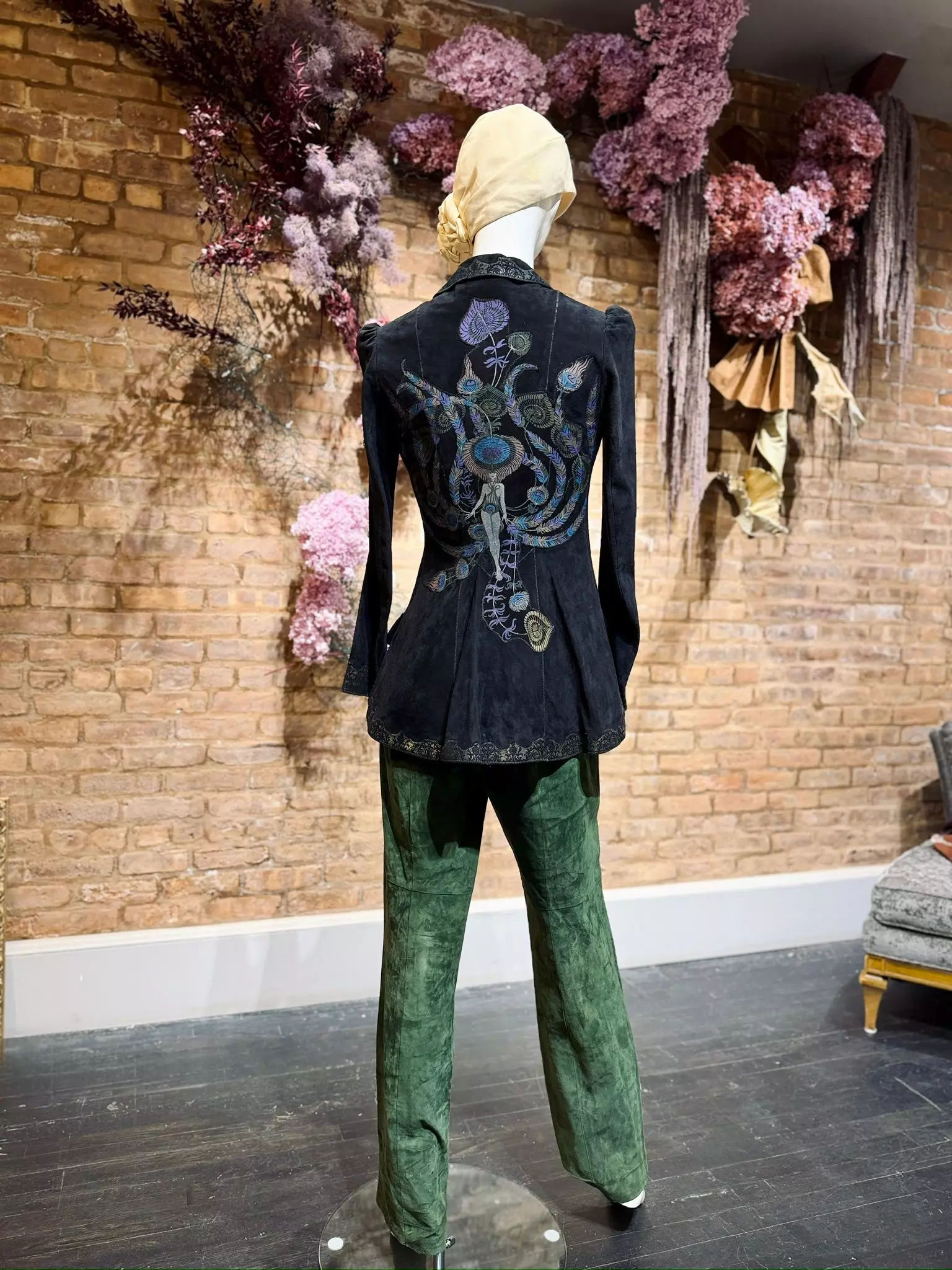
Roberto Cavalli, renowned for his vibrant and sensual aesthetic, demonstrated a remarkable technical aptitude early in his career, an aspect thoroughly explored in a new exhibition by Reracked's Laura Ellner. His pioneering work in the 1970s, utilizing suede and leather, showcased a blend of artistic vision and engineering ingenuity. Cavalli developed a unique silk-screening method for leather, where pigments were hand-mixed and applied through multiple screens, ensuring that each piece was distinct despite repeated motifs. This meticulous process allowed for slight variations in color density and alignment, making every garment a unique work of art. The exhibition highlights his bespoke printing technique, which transformed animal skins into canvases for intricate, poster-like designs, infused with soft, variegated colors and often featuring hand-painted accents.
Ellner's curated collection reveals a less familiar side of Cavalli, emphasizing his foundational skill. The garments feature incredibly fine lines that depict art nouveau, Japanese prints, and psychedelic motifs, all characteristic of the "Summer of Love" era. These early pieces, often in A-line midis and fitted jackets, underscore Cavalli's commitment to craftsmanship. His patented method, "Stampa Cavalli," involved printing designs directly onto assembled garments, ensuring patterns were continuous and uninterrupted by seams. This innovative approach was so advanced that it initially attracted leading brands such as Hermès and Pierre Cardin, who purchased his printed leathers before Cavalli decided to reserve the technique for his own collections. The exhibition thus illuminates Cavalli’s early dedication to material innovation and intricate design, laying the groundwork for his future successes.
A Rediscovered Legacy: Reracked's Exhibition of Early Cavalli
The Reracked exhibition, featuring Roberto Cavalli's seldom-seen early designs, offers a compelling re-evaluation of the designer's career trajectory. These pieces, dating back to the 1970s, stand in contrast to his later, more overtly sensuous creations, showcasing a gentler, more bohemian spirit. Ellner, who discovered these rare garments through a consignee whose mother had worn them in the 70s, was captivated by the rich stories embedded in each piece. The collection includes items from his "Roberto Cavalli for Crissa" line, which provided a distinctive and individualistic style for women seeking unique fashion statements, a testament to Cavalli's early impact on personal expression in clothing.
Laura Ellner's journey into presenting these early Cavalli works began serendipitously after stepping away from digital marketing to reconnect with her passion for clothing. Her store in Kingston became the unexpected venue for this significant discovery, revealing a treasure trove of Cavalli's formative designs. The exhibition, running from September 11-16 with sales commencing on the 17th, provides a rare opportunity to explore a pivotal, yet underappreciated, chapter of Cavalli’s artistic development. Unlike other recent vintage fashion sales, this collection specifically highlights the designer’s authentic technical abilities and bohemian leanings, preceding his more libertine aesthetic. Ellner believes the renewed interest in these vintage Cavalli pieces is driven by a combination of Y2K nostalgia and a contemporary desire for individuality in fashion, a desire Cavalli himself championed from the very beginning of his illustrious career.
About the author
Tim Gunn
Fashion consultant and TV personality known for "Project Runway" and his ethos of "make it work."