The Road Not Taken: Ridley Scott's Abandoned "Dune" Adaptation
ByAmy Hennig
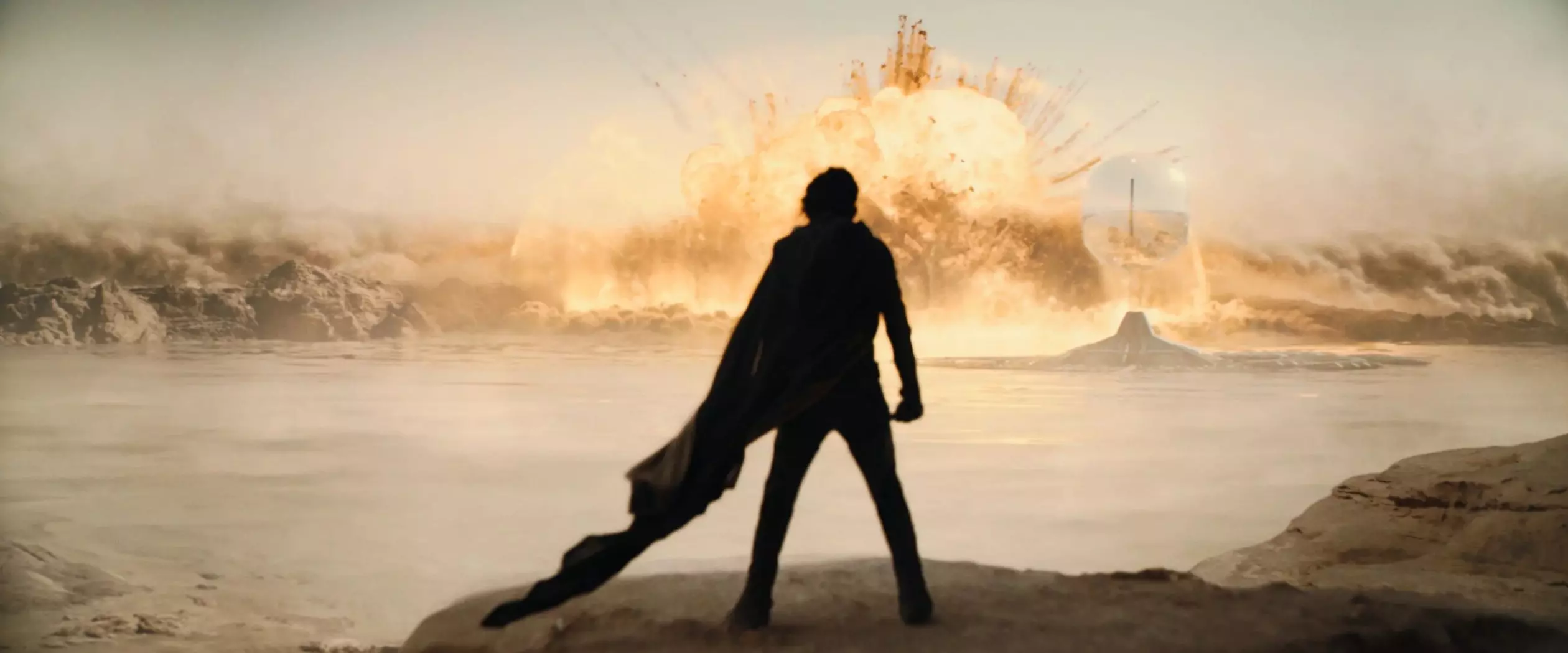
Denis Villeneuve's cinematic interpretation of Frank Herbert's 'Dune' saga has been met with widespread acclaim, cementing its place as a definitive screen rendition of the beloved science fiction novel. While the current trilogy, set to conclude with 'Dune: Part 3,' has garnered both critical and commercial success, it's worth reflecting on earlier attempts to bring the sprawling narrative to life. One such ambitious, though ultimately unproduced, endeavor was spearheaded by acclaimed director Ridley Scott, offering a glimpse into a very different cinematic universe for Arrakis.
Before Scott's involvement, the journey of adapting 'Dune' was already fraught with creative challenges. The novel's immense popularity quickly attracted the attention of Hollywood, with producer Arthur P. Jacobs acquiring the rights in 1972. Following his passing, French producer Jean-Paul Gibon commissioned avant-garde filmmaker Alejandro Jodorowsky to direct in 1974. Jodorowsky's vision, though artistically bold, featuring unconventional casting choices and a fantastical approach, ultimately proved unfeasible due to significant budget overruns, leading to its collapse and later becoming the subject of the documentary 'Jodorowsky's Dune.'
In the wake of these earlier attempts, Ridley Scott took on the mantle of adapting 'Dune' in the late 1970s. Fresh off the success of 'Alien' and eager to delve deeper into the science fiction genre, Scott's collaboration with H.R. Giger promised a visually striking and potentially darker rendition of Herbert's world. Giger, known for his biomechanical artistry, had already contributed concept designs for the Harkonnen homeworld during Jodorowsky's phase and was set to bring his unique aesthetic to Scott's project, envisioning a skull-laden Harkonnen castle and a more monstrous sandworm. However, this ambitious undertaking faced numerous hurdles. Fundamental disagreements arose between Herbert and Scott regarding the screenplay, with Herbert criticizing the script for oversimplifying his complex narrative, excising key characters, and even introducing a controversial incestuous subplot. Furthermore, the film's projected budget of $50 million (equivalent to nearly $300 million today) and a demanding two-and-a-half-year production schedule proved daunting. A personal tragedy, the passing of Scott's older brother, further impacted his commitment. Consequently, Scott departed the project, which then fell to David Lynch, whose 1984 adaptation, though divisive, left its own mark on cinema history. Scott, redirecting his creative energies, went on to direct 'Blade Runner,' a film based on Philip K. Dick's novel, which would become a science fiction masterpiece and profoundly influence the cyberpunk genre, ultimately demonstrating that his decision to step away from 'Dune' paved the way for another iconic contribution to cinematic history.
The intricate history of 'Dune' adaptations underscores the enduring power of Frank Herbert's original narrative and the diverse ways in which artists interpret and reshape it. Each attempt, whether realized or not, reflects a distinct artistic vision, highlighting the challenges and triumphs inherent in translating a beloved literary work to the screen. Ultimately, the journey of 'Dune' through various directorial lenses teaches us that sometimes, the paths not taken can lead to other extraordinary destinations, fostering innovation and enriching the tapestry of cinematic storytelling.
About the author
Amy Hennig
Renowned video game writer and director, known for her narrative work on the "Uncharted" series.