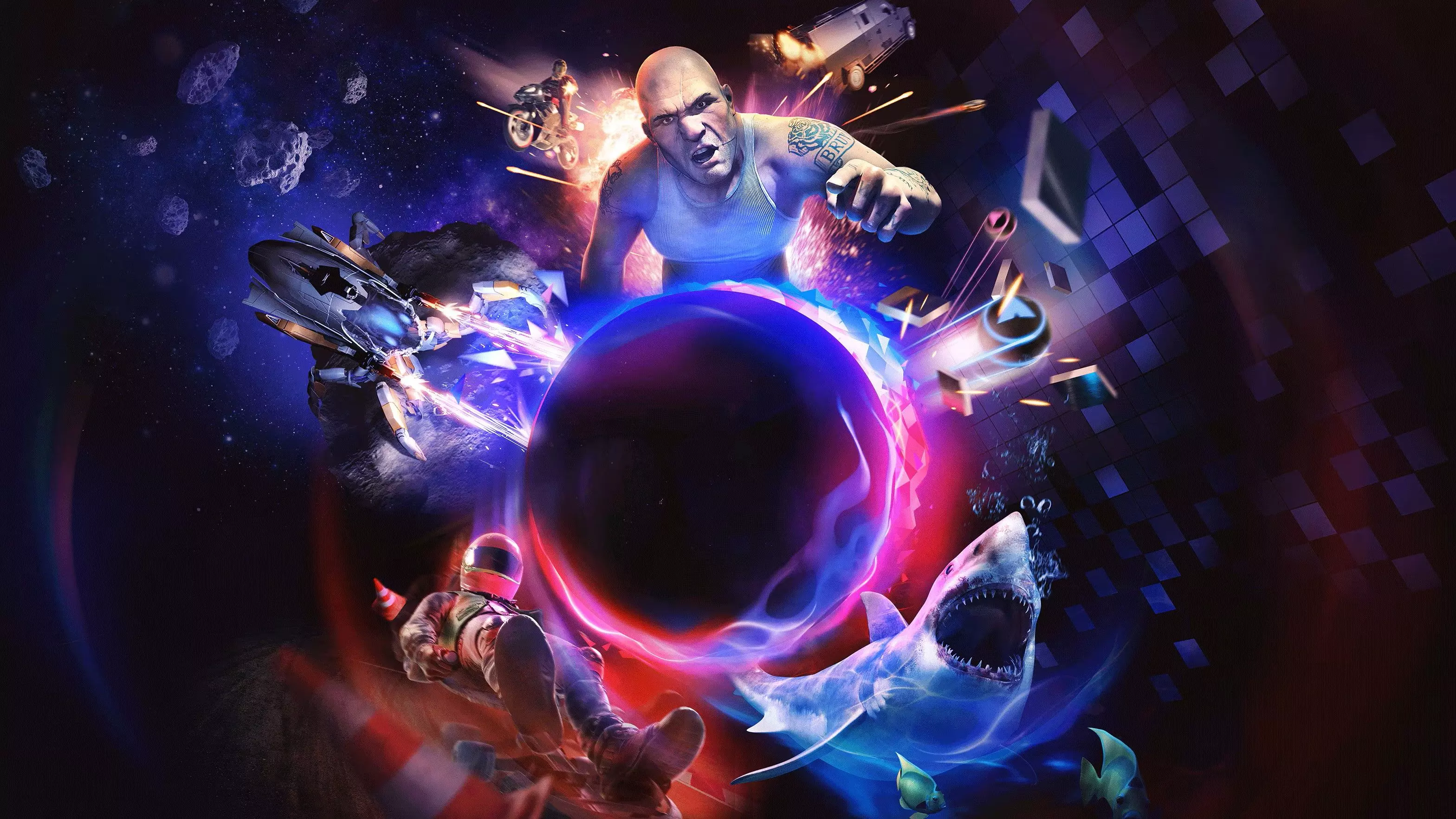
The Rise and Fall of PlayStation VR: A Decade in Review
ByMark Rosewater
In the rapidly evolving landscape of video games, a decade can witness the ascent and descent of entire technological paradigms. The PlayStation VR, first introduced on October 13, 2016, serves as a poignant illustration of this phenomenon. Initially positioned as a breakthrough for virtual reality within mainstream gaming, the bulky headset aimed to democratize access to an emerging technology. However, by 2026, it has come to symbolize a broader trend in VR that appears to be on the brink of obsolescence, transforming from a promising innovation into a relic of a past era.
The mid-2010s saw a growing buzz around virtual reality, with 2016 marking the official commencement of this trend. The Oculus Rift, hailed as one of the pioneering consumer headsets of its time, made its debut in March, closely followed by the HTC Vive in April, igniting a fervent competition in the burgeoning headset market. While these devices generated considerable excitement, their reliance on high-spec gaming PCs made them less accessible to the average consumer. The PlayStation VR, launched in October of the same year, was envisioned as the solution to this accessibility challenge. Requiring only a PlayStation 4 console, it promised a simpler setup, despite a tangle of cables, and presented a more inviting, less intimidating aesthetic with its white design compared to its darker, more complex-looking rivals.
Despite its initial advantages, the PlayStation VR took some time to truly establish itself. Its launch lineup of games, including titles like PlayStation VR Worlds and Batman: Arkham VR, primarily left an impression of glorified tech demonstrations rather than fully realized gaming experiences. Although a few early standout games, such as Ubisoft's Eagle Flight and Rez Infinite, hinted at the platform's potential, it wasn't until two years later that PSVR genuinely gained traction.
The year 2018 proved to be a pivotal moment for Sony's virtual reality endeavor, almost serving as a re-launch for the device. A significant influx of critically acclaimed titles, including Tetris Effect, Moss, and Astro Bot: Rescue Mission, emerged as the "killer apps" needed to persuade a hesitant audience. This period marked a surge in PSVR's popularity, with robust sales during holiday seasons, indicating the arrival of console VR as a legitimate gaming force. The enthusiastic reception underscored a moment when virtual reality on consoles seemed poised for widespread adoption.
Reflecting on it now, 2018 appears to have been the pinnacle of Sony's VR experiment. While subsequent titles like Blood and Truth continued to explore the technological boundaries of the headset, Sony gradually ceded its central position in the VR arena. In 2020, Oculus recaptured public attention with its Quest 2 headset, and Valve made significant waves with Half-Life: Alyx, a groundbreaking VR title inaccessible on the PSVR. By this point, Sony's headset, tethered to a previous generation console, began to feel increasingly outdated and less capable as VR technology progressed at a rapid pace around it.
Sony's final significant push to establish PSVR as a viable platform came in 2023 with the introduction of the PlayStation VR 2. This updated headset represented a substantial improvement across the board, offering enhanced comfort, greater power due to its integration with the PS5, a simpler setup process, and a robust library of launch titles. The release of Horizon: Call of the Mountain, a first-party exclusive leveraging one of Sony's major franchises, underscored the company's apparent commitment to the new device.
However, this resurgence was short-lived. The PSVR2 encountered a lukewarm reception, launching into a market where mainstream interest in VR had already largely waned. Beyond a VR mode for Gran Turismo 7 and some promotional efforts for promising games like Synapse, Sony's support for the headset seemed to diminish quickly. By 2024, merely a year after its debut, Sony released a PC adapter for the device, a move that generated some fleeting interest but ultimately appeared to be an acknowledgment that console-based VR was not the direction of the future.
By 2026, the fate of console VR appears sealed. Reports indicate that in September of that year, Sony transferred several VR-related patents to Meta, effectively signaling the conclusion of its decade-long ambitions in the virtual reality space. This decision exemplifies a company adapting to market realities, as the VR gaming industry faces significant challenges. Many prominent developers who previously created successful VR titles have shifted their focus back to traditional flat-screen games, while others, such as Polyarc, the studio behind Moss, have ceased operations entirely. Major publishers are increasingly hesitant to invest in high-profile VR games, with early adopters like Ubisoft withdrawing from the technology. Any lingering hopes for a revitalization of the sector, such as with Valve's Steam Frame, were dampened by its high price and scarcity of first-party titles. The future of VR technology currently offers little cause for optimism.
While it is unlikely that console manufacturers will venture into VR again in the near future, the technology continues to exist within a dedicated, albeit smaller, niche. Recent fan-driven initiatives, such as a mod providing VR support for Titanfall 2, have garnered attention, suggesting that community projects might sustain the interest as official game releases dwindle. There remains a possibility that VR gaming could endure as an enthusiast hobby for those who enjoy customizing older titles. The unexpected revival of Nintendo's Virtual Boy this year also demonstrates that occasionally, technologies once deemed failures can find a nostalgic second life. Nevertheless, the intense technological competition that once fueled the PlayStation VR's journey has undeniably concluded, marking the end of a ten-year saga with a perfectly imperfect resolution.
About the author
Mark Rosewater
Head designer for "Magic: The Gathering" and author of long-running insights on game design.