Reza Rahadian's 'Casparina': A Cinematic Journey Through Exile and Family Reunion
ByStephen King
Indonesian actor-director Reza Rahadian is embarking on a deeply personal cinematic endeavor with his second feature film, 'Casparina.' This poignant drama draws inspiration from the extraordinary life of his grandmother, Francisca Casparina Fanggidaej, a journalist who faced the harsh reality of statelessness and prolonged exile. The project, currently gaining traction at the Busan International Film Festival's Asian Project Market, delves into the profound impact of political upheaval on individuals and families, particularly focusing on the enduring bonds and fractured relationships that emerge from such tumultuous times. Rahadian aims to bring to the screen a narrative that not only honors his grandmother's resilience but also explores the universal themes of sacrifice, belonging, and the arduous journey of reconciliation.
'Casparina' tells the story of Rina, a journalist whose Indonesian citizenship is revoked in 1965 due to her opposition to the then-governing regime, forcing her into an involuntary exile that spans decades. After 34 years, a letter arrives, signaling the collapse of the old regime and her freedom to return home. This long-awaited homecoming, however, is fraught with emotional complexities. Rina returns to find her children, Andi and Lila, now adults who have built lives entirely separate from their mother's presence. The film meticulously navigates the delicate process of healing old wounds, confronting years of unspoken resentment, and gradually rebuilding the familial connections that were severed by political circumstances. Through their journey, Rina's children begin to comprehend the immense personal cost of their mother's convictions and the sacrifices she made for both her country and her family.
Rahadian's motivation for this project stems from a profound personal connection and a desire to illuminate a significant, yet often overlooked, chapter of Indonesian history. He was particularly moved by the narrative of motherhood in absence and the abrupt, forceful revocation of citizenship that characterized the era. His grandmother's 32-year separation from her children deeply resonated with him, making 'Casparina' a story he deems of paramount importance. Rahadian hopes that audiences will gain an understanding of the profound consequences of difficult choices, often driven by unseen forces, and the enduring pain of a mother's prolonged absence. He also seeks to highlight the silent suffering of children who, for their own safety, could not openly acknowledge their mother's identity.
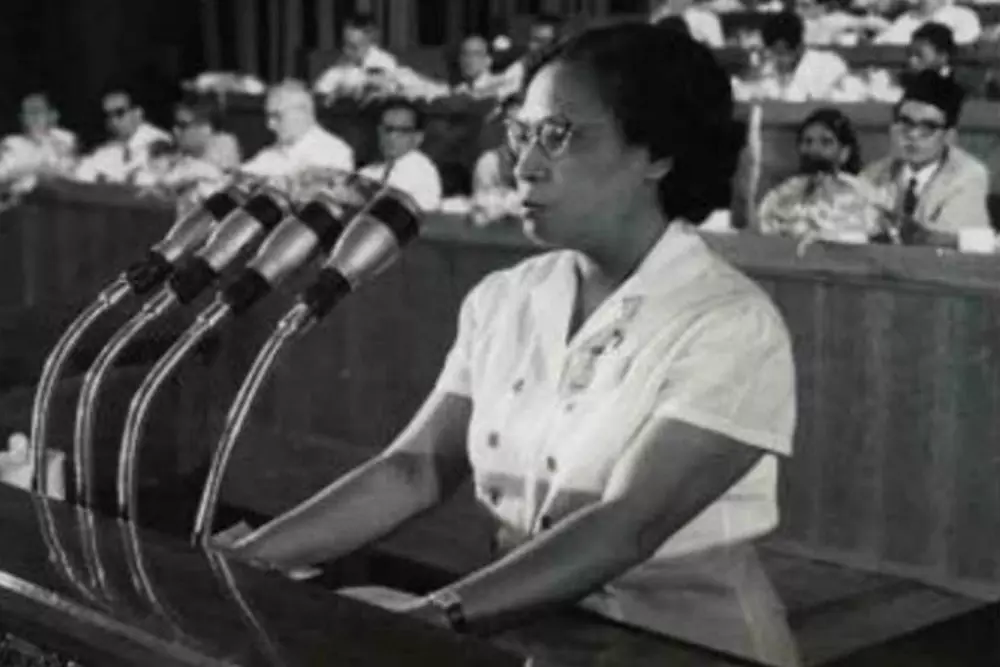
Producers Arya Ibrahim and Gita Fara emphasize that 'Casparina' is more than just a family drama; it is a historical reflection on the political turmoil of 1965, which irrevocably fractured countless families and condemned many to lives in exile. They recount how Francisca Casparina Fanggidaej was representing Indonesia at an international forum in Beijing when her citizenship was revoked. She left behind six children and spent 32 years in exile, first in Beijing and later in the Netherlands, before a eventual family reunion. For Ibrahim and Fara, stories like Casparina's are crucial for understanding Indonesia's historical fabric and national identity. They view Casparina as a 'victim of an era' and believe the film serves as a vital reminder to prevent the recurrence of such historical injustices. Rahadian's previous directorial work, 'On Your Lap,' received critical acclaim at the Busan festival in 2025, securing four Vision awards, including the audience and Fipresci awards. 'Casparina' is currently in its early scriptwriting phase, with the production team actively seeking potential partners, collaborators, film funds, and co-production opportunities at the Busan market.
This film promises to be a powerful exploration of human resilience, the intricate tapestry of family relationships, and the lasting echoes of political events on personal lives. It offers a unique lens through which to view a pivotal moment in history, reminding us of the sacrifices made and the enduring human spirit in the face of adversity. The narrative's focus on reconciliation and understanding across generations underscores the timeless struggle to heal and reconnect after profound separation.
About the author
Stephen King
Prolific author of horror and suspense, who also writes extensively on the craft of writing and pop culture.