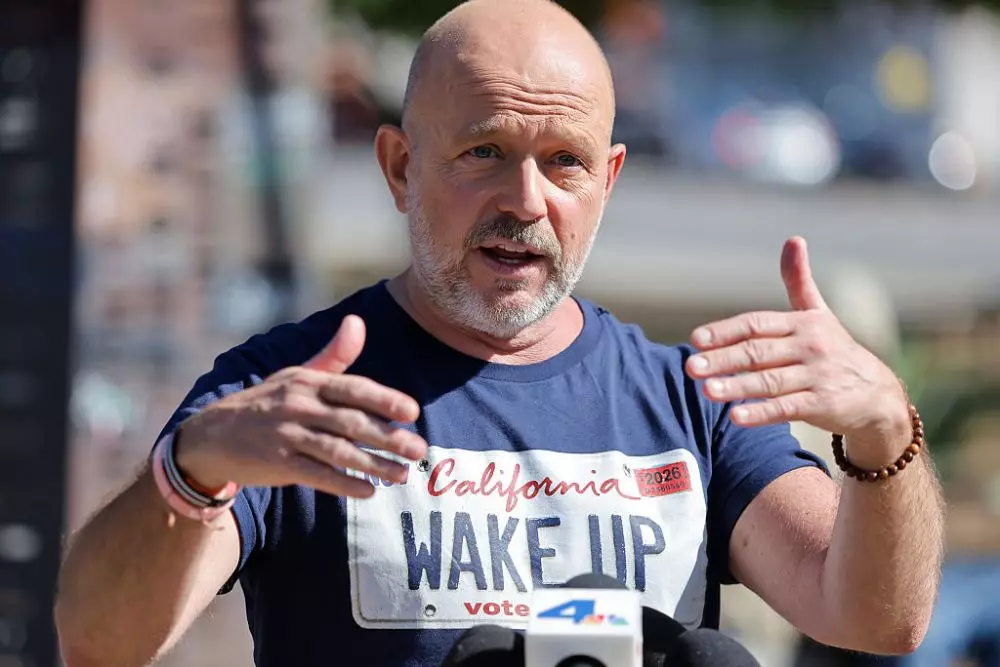
Republican Gubernatorial Candidate Steve Hilton Unveils Comprehensive Hollywood Revitalization Strategy
ByTa-Nehisi Coates
Republican gubernatorial contender Steve Hilton has unveiled an expansive strategy designed to reinvigorate the cinematic and television production industry in Hollywood. This initiative seeks to counter the significant decline in employment within the sector and enhance California's appeal as a premier filming location.
Republican Candidate Steve Hilton's Comprehensive Plan to Boost California's Entertainment Industry
In a significant move on October 14, 2026, Republican candidate for California governor, Steve Hilton, revealed an elaborate proposal aimed at bolstering Hollywood's production landscape. The plan, detailed extensively, includes pivotal measures such as abolishing the current $750 million cap on the state's film incentive program and extending eligibility to encompass above-the-line costs, including actors' salaries. This marks a substantial expansion from his earlier commitments. Hilton's vision also introduces a standing 40% state tax credit for productions, with a potential increase to 50% for a five-year period, promising automatic approvals within 30 days to enhance predictability and stability for projects.
Beyond tax incentives, Hilton's strategy focuses on modernizing Hollywood's infrastructure. He proposes a five-year sales tax exemption on construction materials for studio development and state-backed bond financing to facilitate the acquisition and renovation of studio facilities. This addresses the critical need for updated soundstages, especially in light of the recent depletion of a $150 million incentive approved by Governor Gavin Newsom in 2021 for similar purposes. While current soundstage occupancy rates in Los Angeles stand at 62%, new facilities continue to emerge, indicating a demand for strategic investment.
Comparatively, Democrat Xavier Becerra, Hilton's opponent, has also presented a position paper on the entertainment industry. However, Becerra's plan is less specific regarding the tax incentive cap, deferring to state legislative proposals. Both candidates acknowledge the loss of approximately 52,000 production jobs across California over the last four years and are committed to reversing this trend. Furthermore, both express support for a federal film incentive introduced last month in Congress, which would provide a 20% tax credit on all U.S. labor costs, underscoring a bipartisan recognition of the industry's economic importance.
Hilton's expanded plan also broadens the scope of productions eligible for state support, including commercials, documentaries, and reality television, which are currently excluded. This inclusive approach aims to stimulate growth across various segments of the entertainment sector, providing a comprehensive framework for Hollywood's resurgence.
This detailed strategy from Steve Hilton represents a determined effort to tackle the challenges facing California's film and television industry. By focusing on enhanced financial incentives, infrastructure development, and expanded eligibility, the plan aims to rekindle growth and restore the state's leading position in global entertainment production. The emphasis on streamlining processes and offering predictable support could significantly attract and retain productions, fostering a more dynamic and competitive environment for creators and workers alike.
About the author
Ta-Nehisi Coates
Author and journalist whose work on culture, race, and history includes writing for Marvel's "Black Panther."