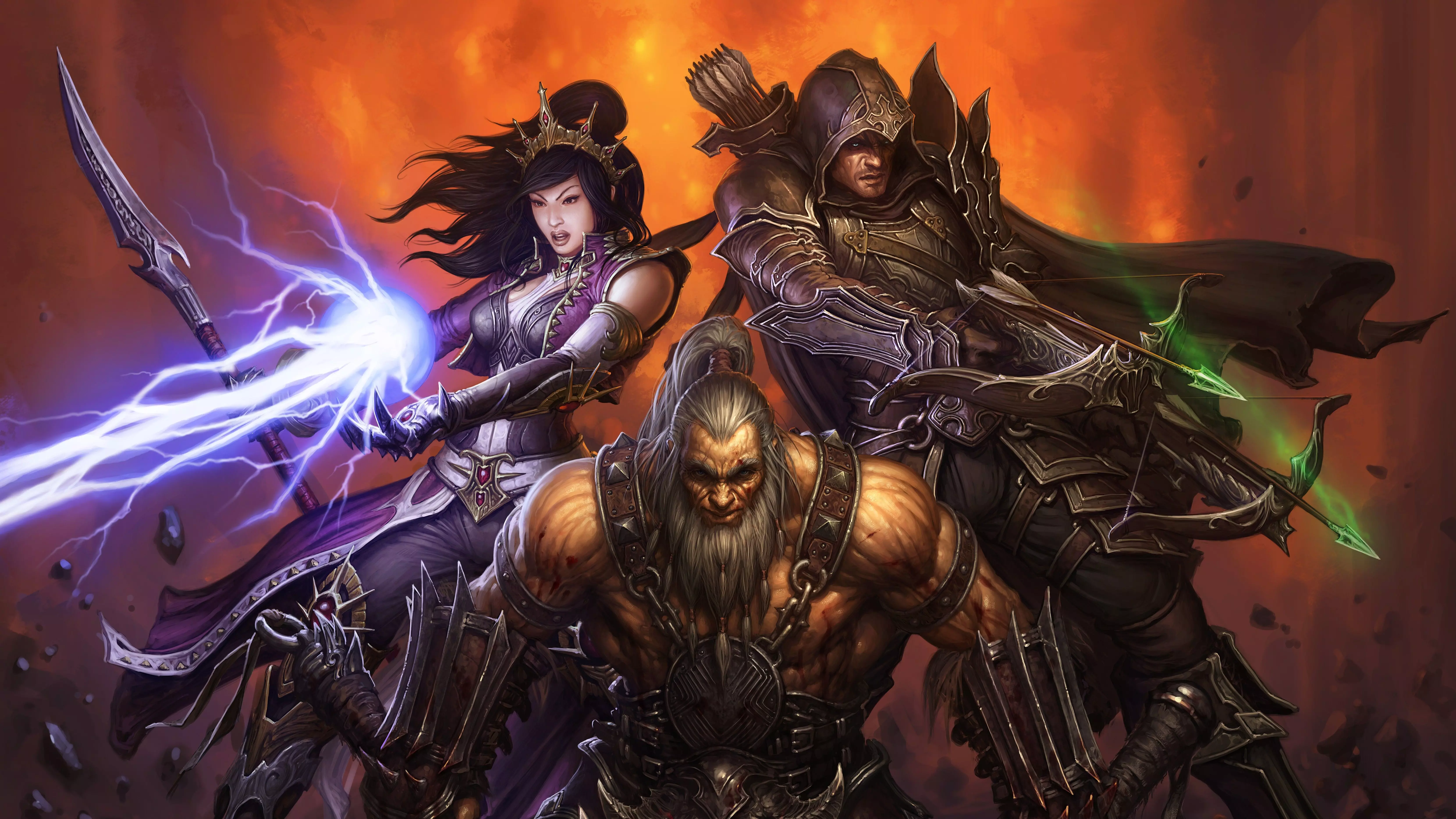
In the expansive universe of Blizzard's dark fantasy action RPGs, a particular title often stands apart in community discussions: Diablo III. While its predecessor, Diablo II, is frequently lauded for its moody atmosphere and unyielding nature, and Diablo IV currently dominates conversations with its contemporary updates, Diablo III occupies a distinctive space. Initially met with skepticism due to its art direction and launch issues, the game has since matured, especially following the significant improvements brought by the Reaper of Souls expansion and robust console adaptations. Despite its rocky start, a dedicated player base continues to enjoy its unique offerings, even as it awaits a broader critical reevaluation.
Diablo III distinguishes itself through an arcade-like immediacy that simplifies its complex statistical systems, offering a more welcoming entry point compared to its series counterparts. The game's combat mechanics are lauded for their refinement, emphasizing tactical positioning and crowd control, with health management built around cooldowns rather than consumable potions. This approach creates a continuously engaging moment-to-moment experience. Furthermore, its character progression and itemization systems, though sometimes seen as unconventional by action-RPG purists, offer remarkable flexibility. Players can freely swap skills and runes, allowing for dynamic adaptation of builds based on acquired gear, which provides a constant sense of novelty and discovery.
Beyond its core gameplay, Diablo III's campaign, while perhaps its weakest narrative element, possesses a certain vibrant, high-fantasy campiness that can be surprisingly entertaining with the right mindset. However, the game truly shines in its Adventure Mode, an endlessly reconfigurable experience that transforms the entire world map into a playground for monster slaying and character advancement through Nephalem Rifts and Bounties. Crucially, the console version of Diablo III excels as one of the finest local co-op games available, supporting up to four players with seamless drop-in/drop-out functionality and an intuitive interface, fostering a natural rhythm of intense combat followed by collaborative loot management.
Diablo III, though sometimes considered less "cool" than its peers, has cultivated a passionate following due to its accessibility, depth, and replayability. Its sustained popularity, even after many years, is a testament to its compelling design and the continuous refinement it received. The game stands as a powerful example of how persistent development and a focus on player experience can transform initial challenges into a celebrated legacy, demonstrating that true quality and enjoyable gameplay ultimately transcend early perceptions and find their enduring place.
About the author
Shigeru Miyamoto
Legendary game designer at Nintendo, creator of Mario, Zelda, and Donkey Kong.