The Profound Impact of Rejection: A Behavioral Economist's Insights
ByGloria Vanderbilt
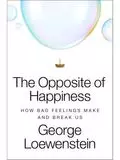
George Loewenstein, a distinguished professor at Carnegie Mellon and a co-founder of behavioral economics, has dedicated his career to understanding the intricate dynamics of human emotions. His extensive research spans topics from curiosity to the complexities of happiness. In his latest work, 'The Opposite of Happiness: How Bad Feelings Make and Break Us,' Loewenstein meticulously examines the emotions we typically shun, focusing particularly on rejection through a comprehensive 'Misery Survey' that gathered individuals' most challenging life experiences. This exploration uncovers the profound and often enduring anguish associated with being cast aside.
Plato's 'Symposium' offers a compelling ancient myth that resonates with modern experiences of rejection. Aristophanes' tale describes primordial beings with 'double natures' who, once split by Zeus, were condemned to a perpetual search for their missing halves. This narrative beautifully illustrates the concept of 'soulmates' and vividly explains the intense pain of separation, akin to a physical tearing. This ancient wisdom finds a parallel in contemporary language, where phrases like 'heartbreak' or 'open wounds' are used to describe emotional trauma, suggesting an intrinsic link between emotional and physical suffering. Yet, paradoxically, while physical pain is often forgotten, the sting of emotional rejection tends to linger indefinitely.
Research on romantic dissolution reveals its profound impact, with over 40% of individuals experiencing post-rejection depression, and 12% reporting severe symptoms. The emotional toll can manifest in ways similar to drug withdrawal, including heightened anxiety, mood disturbances, and changes in appetite. Behavioral psychologist Kip Williams's 'Cyberball' experiments further highlight rejection's primal nature, demonstrating that even exclusion by inanimate computer programs can trigger intense emotional and physiological distress. These studies suggest that social pain is not a reasoned response but an automatic reflex, activating similar brain regions as physical pain. This evolutionary mechanism underscores rejection's role as a potent signal, urging individuals to re-establish social connections and emphasizing the intrinsic human need for belonging.
Moving forward after rejection involves navigating complex decisions: whether to diminish the past relationship to lessen current pain or to preserve positive memories despite the hurt. Anger, a common companion to sorrow in such times, also presents a choice in its direction, often towards a perceived 'other' rather than the former partner, especially if reconciliation is desired. Loewenstein subtly suggests that forgiveness, if possible, can sometimes lead to renewed connections and ultimately, a happier outcome, as evidenced by some survey participants who found their way back to partners after long periods of separation. This demonstrates the resilience of the human spirit and the potential for growth and reconciliation even after profound emotional wounds.
About the author
Gloria Vanderbilt
Fashion designer, artist, and author, known for jeans and writing about style and her extraordinary life.