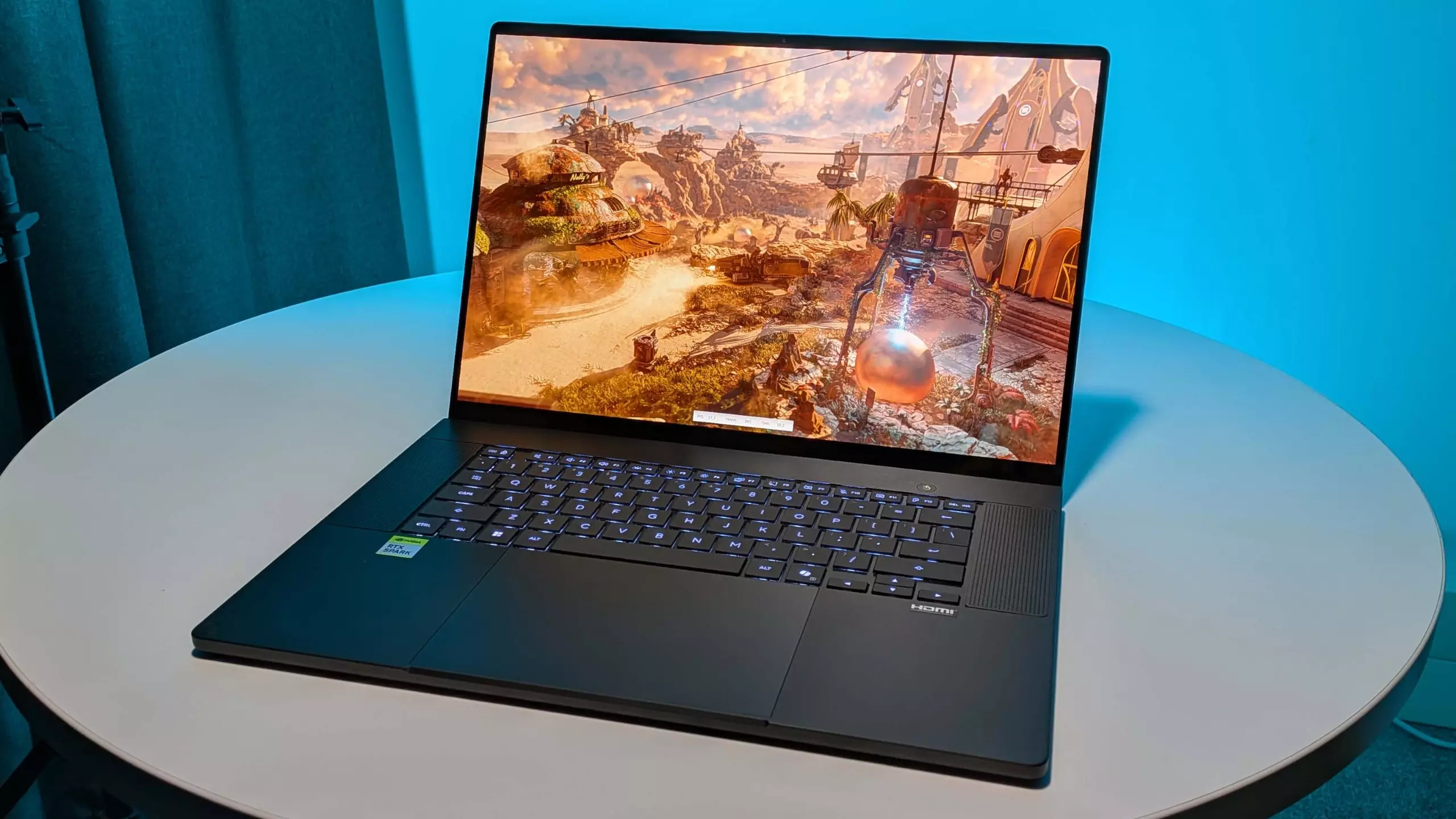
Nvidia's RTX Spark: An Ambitious Hybrid for High-End Computing
ByRichard Garfield
Nvidia's RTX Spark represents a significant stride in integrated silicon, positioning itself as a comprehensive solution for diverse computing needs. This System-on-Chip (SoC) is marketed as the ultimate component for creative professionals, artificial intelligence applications, and high-performance gaming. However, its premium cost and certain constraints, particularly for dedicated PC gaming, suggest it may not be universally appealing to all users. Despite this, the underlying technology offers a compelling glimpse into the potential evolution of personal computing hardware.
The initial evaluations of the RTX Spark-powered Asus ProArt P16 laptop reveal a device that excels in efficiency and overall performance. While it delivers commendable results in graphically demanding tasks and AI workloads, its pricing places it firmly in the high-end market segment. This makes it a formidable option for specialized users who prioritize advanced AI capabilities and creative workflows, where its unified memory architecture truly shines. For mainstream gamers, the value proposition is less clear, given the existence of more affordable gaming laptops that offer comparable or superior gaming performance without the same financial commitment.
The Innovative Architecture of RTX Spark
The Nvidia RTX Spark SoC integrates a powerful Blackwell-based GPU with a multi-core Arm CPU, alongside a substantial amount of unified LPDDR5X memory. This design aims to provide a versatile platform capable of handling intense computational tasks, particularly those involving local AI. The GPU features a configuration similar to the desktop RTX 5070, with 6144 CUDA cores, but operates with a more constrained memory interface and clock speed, impacting raw graphical throughput compared to its desktop counterpart. The Arm CPU component, while utilizing high-performance Cortex-X925 and efficient Cortex-A725 cores, faces challenges in optimizing x86 emulation, which is crucial for broad software compatibility on Windows.
Nvidia’s ambition with the RTX Spark is evident in its all-in-one approach. The integrated architecture, combining the latest GPU technology with advanced Arm processors, is designed to efficiently manage system resources and dynamically allocate memory between the CPU and GPU. This is particularly advantageous for memory-intensive applications like AI processing, where the unified memory architecture (UMA) allows for seamless data access and increased throughput. The SoC’s energy efficiency is a highlight, enabling robust performance even at lower power consumption levels, making it suitable for compact, high-performance laptops. However, the reliance on Arm cores for a predominantly x86 software ecosystem necessitates a robust emulation layer, and any performance overhead in this area could affect the user experience for a wide range of applications, especially older games and specialized software not natively compiled for Arm.
Gaming Performance and Future Prospects
In terms of gaming performance, the RTX Spark demonstrates notable efficiency, delivering frame rates that closely rival those of dedicated gaming laptops equipped with higher-wattage GPUs. For instance, in titles like Metro Exodus Enhanced, the RTX Spark-powered Asus ProArt P16 achieves competitive frame rates while consuming significantly less power. This efficiency extends to battery life during gaming, although prolonged sessions still typically require a power connection. However, the platform encounters limitations with x86 emulation and anti-cheat software, which currently restrict compatibility with certain popular games. Microsoft is actively addressing these issues by enhancing its Prism emulation layer and working with anti-cheat providers to broaden game support.
Despite its current limitations, the RTX Spark represents a fascinating development in personal computing. While its high price point and some software compatibility hurdles may deter the average gamer, its potential for local AI processing and creative workloads is substantial. The platform offers a glimpse into a future where integrated Arm-based systems could challenge the traditional x86 dominance, particularly as AI-driven applications become more prevalent. Continued advancements in emulation, coupled with broader software support, could eventually position the RTX Spark, or similar future iterations, as a truly versatile and compelling option for a wider audience, merging high-performance gaming with advanced computational capabilities in a single, efficient package.
About the author
Richard Garfield
Mathematician and game designer who created "Magic: The Gathering," revolutionizing collectible games.