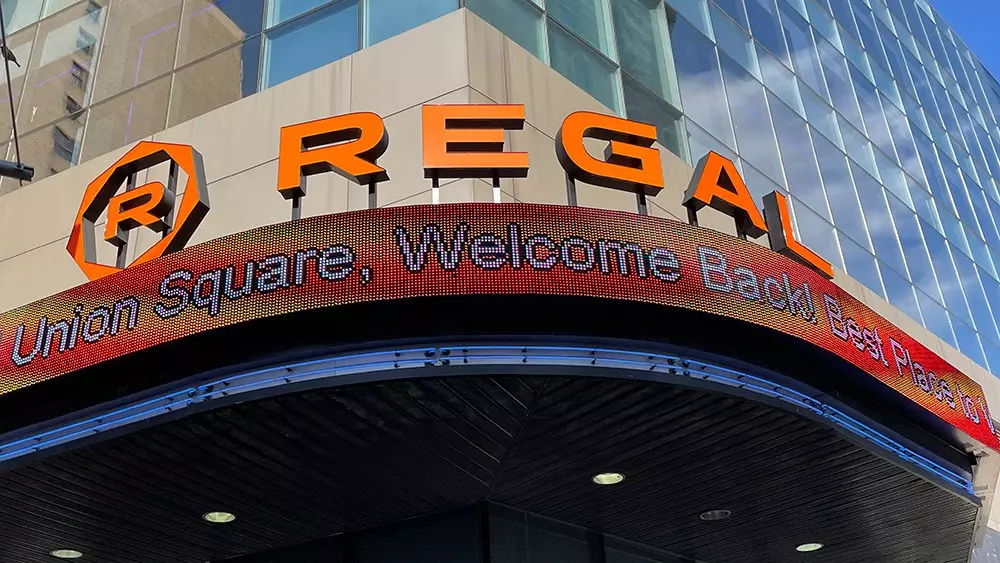
New Initiative to Boost Cinema Attendance Launched by Regal Cinemas, IFTA, and CNC
ByRicky Gervais
This article details a collaborative pilot initiative between Regal Cinemas, the Independent Film & Television Alliance (IFTA), and the CNC, designed to combat the ongoing decline in movie theater attendance. The program, dubbed 'Future of Distribution,' seeks to optimize underutilized cinema screens by introducing a neutral programming strategy focused on maximizing audience engagement. It outlines the operational model, the underlying challenges faced by the film exhibition industry, and the core principles guiding this innovative effort to revitalize the theatrical experience.
Reimagine the Big Screen: Smart Programming, Brighter Future for Cinemas
A Bold New Pilot Project to Counter Declining Cinema Attendance
Regal Cinemas, in partnership with the Independent Film & Television Alliance (IFTA) and the CNC, recently unveiled a groundbreaking initiative known as the 'Future of Distribution' pilot. This program, launched at the prestigious Lumière Summit in Saint-Paul-de-Vence, France, aims to tackle the persistent issue of dwindling movie theater admissions. The core strategy involves entrusting underutilized cinema screens to an independent programmer, whose sole mission is to boost attendance figures.
The "Future of Distribution" Pilot: A Strategic Rollout and Timeline
The implementation phase of this innovative pilot project is scheduled to commence within selected markets during the fourth quarter of the current year. Stakeholders and the public can anticipate an initial report detailing the findings and progress of the program in the first half of 2027. This structured rollout allows for careful observation and analysis of the initiative's impact on audience engagement and theater viability.
Empowering Neutral Programmers: A Fresh Approach to Content Curation
The operational framework of this model allows participating cinemas to allocate a specific number of their idle screens and available time slots to a neutral programming entity. This programmer operates with complete autonomy, free from the conventional constraints of studio affiliations or specific circuit priorities. Their mandate is clear: to curate a diverse and compelling line-up of content—ranging from major blockbusters and niche documentaries to classic repertory films and unique special events—all with the singular objective of attracting the largest possible audience.
Addressing the Industry's Critical Challenge: A New Perspective on Audience Engagement
The current state of the theatrical exhibition industry highlights an urgent need for intervention. In 2025, North American cinema admissions stood at approximately 770 million, representing a significant 37% decrease compared to 2019 levels. Despite this sharp decline in viewership, the total number of cinema screens has remained relatively stable. Consequently, the average occupancy rate across the sector hovers between a mere 11% and 15%. This pilot project reframes the problem not as a lack of audience interest, but rather as a misalignment between available films, suitable venues, and optimal showtimes.
Guiding Principles for a Collaborative and Independent Initiative
The pilot program is built upon five fundamental principles designed to ensure its integrity and effectiveness. Firstly, participation from cinema venues is entirely voluntary. Secondly, existing film release windows and scheduling agreements will be strictly maintained. Thirdly, the oversight structure for the initiative will be entirely independent and operate for a predefined duration. Fourthly, the program will exclusively utilize screen capacity that would otherwise remain unused. Finally, all participating venues will receive comprehensive results from the pilot, fostering a collective learning environment for the entire industry.
Unlocking the Potential of Programming Innovation: The Path to Increased Admissions
The ultimate objective of this pilot is to ascertain whether strategic programming innovations, implemented independently of new film productions, additional screens, or external subsidies, can generate a measurable increase in cinema admissions. Furthermore, the initiative seeks to achieve this growth without causing any disruption to the established distribution arrangements currently in place. This experiment aims to prove that smarter content curation alone can be a powerful catalyst for revitalizing the movie-going experience.
About the author
Ricky Gervais
Comedian, writer, and actor who created "The Office" and writes provocatively on comedy and society.