MicroStrategy's strategic acquisition of Bitcoin has played a pivotal role in cushioning the cryptocurrency market during recent downturns. This report delves into how the company's sustained buying activity has served as a critical balancing mechanism, preventing deeper price depreciation amidst various market pressures.
MicroStrategy: The Unsung Hero Stabilizing Bitcoin's Volatile Ride
Bitcoin's Resilience in a Shaky Market: A Closer Look at Recent Trends
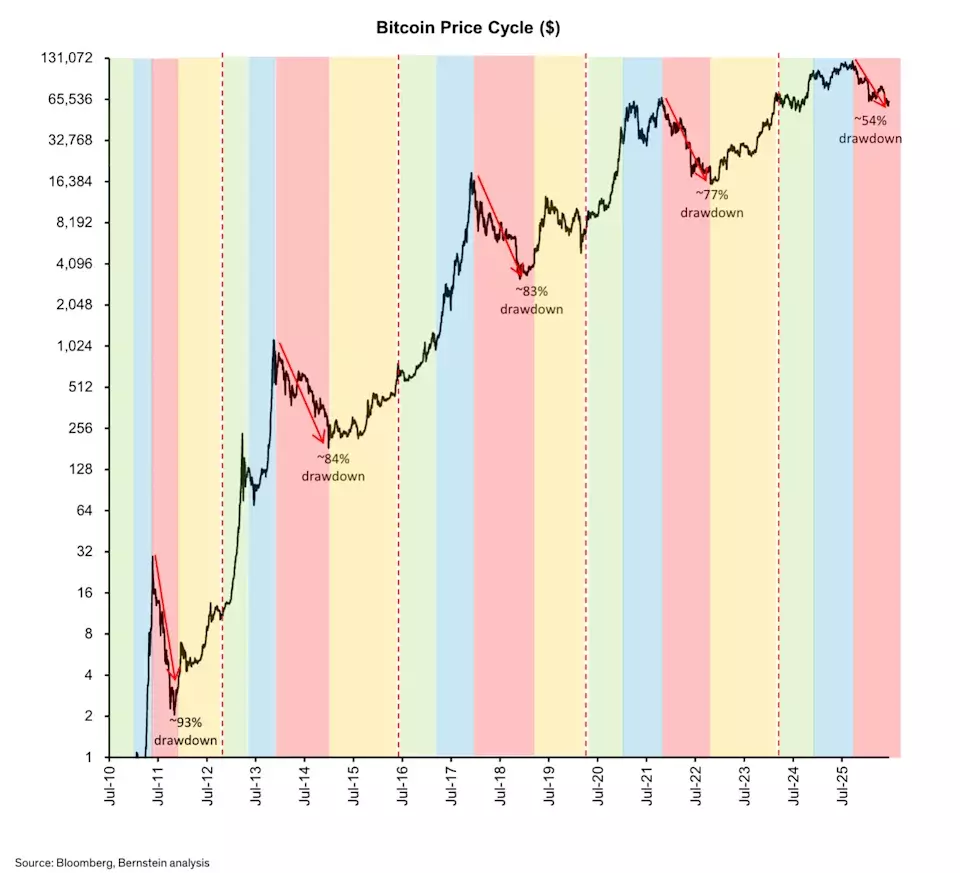
While the past year has presented significant hurdles for Bitcoin, its market performance has shown greater stability when compared to earlier periods of severe decline in the cryptocurrency space. Analysts from Bernstein highlight that this enhanced resilience can be attributed, in large part, to the continuous buying efforts of MicroStrategy.
MicroStrategy's Role as a Market Stabilizer: Counteracting Sell-Offs
MicroStrategy, a prominent digital asset treasury firm, has been identified as a key factor in mitigating a more pronounced Bitcoin sell-off. Analyst Gautam Chhugani noted that the company's consistent accumulation of Bitcoin acts as a "net buyer," providing essential support to the market during periods of instability. This strategic approach has been instrumental in tempering the overall market depreciation.
Bitcoin's Valuation and Historical Performance: A Comparison to Previous Downturns
Currently, Bitcoin is trading around $62,000, representing a significant drop of approximately 54% from its peak of $125,000 recorded in October. However, experts suggest that despite this decline, the current crypto bear market has been considerably less severe than previous cycles, indicating a potential strengthening of market foundations.
The Impact of Institutional Inflows and Outflows on Bitcoin's Trajectory
In 2026, Bitcoin inflows from major treasury companies and exchange-traded funds (ETFs) reached $10 billion, a notable decrease from the $60 billion observed the previous year. Despite a substantial $5.5 billion in withdrawals from spot ETFs this year, corporate treasury purchases, particularly from MicroStrategy, have managed to maintain positive net market inflows, underscoring their vital role.
MicroStrategy's Unwavering Commitment: A Pillar of Strength for Bitcoin
The analysts further elaborated that MicroStrategy's ongoing Bitcoin acquisitions have acted as a crucial counterweight in the market. This consistent buying behavior has helped offset selling pressure from leading U.S. Bitcoin miners, who have increasingly shifted their focus towards artificial intelligence data centers. MicroStrategy, transitioning from a software entity in 2020 to a dominant digital asset treasury, now holds over 843,700 tokens, accounting for roughly 4% of Bitcoin's total circulating supply.
External Pressures: ETF Outflows, AI Investments, and Federal Reserve Policy
Investor confidence has also been affected by outflows from spot ETFs and a growing preference for AI-related investments, both of which have impacted Bitcoin's performance this year. Additionally, Bitcoin's price has shown considerable sensitivity to the Federal Reserve's interest rate policies. Recent weeks have seen increased concerns about a potential rate hike later in the year, which contributed to Bitcoin's 20% plunge in June—its most significant monthly decline in four years.
About the author
Chika Uwazie
Fictional representative of African fintech entrepreneurs and authors writing about money management in emerging economies.