Maia Ruth Lee's 'Double Vision' Explores Migration and Identity Through Art
ByMiuccia Prada
Maia Ruth Lee's latest exhibition, "Double Vision," is a profound exploration of migration and identity, transforming personal experiences into a compelling artistic narrative. Lee, an artist whose journey spans multiple continents and cultures, draws inspiration from the seemingly ordinary yet deeply symbolic imagery of luggage. Her work weaves together themes of movement, memory, and the evolving concept of home, inviting viewers to contemplate the complexities of diasporic life.
Artist Maia Ruth Lee's "Double Vision" Exhibition Unveils a Multilayered Exploration of Migration and Identity at Tina Kim Gallery
In 2013, during a visit to her parents in Nepal, artist Maia Ruth Lee was struck by the sight of vividly wrapped luggage at the Kathmandu airport. These bundles, often belonging to migrant workers returning home, sparked her renowned "Bondage Baggage" series. What began as a photographic endeavor evolved into a multidisciplinary artistic practice, encompassing sculptures, paintings, and installations that symbolize displacement, labor, and resilience.
Lee's nomadic upbringing, born in Busan, South Korea, and having lived in Singapore, Papua New Guinea, and Nepal due to her parents' work as Bible translators, profoundly influenced her perspective. Her relocation to New York City and later to San Francisco further broadened her understanding of global mobility. This personal history underpins her artistic exploration, which she now complements with academic pursuit, undertaking a master's degree in migration studies at the University of San Francisco.
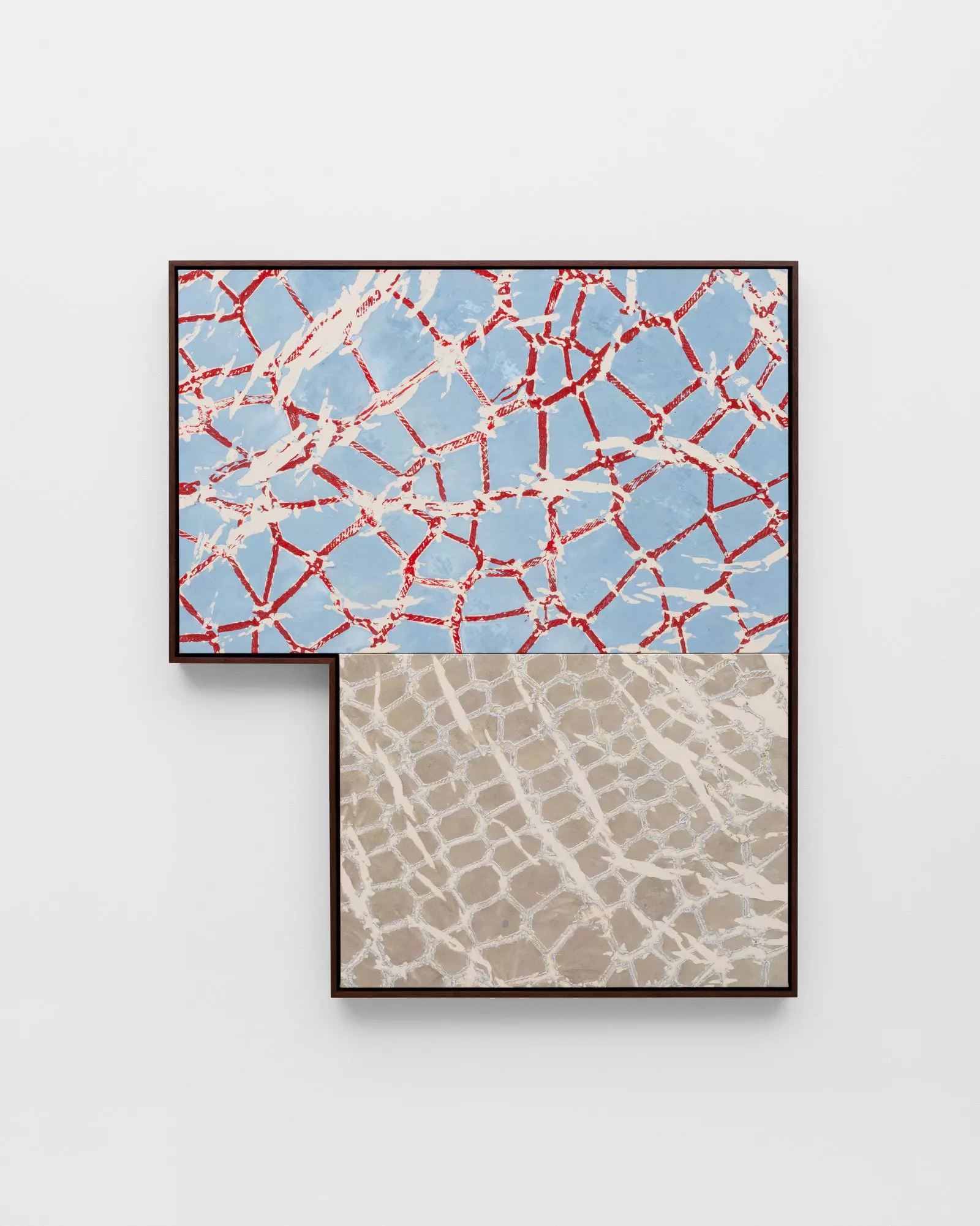
The "Double Vision" exhibition, on display at Tina Kim Gallery in Chelsea from September 10 to October 24, 2026, showcases Lee's extensive experimentation. Her pieces include intricate sculptures crafted from tarps and ropes, transformed into paintings through a unique ink-coating process that reveals tie-dye-like prints. The exhibition also features soft towers of expandable duffel bags, which Lee aptly notes are called "migrant bags" in Korea, and latex molds derived from her earlier works. These pieces collectively explore the mutability of perception and the cyclical nature of her artistic process, as she continually reinterprets and recycles ideas. Additionally, the exhibition features a film comprising candid family footage from Nepal and Korea (1990-1998) and a series of 15 welded scrap metal glyphs, symbols from her self-devised lexicon that will also be featured in the Queens Museum's Large Wall Commission next spring.
Gallerist Tina Kim, who discovered Lee's work at the 2019 Whitney Biennial, praises her unique process for imbuing each artwork with "a sense of care and tenderness." Lee's recent academic venture into migration studies has further enriched her art, providing theoretical frameworks for her explorations of diasporic experiences. The artist emphasizes that migration is a pervasive and urgent topic, particularly in light of contemporary global events.
A poignant element of the exhibition is Lee's "Luggage Installation," featuring towers of stacked bags adorned with yellow keychains bearing the phrase "I Am Expandable." These keychains, common to such bags, become powerful metaphors in Lee's hands. The bags are printed with stills from her family's home movies, and their expandable nature symbolizes the selective revelation of one's identity in the migratory journey: "You show what you want to show."
Lee's practice extends beyond personal narrative, incorporating a strong sense of community and collaboration. She has taught art, serves on the board of Artists & Mothers, and led an embroidery workshop in Los Angeles. While not overtly religious, Lee views her artistic endeavors as a form of translation, akin to her parents' work with language. Her art continually reinterprets core ideas, manifesting in diverse forms while remaining interconnected within a shared conceptual world.
Even amidst the devastating floods in Nepal during the exhibition's installation, Lee chose to proceed, recognizing the profound relevance of her work on home, loss, and resilience. Her art, deeply rooted in her biography and family history in Nepal, transcends its physical location to explore how these experiences shape one's perception and understanding. It translates the "in-betweenness" of constant movement, highlighting the liminal spaces that define human existence.
About the author
Miuccia Prada
Head of the Prada fashion house and intellectual designer known for defining modern minimalist and innovative fashion.