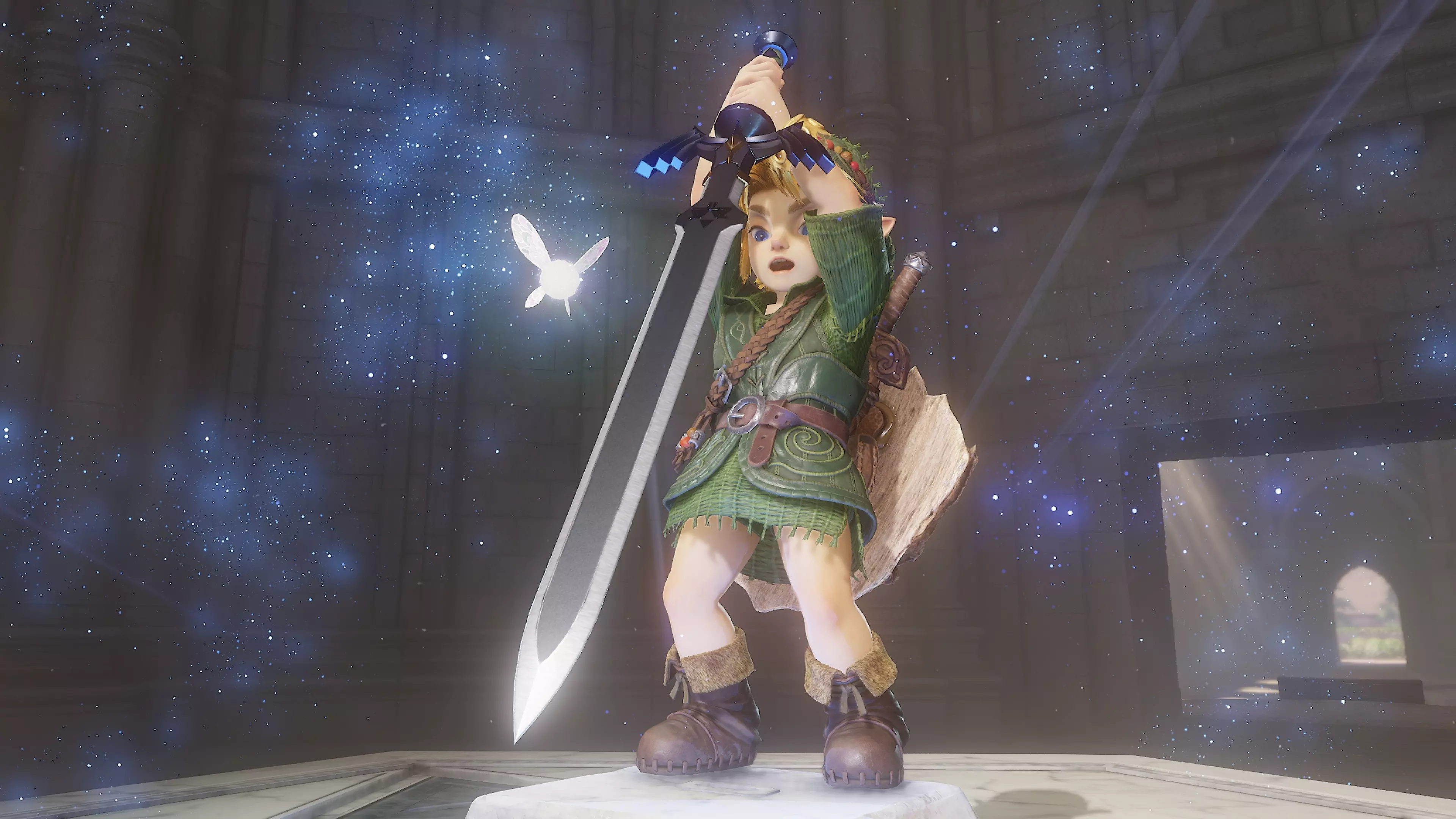
The Legend of Zelda: Ocarina of Time Remake Overhauls Notorious Water Temple
BySid Meier
The highly anticipated remake of "The Legend of Zelda: Ocarina of Time" is poised to transform one of the original game's most challenging and often criticized sections, the Water Temple, promising a fresh and more engaging experience for both veteran players and newcomers.
A Classic Reimagined: Taming the Infamous Water Temple
Addressing a Lingering Challenge: The Water Temple's Notoriety
For decades, "The Legend of Zelda: Ocarina of Time" has been lauded as a masterpiece in video game history. Yet, even in its esteemed legacy, one element consistently drew widespread complaints: the Water Temple. Developers behind the upcoming remake have clearly taken note of this pervasive sentiment, indicating a deliberate effort to rectify its perceived shortcomings.
Insights from the Creators: Aonuma's Perspective
During a segment of Nintendo's "Ask the Developer" series, long-time Zelda producer Eiji Aonuma, who originally designed the dungeons for the game, openly acknowledged the Water Temple's problematic reputation. He lightheartedly admitted that he had "overdue homework" regarding the temple, recognizing its difficulty and confirming that the remake team has implemented adjustments to address these issues.
Unpacking the Frustrations: Why the Water Temple Was Disliked
The original Water Temple was notorious for several reasons. Players often struggled with the slow movement underwater, coupled with a bewildering layout. A significant source of frustration was the constant need to access menus to equip and unequip the Iron Boots, which were essential for sinking. This repetitive action frequently disrupted immersion and led to players feeling disoriented within the labyrinthine environment.
The Vision Behind the Design: Aonuma's Original Intent
Aonuma elaborated on his initial creative impulse for the Water Temple, explaining his desire to craft an environment where merely being submerged was an enjoyable experience. At a time when 3D games rarely ventured underwater, he aimed to replicate the unique sensations of freediving—the altered sounds and the feeling of entering a distinct space. His goal was to translate these sensory experiences into the game.
Acknowledging Flaws and Implementing Solutions: Developer's Adjustments
However, Aonuma conceded that the temple's intricate architecture combined with the frequent item-swapping created an overly cumbersome experience. He acknowledged that the constant menu navigation made it difficult for players to maintain their bearings. To remedy this, game director HokWai Ng detailed specific improvements in the remake, such as streamlining item toggling through the d-pad. Furthermore, problematic walls that obscured visibility have been replaced with lattice-style structures, allowing players to glimpse adjacent rooms and better comprehend the overall spatial arrangement.
Fostering Intergenerational Dialogue: A New Experience
The developers expressed their hope that these changes will spark conversations between different generations of players, contrasting their experiences with the original and the remake. Ng playfully suggested a scenario where a child playing the new version might remark on its ease, potentially causing an older parent, who struggled with the original, to feel a bit deflated. Early previews of the remake have been highly positive, and players won't have to wait long to experience the revamped Water Temple, as the game is set to release on November 5th, exclusively for Nintendo Switch 2.
About the author
Sid Meier
Pioneering game designer known for the "Civilization" series and his philosophy on game design.