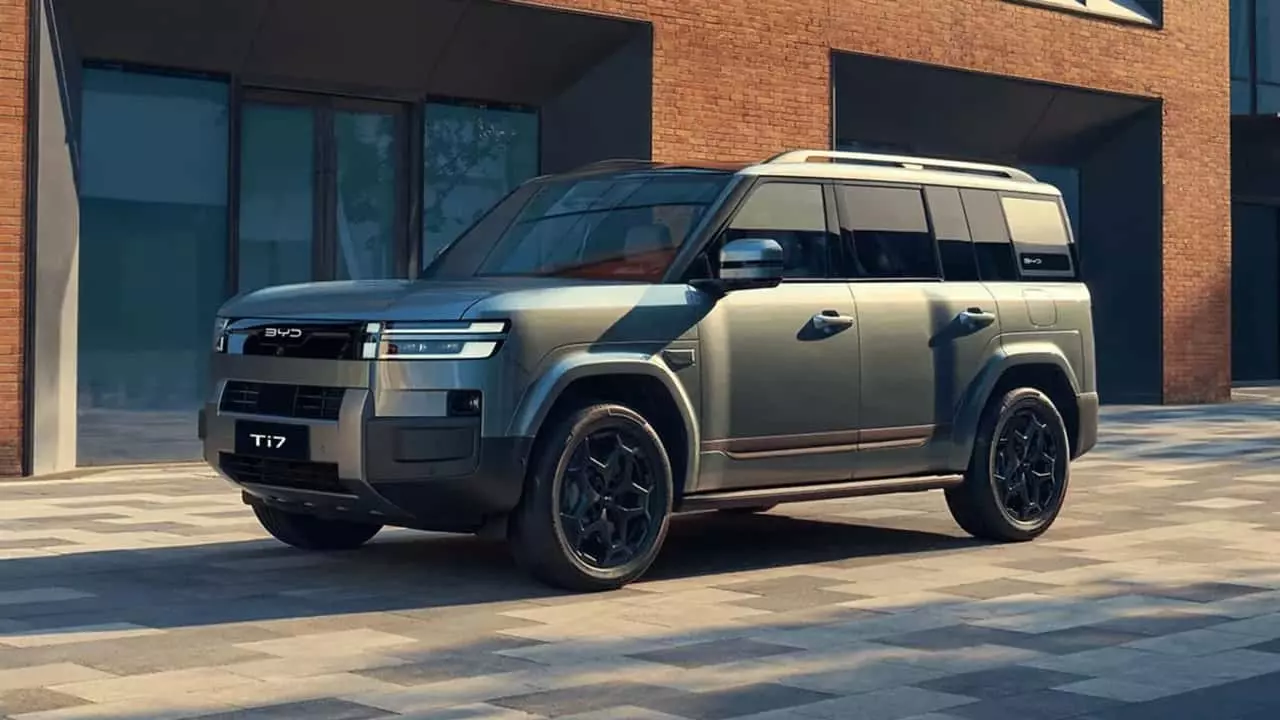
Land Rover Initiates Legal Action Against BYD Over Alleged Defender Copying
BySimona De Silvestro
Jaguar Land Rover (JLR) has reportedly initiated legal proceedings against Chinese automaker BYD, alleging that BYD copied elements of its iconic Defender model. This legal confrontation underscores the increasing tensions surrounding intellectual property in the rapidly evolving global automotive landscape, especially as Chinese brands expand their international presence.
JLR Sues BYD Over Alleged Defender Imitation and Technology Reverse-Engineering
JLR's Response to Alleged Copying and Initial Legal Moves
Jaguar Land Rover has initiated legal action against Chinese automotive giant BYD, alleging that BYD reverse-engineered its Defender model. This follows reports suggesting that BYD's Ti7 SUV bears a striking resemblance to the Defender. JLR, known for its iconic designs, is not taking kindly to what it perceives as an unauthorized appropriation of its intellectual property. The dispute has already seen court-ordered bailiffs seize digital records from BYD's Netherlands offices, indicating the seriousness of JLR's allegations and its proactive approach to protecting its brand.
The Legal Battle: Seizure of Records and Upcoming Court Decision
Reports from prominent media outlets reveal that the raid on BYD's European premises occurred in August. JLR suspects that BYD technicians disassembled a Defender to analyze and replicate its technology for the development of the Ti7, a seven-seat plug-in hybrid SUV. While BYD's legal team has dismissed the seizures as a “fishing expedition” and argued against the extent of the data confiscation, JLR's legal advisors contend that BYD has obstructed the legal process. The case is now proceeding to court in The Hague, with a preliminary ruling anticipated in November, which will determine whether BYD must answer to the intellectual property infringement claims. Both companies have refrained from commenting publicly on the ongoing legal proceedings.
Comparing the BYD Ti7 and Land Rover Defender: Design and Market Positioning
The core of this legal dispute revolves around the BYD Ti7, which has been available in China as the Fangchengbao Ti7 since September 2025. Its robust, angular design has frequently drawn comparisons to the Land Rover Defender, with some critics even labeling it a direct imitation. However, JLR's case extends beyond mere aesthetic similarities, focusing on the alleged reverse-engineering of the Defender's underlying technology. The Ti7 is slated for a UK launch in January, with an attractive starting price significantly lower than that of the seven-seat Defender 110, offering consumers a similarly sized but more affordable alternative, despite differences in powertrains and engineering.
JLR's History with Copycat Allegations and Its Strategic Approach to the Chinese Market
This is not JLR's first encounter with intellectual property disputes concerning Chinese automakers. In 2019, the British manufacturer successfully concluded a three-year legal battle against Jiangling Motor Corporation over a vehicle accused of copying the Range Rover Evoque. This history underscores JLR's firm stance on defending its designs and technologies. However, JLR has also pursued collaborative strategies in China, exemplified by its long-standing joint venture with Chery, which recently led to the revival of the Freelander name as an electric vehicle brand. This dual approach reflects the complexities of operating within the Chinese automotive market, balancing protection of proprietary assets with strategic partnerships.
The Broader Challenge: Chinese Competition and JLR's Brand Protection Efforts
The competitive landscape for established automakers is rapidly changing, with Chinese manufacturers like BYD expanding their reach into international markets, particularly in Europe. These brands are often characterized by their advanced technology and aggressive pricing strategies, posing a significant challenge to traditional industry players. For JLR, the Defender represents more than just a vehicle; it is a critical pillar of the company's heritage and commercial success. The ongoing legal action against BYD signifies JLR's resolve to safeguard its valuable intellectual property and market position against the encroachment of Chinese rivals, demonstrating its commitment to defending its brand's integrity in a fiercely competitive global arena.
About the author
Simona De Silvestro
Professional racing driver who provides expert insight into performance and vehicle dynamics from a driver's perspective.