Korean Animated Feature 'Long Long Night' Explores Grief and Connection Through a Rhino's Journey
ByMindy Kaling
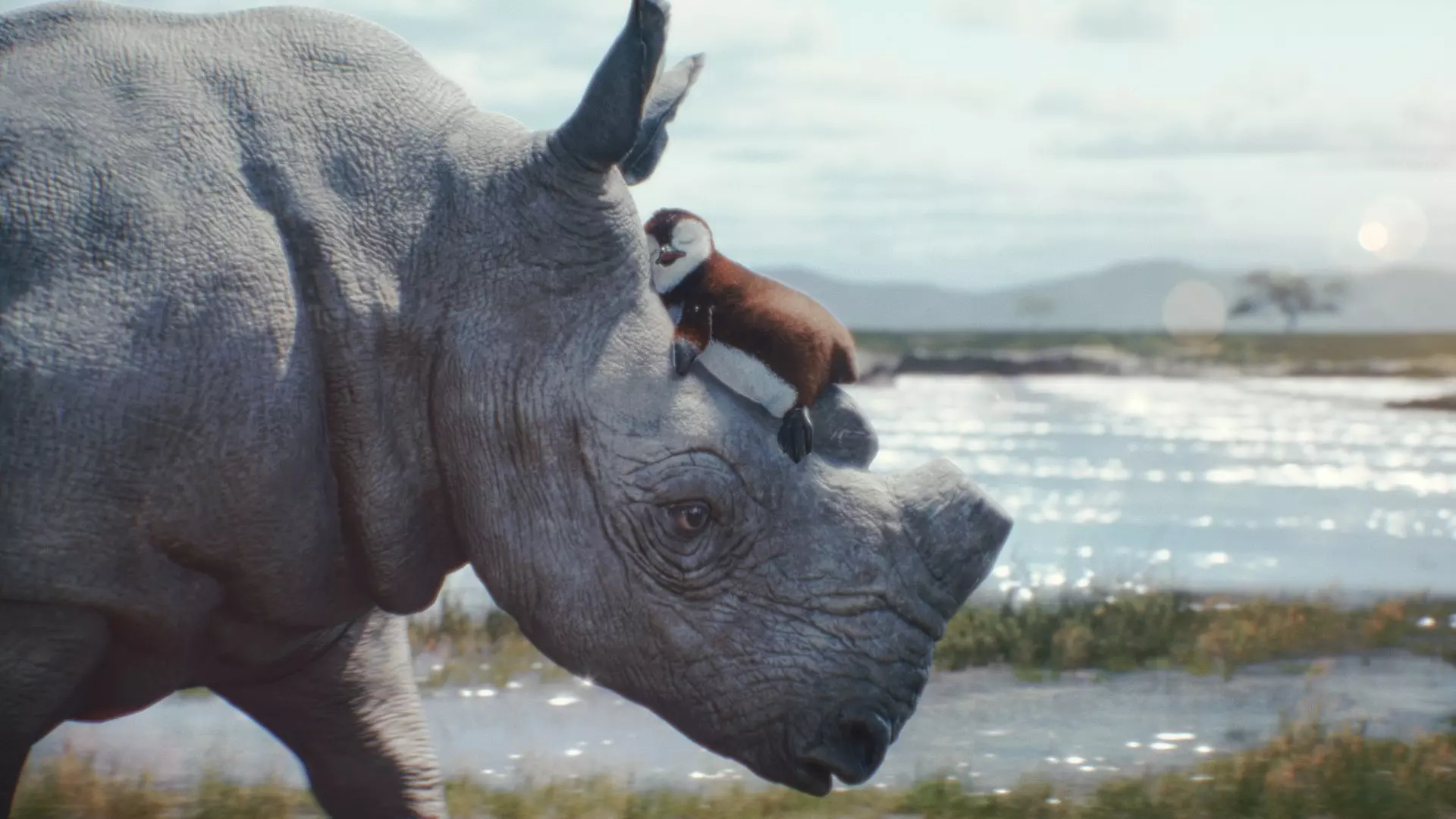
Youm Kyu-bock's inaugural animated feature, 'Long Long Night,' boldly deviates from typical children's storytelling by delving into profound themes such as the inevitability of solitude, the sorrow of losing loved ones, and the universe's indifference. Drawing inspiration from a highly popular children's book, the film centers on Norden, a rhinoceros who, after enduring personal tragedies, forms an unlikely bond with a baby penguin. The director provides insights into the film's delicate handling of somber topics, its underlying environmental advocacy, and his distinctive animation aesthetic, underscoring the transformative power of affection and companionship amidst life's challenges.
The film, rendered in stunning 3D using Unreal Engine, brings Norden's weathered appearance and the expansive African landscapes to life with remarkable detail. Yet, Youm deliberately softens this realism with carefully chosen lighting and color, imbuing the animals' experiences in their natural habitat with the charm and wonder of a storybook illustration. This artistic choice allows the film to explore its weighty themes without becoming overtly grim, maintaining a balance between the harsh realities depicted and the tender emotional core of the narrative.
Youm Kyu-bock's journey to feature film directing is notable, spanning two decades in commercial production for major brands like Samsung, BMW, and Canon. A Kookmin University visual design graduate, he previously worked as a producer at AlphaVille 44 and a director at Elvis Production before founding GoogGoog Studio. This studio, initially focused on advertising and branded content, has now successfully ventured into original feature films, with 'Long Long Night' being its pioneering effort. The creation of 'Long Long Night' was a significant endeavor, especially for an independent animated feature in South Korea, given the approximately 5 billion won ($3.7 million) budget. The production, which lasted four and a half years, faced an 18-month hiatus due to funding shortages. The animation team fluctuated, typically comprising about 60 artists, and expanding to approximately 120 during peak production phases.
'Long Long Night' made its global debut at the Toronto International Film Festival in September, marking it as the first Korean animated feature to be presented at TIFF since Yeon Sang-ho's 'The Fake' in 2013. Following this, it was featured in competition at the Busan International Film Festival in October, where it garnered acclaim for its intricate narrative and the artistic quality of its animation. Produced by GoogGoog Studio and Studio Eon, with presentation by The Contents On, the film's global sales are managed by Seoul-based Finecut. The English-dubbed version is scheduled for its market premiere at AFM on November 11.
The director found deep resonance with Ru Ri's original book, particularly drawn to the profound emotional connection between Norden the rhino and the infant penguin, as well as the compelling road-movie structure. He was especially moved by the scene depicting Norden and the penguin traversing the unforgiving desert, feeling an undeniable urge to translate this powerful imagery to the big screen. For Youm, the narrative of Norden nurturing the baby penguin and finding healing from his own profound losses resonated deeply, observing the penguin's journey to independence fostered by this love. This journey, he noted, felt like witnessing the unfolding of life itself, leading to an overwhelming emotional response when Norden ultimately releases the penguin into the ocean. The captivating African backdrop further solidified his conviction to adapt the story into a film.
The movie delicately approaches sensitive subjects such as loss, human cruelty, and mortality, themes inherent in the acclaimed source material that has sold over 800,000 copies in South Korea. The director consciously decided to maintain the book's poignant and melancholic essence, ensuring the film never descends into gruesome or shocking territory. For intense sequences like poaching, the film relies on suggestive sound design and atmospheric lighting rather than explicit visuals. Deaths of supporting characters are largely implied, often by framing scenes from a distance to allow the audience to infer events through context. This approach acknowledges the film's departure from conventional, idyllic children's animation, a deliberate choice by the filmmakers.
In the film's worldview, the universe is portrayed as a harsh and detached place where existence is fragile and often devoid of inherent meaning. Yet, the central message conveyed is that meaning can be forged through the capacity to love and protect another. The director hopes that young audiences will internalize this profound idea: even when feeling insignificant, the mere act of existence is a source of immense joy and value to someone.
About the author
Mindy Kaling
Actress, writer, producer, and author of humorous essays on Hollywood and life.