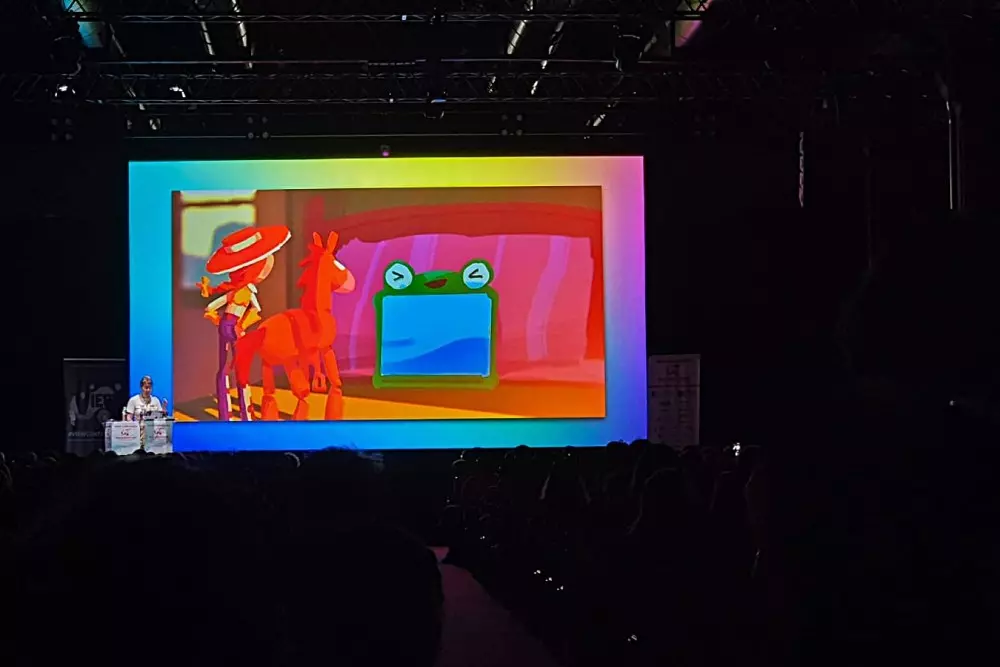
Kenna Harris Transforms Jessie from Superfan to Pixar Co-Director for 'Toy Story 5'
ByChimamanda Ngozi Adichie
Kenna Harris, the co-director of Pixar's upcoming film 'Toy Story 5,' has opened up about her remarkable journey from being a passionate fan of the character Jessie to becoming a key creative force behind the latest installment. Her path involved not only co-directing but also co-writing the screenplay, a challenging endeavor that required a pivotal two-week rewrite to redefine the narrative's emotional foundation and elevate Jessie's role. This intensive period of re-evaluation and revision was crucial in shaping the sequel into the compelling story it aims to be, addressing initial concerns about the film's impact and deepening its thematic resonance.
Harris's experience highlights the collaborative and iterative nature of filmmaking at Pixar, particularly when dealing with a beloved franchise like 'Toy Story.' Her personal connection to Jessie, cultivated since childhood through fan art and imaginative play, provided a unique perspective that ultimately influenced the character's expanded narrative arc. The willingness to take creative risks, such as advocating for a romantic moment between Jessie and Buzz and grounding the story in Bonnie's loneliness, demonstrates Harris's commitment to pushing emotional boundaries and delivering a fresh yet authentic continuation of the saga. This deep personal investment and bold creative leadership were instrumental in navigating the complexities of production and ensuring that 'Toy Story 5' not only honors its legacy but also carves out its own distinct and meaningful place within the series.
From Childhood Fan to Pixar Filmmaker: Kenna Harris's Creative Ascent
Kenna Harris, co-director of Pixar's highly anticipated 'Toy Story 5,' transitioned from a dedicated admirer of the character Jessie to a central figure in the film's creation. Her early fascination with Jessie from 'Toy Story 2,' which included meticulously sketching the cowgirl and imagining new scenarios for her, laid the groundwork for her eventual career. This deep personal connection to the franchise not only fueled her artistic aspirations but also provided a unique lens through which to approach the sequel, influencing her creative decisions and her commitment to Jessie's character development. The decision to embrace risks, like advocating for Jessie and Buzz's on-screen kiss, further underscored her dedication to bringing fresh and impactful elements to the narrative.
Harris's journey into the world of Pixar filmmaking involved significant personal and professional growth. After contributing to projects like 'Luca,' 'Ciao Alberto,' and 'Inside Out 2,' she took on the demanding role of co-director for 'Toy Story 5' alongside Andrew Stanton. This opportunity led her to also co-write the screenplay, a challenge she accepted despite her inexperience in feature film writing. Her audacious approach to storytelling, including the successful push for a more prominent and emotionally rich role for Jessie, highlights her influence. She steered the animation team towards a more expressive and less rigidly realistic visual style for imagination sequences, a process affectionately dubbed “playtime weeklies,” reflecting her desire to infuse the film with a sense of spontaneity and artistic freedom.
Overcoming Narrative Challenges: The Two-Week Rewrite that Redefined 'Toy Story 5'
The production of 'Toy Story 5' encountered a significant hurdle when early story versions failed to deliver a compelling emotional journey, prompting a critical two-week production halt. Kenna Harris and director Andrew Stanton dedicated this period to an intensive rewrite, transforming the narrative's core. Initially, the story focused on Jessie's efforts to regain playtime with Bonnie, but audience feedback indicated that these stakes felt insufficient. The breakthrough came with the decision to center the plot around Bonnie's loneliness, allowing Jessie to embark on a quest to help the shy girl forge a genuine friendship, thereby deepening the emotional resonance and providing a more powerful motivation for the characters.
This decisive rewrite proved to be a pivotal moment for the film, elevating its quality and impact. By shifting the focus to Bonnie's emotional needs, the filmmakers were able to weave a more profound and relatable narrative. The character of Blaze, initially a minor figure, gained crucial importance as a catalyst for Bonnie's new friendship, becoming integral to the adventure. Harris also addressed earlier attempts to resolve Jessie's past pain, such as a planned reunion with an elderly Emily, opting instead for a more subtle and impactful climax involving a time capsule at the tire-swing tree from 'Toy Story 2.' This nuanced approach ensured that Jessie's character arc felt earned and deeply integrated into the film's overarching themes, demonstrating how creative adaptability and a willingness to overhaul an entire act can transform a promising concept into a truly moving cinematic experience.
About the author
Chimamanda Ngozi Adichie
Acclaimed novelist ("Americanah") whose essays and talks offer sharp critiques of culture and feminism.