JSAUX 6-in-1 Dock for Switch 2: A Comprehensive Review
ByShigeru Miyamoto
The JSAUX 6-in-1 Dock for the Nintendo Switch 2 emerges as a visually appealing and compact solution for gamers on the go, aiming to consolidate multiple functionalities into one device. Its sleek, unbranded exterior and intuitive display offer a minimalist aesthetic that is immediately striking. Designed to facilitate TV mode, charge up to four Joy-Cons, and accommodate a Pro Controller, the dock also boasts a foldable form factor ideal for travel. However, beneath its attractive facade lie several functional compromises that significantly impact its utility, preventing it from truly serving as a comprehensive replacement for official Nintendo peripherals. The review delves into both its commendable design elements and the critical operational flaws that users should consider.
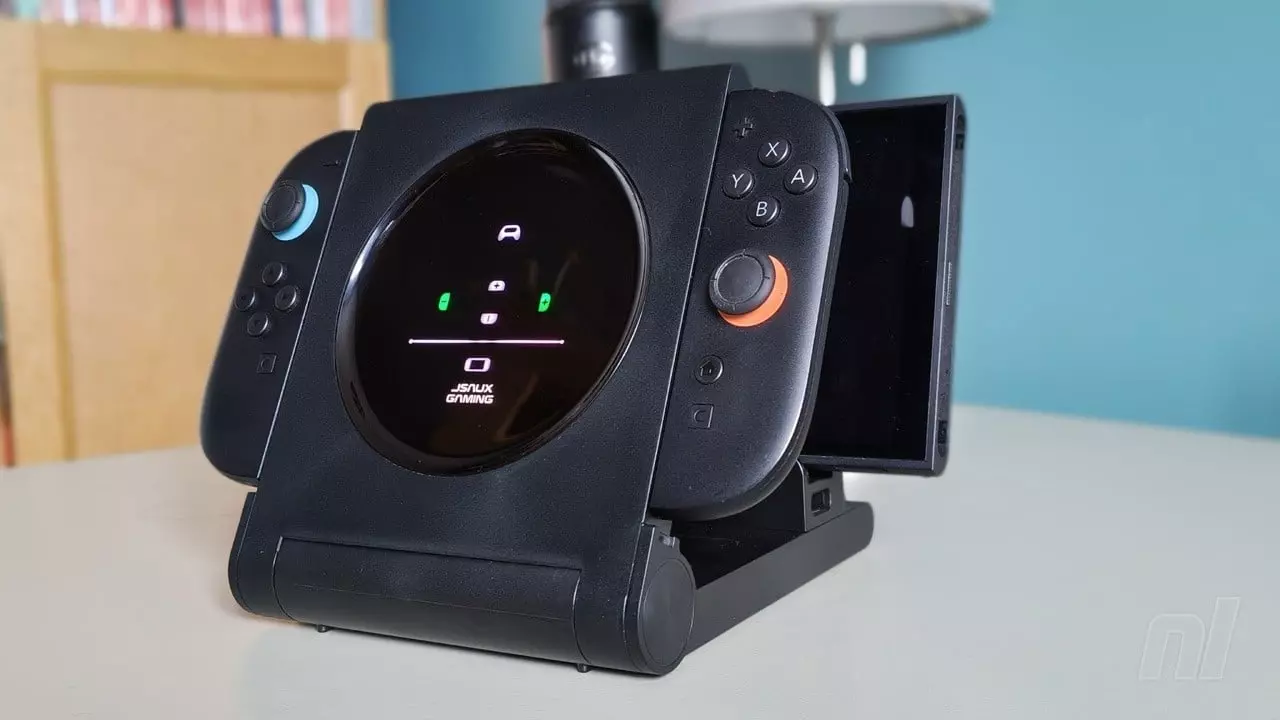
Upon first impression, the JSAUX dock's design is its strongest suit. The manufacturer's commitment to a clean, understated look is evident, with no external branding to detract from its aesthetic. The color-coded Joy-Con charging slots seamlessly integrate with the device's dark casing, providing a pleasant visual contrast and enhancing usability. The circular display screen further contributes to the minimalist charm, adopting an almost retro radar-like appearance. This screen efficiently communicates charging status through distinct color changes – white for standby, red for active charging, and green for a full charge – making it easy for users to monitor their controllers at a glance. The magnetic attachment for Joy-Cons, though less robust than the console's own mechanism, facilitates easy insertion and removal, adding to the device's user-friendly aspects.
However, the device's design also introduces significant practical challenges. The charging slot for the Pro Controller, located at the rear, offers minimal support, leading to considerable wobbling. This instability poses a genuine risk of damage to the controller's USB-C port, a critical flaw for a charging accessory. More critically, the dock's advertised 6-in-1 functionality proves misleading in practice. Users are forced to choose between docking their Switch 2 for TV play or charging their Pro Controller, as the console's docking module occupies the Pro Controller's charging slot. This limitation effectively downgrades the device to a 5-in-1 or even less, depending on the user's priority, undermining its core value proposition. Furthermore, the shallow design of the console's docking module means the Switch 2 itself can be prone to wobbling, lacking the secure fit expected from a primary docking station.
Despite these shortcomings, the JSAUX dock does deliver on video output quality, supporting 4K resolution at 60 frames per second and 120 frames per second at lower resolutions. The absence of Variable Refresh Rate (VRR) support is noted, though it's anticipated to be addressed in future firmware updates. Users are advised against updating the dock via Nintendo's prompts to avoid potential compatibility issues. Additional features include an Ethernet port, two USB-A ports, and a USB-C power input. The inclusion of slots for game cartridges and Micro SD Express cards on the back of the screen is a thoughtful touch, offering organized storage, though the balance of four slots for each might be skewed given current accessory usage patterns. While the foldable design offers protection for stored items during transport, the convenience of dedicated game cases or carry bags might still be preferred for robust protection of game media.
Ultimately, while the JSAUX 6-in-1 Dock for Switch 2 is an aesthetically pleasing and conveniently portable accessory, its functional compromises prevent it from being a true replacement for Nintendo's official dock. Its appeal lies primarily as a secondary docking option for travel, where its compact and foldable nature shines. The inability to simultaneously dock the console and charge a Pro Controller, coupled with the instability of both the console and the Pro Controller when connected, are significant drawbacks. For those seeking a primary, stable, and fully functional docking solution, the JSAUX offering falls short, positioning itself instead as a specialized travel companion rather than a versatile all-in-one hub.
About the author
Shigeru Miyamoto
Legendary game designer at Nintendo, creator of Mario, Zelda, and Donkey Kong.