Jim Cramer's Advice on Seagate: Trim Your Profits After a 441% Surge
ByChika Uwazie
Financial expert Jim Cramer has weighed in on Seagate Technology's impressive market performance, advising investors to consider a strategic reduction in their holdings. This counsel follows a substantial 441% increase in Seagate's stock value, positioning it among the S&P 500's top performers. The recommendation is particularly pertinent for investors with limited cash reserves, suggesting that now might be an opportune moment to rebalance portfolios, especially as the company approaches its Q4 earnings announcement. Seagate's resurgence is largely fueled by the burgeoning demands of artificial intelligence infrastructure, which necessitates vast data storage solutions. The company's technological advancements, specifically its HAMR and Mozaic platforms, have transformed it into a key player in the AI storage sector.
Strategic Profit-Taking: Jim Cramer's Timely Advice Amidst Seagate's Skyrocketing Success
Seagate's Phenomenal Market Resurgence
Seagate Technology has demonstrated an extraordinary rebound, making it one of the most compelling success stories within the S&P 500. Its stock has climbed to an impressive fourth position among the top year-to-date performers, following industry leaders like Sandisk, Dell, and Micron. This remarkable ascent highlights the company's strong trajectory in the current market.
Jim Cramer's Prudent Suggestion for Investors
Despite Seagate's impressive gains, financial guru Jim Cramer has offered a word of caution. He recommends that investors consider trimming their positions, particularly if they are in need of liquidity. This is not a direct sell recommendation but rather a strategic move to secure profits, especially for those holding substantial gains.
Understanding the Nuance of Trimming vs. Selling
Cramer's distinction between 'trimming' and 'selling' is crucial. Trimming involves taking a portion of profits from a winning stock, allowing investors to rebalance their portfolios and realize some gains, without completely exiting their position. This strategy is particularly relevant when a stock has experienced significant appreciation and is approaching key financial events like earnings reports.
Seagate's stellar performance in 2026 is intricately linked to the massive infrastructure demands of artificial intelligence. The development and deployment of large language models generate an unprecedented volume of data, requiring efficient and cost-effective storage solutions. Hard disk drives, the core of Seagate's business, remain the most economical option for mass-capacity storage at a hyperscale level.
Innovative Technology: HAMR and Mozaic Platforms
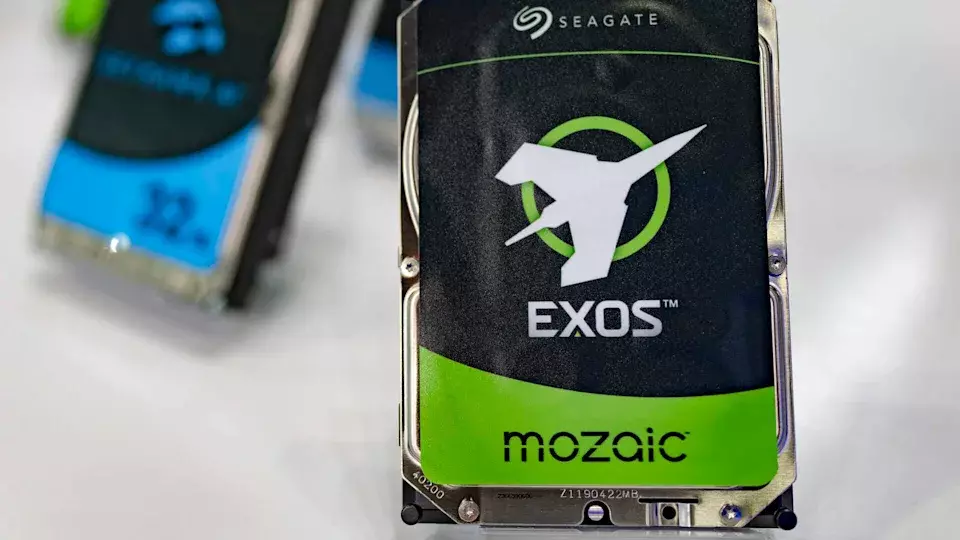
A significant factor in Seagate's transformation from a standard hardware manufacturer to a specialized AI infrastructure provider is its innovative HAMR (Heat-Assisted Magnetic Recording) technology. This advancement allows for a substantially higher data density on each drive. Furthermore, the Mozaic 3 platform has achieved full qualification across major cloud service providers, and Mozaic 4 is already being qualified by two customers, signaling strong market adoption and technological leadership.
Robust Financial Performance and Future Outlook
Seagate's financial results underscore its structural shift and strong market position. The company reported $3.11 billion in Q3 fiscal 2026 revenue, a non-GAAP gross margin of 47%, and non-GAAP diluted EPS of $4.10, along with $953 million in free cash flow. These figures, coupled with the retirement of $641 million in debt, paint a picture of robust financial health. Looking ahead, management projects Q4 2026 revenue of $3.45 billion and non-GAAP diluted EPS of $5.00, suggesting continued growth and margin expansion driven by higher-capacity drives.
Strategic Portfolio Management Ahead of Earnings
Cramer's advice to trim holdings before the July 28 earnings report is a tactical approach to portfolio management. While Seagate's stock currently reflects strong performance and expectations, significant additional gains post-earnings would require a substantial beat on EPS guidance or exceptionally positive fiscal 2027 forecasts. For long-term investors, the underlying AI storage thesis remains strong, but for those with substantial gains, taking some profits offers a sensible risk management strategy.
The Prudence of Securing Gains
For investors who acquired Seagate stock at significantly lower prices, realizing some profits after such a massive rally is a sound financial practice. This approach allows them to de-risk their portfolios while still maintaining exposure to potential future growth. The decision to trim or hold ultimately depends on individual portfolio composition and risk tolerance, with Cramer's insights providing a valuable framework for informed decision-making.
About the author
Chika Uwazie
Fictional representative of African fintech entrepreneurs and authors writing about money management in emerging economies.