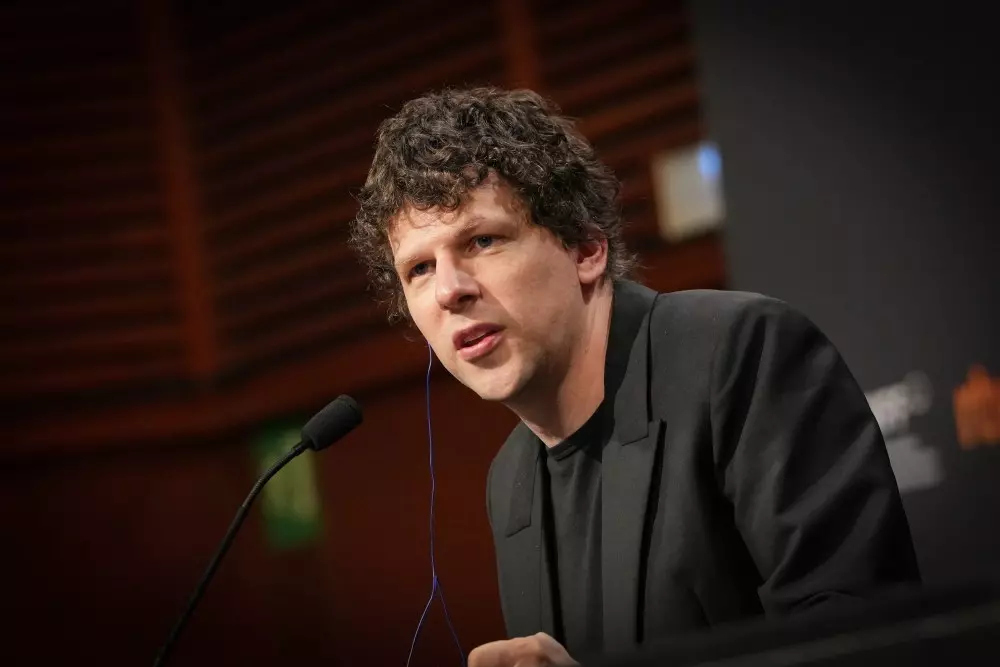
Jesse Eisenberg on 'The Debut' and the Transformative Power of Community Theater
ByMindy Kaling
Actor and filmmaker Jesse Eisenberg recently opened up about the deeply personal origins of his new film, "The Debut," and shared insights into his decision regarding the "Social Network" sequel. During an appearance at the San Sebastian Film Festival, Eisenberg explained how his childhood struggles with shyness and bullying were directly woven into the narrative of his latest project. He emphasized that community theater played a pivotal role in his formative years, offering him a sanctuary and a sense of belonging that profoundly impacted his life. This transformative period, characterized by acceptance and encouragement, forms the emotional core of "The Debut," highlighting the power of creative expression in personal development. Additionally, Eisenberg touched upon his choice not to revisit the character of Mark Zuckerberg in "The Social Reckoning," expressing his admiration for the script and the casting of Jeremy Strong, while reaffirming his personal detachment from social media platforms.
Eisenberg’s candid reflections provide a unique lens through which to understand his artistic motivations and personal values. His journey from a marginalized child to a celebrated artist underscores the importance of finding supportive environments and outlets for self-expression. The actor’s deliberate separation from social media, despite his iconic portrayal of its most prominent figure, further illustrates his commitment to maintaining a distinction between his public persona and private life. This nuanced perspective offers a compelling narrative about vulnerability, resilience, and the search for identity, both within and outside the spotlight.
The Personal Genesis of 'The Debut' and the Healing Power of Performance
Jesse Eisenberg's latest directorial endeavor, "The Debut," draws heavily from his own childhood experiences, exploring themes of social anxiety, bullying, and the unexpected solace found in community theater. Speaking at the San Sebastian Film Festival, Eisenberg revealed that the film’s protagonist, Mona Friedman, a New Jersey housewife who discovers herself through a local musical production, is a reflection of his younger self. Growing up in central New Jersey in the 1990s, Eisenberg described himself as a shy, depressed, and friendless child who faced taunts and ridicule from his peers. It was only when he joined a community theater group at the age of seven that he found an environment of acceptance and kindness, a stark contrast to his daily school life. This personal journey of transformation through the arts forms the emotional bedrock of "The Debut."
Eisenberg recounted how the theater became a haven where his curly hair, once a target of mockery, was celebrated. This shift from being made fun of to being embraced was a profound experience that shaped his understanding of belonging and self-worth. He highlighted a specific scene in "The Debut" that directly mirrors a painful yet pivotal moment from his own drama school days, where a teacher's harsh critique, though initially devastating, ultimately empowered him to overcome his inhibitions and embrace vulnerability on stage. This ability to transmute personal suffering into artistic expression is central to the film, illustrating how creative pursuits can offer not only an escape but also a path to profound personal growth and self-discovery. Eisenberg’s narrative underscores the therapeutic potential of performing arts, particularly for individuals seeking acceptance and a voice.
Reflecting on 'The Social Reckoning' and Disengagement from Social Media
During his festival appearance, Jesse Eisenberg also addressed inquiries about his decision not to return as Mark Zuckerberg in Aaron Sorkin’s sequel, "The Social Reckoning," a role now taken by Jeremy Strong. Eisenberg candidly explained that while he admired Sorkin's script and was confident in the film’s quality and Strong's performance, he simply felt no desire to reprise the character. This choice, he emphasized, was a personal one that did not reflect negatively on the project itself. His comments suggest a clear demarcation between his professional admiration for the film and his personal artistic inclinations, indicating a preference for exploring new creative territories rather than revisiting past roles.
Eisenberg further elaborated on his general stance towards social media, stating he holds "no opinion" on it because he actively avoids engaging with such platforms. He noted the irony that despite his iconic portrayal of Facebook's founder, he remains largely disconnected from the digital world that character represents. This deliberate disengagement from social media, a pervasive force in contemporary society, highlights Eisenberg’s desire to maintain a level of privacy and detachment from the very technology he helped bring to life on screen. His position underscores a broader discussion about the impact of digital connectivity and an individual's right to choose their level of involvement, demonstrating a thoughtful and intentional approach to personal and professional boundaries in an increasingly hyper-connected world.
About the author
Mindy Kaling
Actress, writer, producer, and author of humorous essays on Hollywood and life.