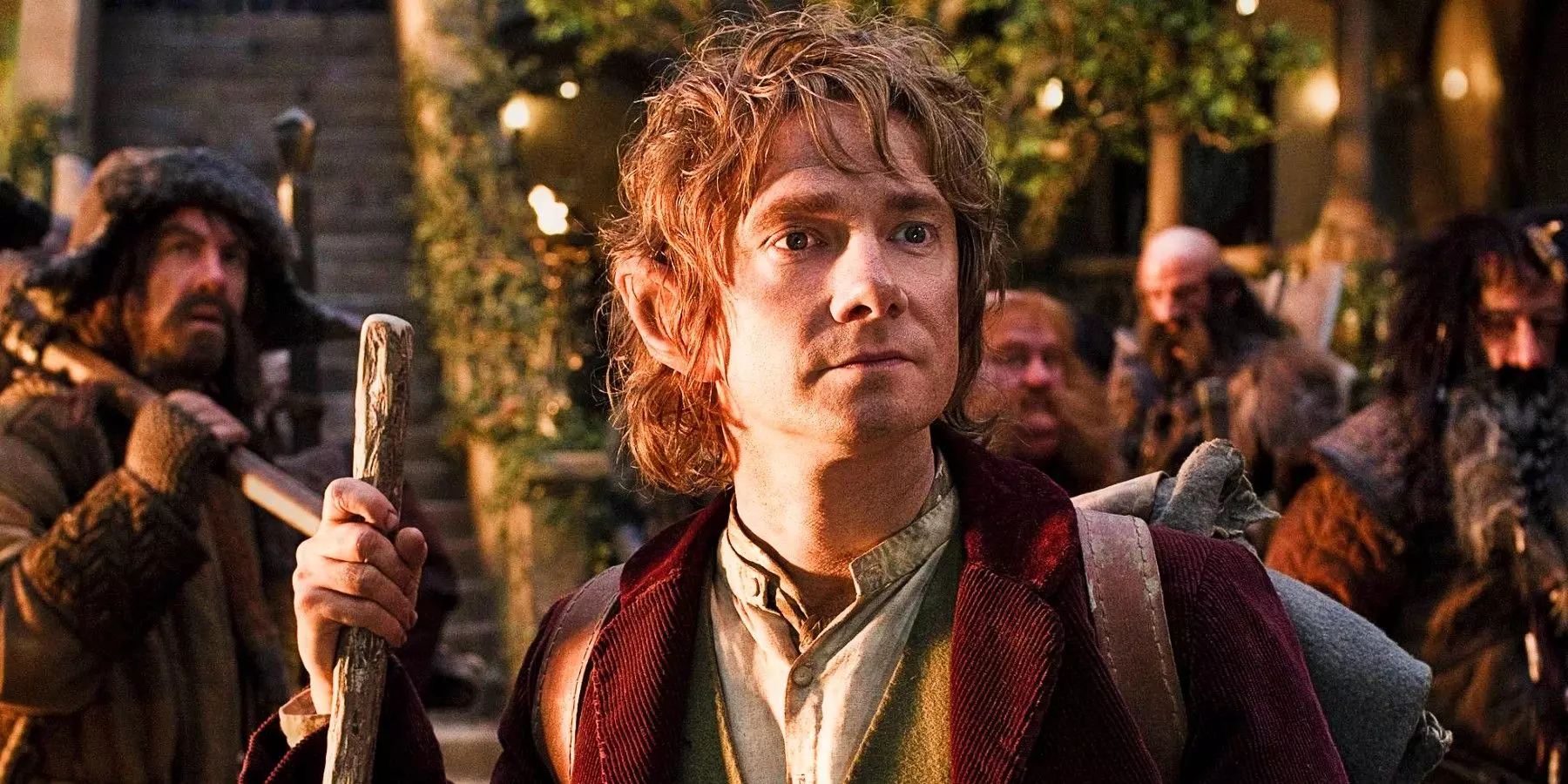
The Hobbit Film Trilogy: A Misguided Adaptation That Lost Its Fairytale Charm
ByHideo Kojima
Peter Jackson's cinematic rendition of J.R.R. Tolkien's 'The Hobbit' has long been a subject of critical discussion among fans and critics alike. Originally conceived as a single, compact narrative, the decision to expand the story into a sprawling trilogy fundamentally altered its core identity. While 'The Lord of the Rings' films garnered immense acclaim for their epic scope, applying a similar grandeur to 'The Hobbit' ultimately proved to be a misstep. The resulting films, often criticized for their excessive use of CGI and the inclusion of extraneous plotlines, strayed significantly from the quaint, intimate charm of Tolkien's original work. This article meticulously examines the reasons behind this perceived failure, suggesting that the filmmakers overlooked the book's true essence as a delightful bedtime story, a narrative style that demands a different approach to adaptation than the monumental scale of its successor.
At its heart, Tolkien's 'The Hobbit' was never intended to be an epic on the scale of 'The Lord of the Rings'. Its genesis as a series of bedtime stories for Tolkien's children imbued it with a unique, whimsical quality. The narrative is more personal, focusing on Bilbo Baggins' reluctant journey from his comfortable hobbit-hole into a world of adventure, dragons, and dwarves. This intimate storytelling style, characterized by a sense of wonder and discovery, is what makes the book so beloved. However, the film trilogy opted for a grander, more action-packed approach, attempting to bridge the narrative gap between 'The Hobbit' and 'The Lord of the Rings' by incorporating elements from Tolkien's appendices and inventing new characters and subplots. This expansion, while perhaps commercially driven, diluted the original story's focus and transformed it into something it was never meant to be.
The author posits that a more successful adaptation could have drawn inspiration from the narrative structure of 'The Princess Bride'. This classic film masterfully employs a meta-narrative framework, where a grandfather reads a story to his grandson, creating a sense of shared experience and reinforcing the tale's fairytale nature. Imagine 'The Hobbit' opening with Professor Tolkien himself, perhaps a little weary after a day's work, settling down to tell his children the story of Bilbo and the dwarves. This framing device would not only honor the book's origins but also provide a crucial anchor to the real world, making the fantastical elements of Middle-earth more accessible and believable. Such an approach would allow for moments of playful interaction, questions from the children, and even subtle nods to Tolkien's own creative process, enriching the viewing experience and grounding the epic journey in a relatable, human context.
The beauty of 'The Princess Bride' lies in its ability to transport the audience into a fantastical world while constantly reminding them of the act of storytelling itself. This dual perspective enhances the magic, making the "secondary world" feel more real precisely because it is presented as a cherished tale being shared. For 'The Hobbit', adopting a similar strategy could have provided the much-needed balance between the grand adventures and the intimate, whimsical spirit of the original book. By weaving in the real-world context of Tolkien narrating the story to his children, the filmmakers could have created a film that was both epic in scope and deeply personal, capturing the true essence of a story that began as a simple, enchanting bedtime tale.
Ultimately, the 'The Hobbit' film trilogy's departure from its source material's fundamental nature led to a series of films that, while visually impressive, often felt disconnected from the heart of Tolkien's narrative. The decision to transform a charming fairytale into an expansive epic, laden with CGI and extended storylines, inadvertently stripped away much of its original magic. A more thoughtful adaptation, one that recognized and embraced the book's origins as a story told to children, could have offered a richer, more authentic cinematic experience. By learning from the narrative ingenuity of films like 'The Princess Bride', filmmakers could have crafted a version of 'The Hobbit' that honored its whimsical spirit while still delivering an engaging adventure, proving that sometimes, less truly is more, especially when preserving the delicate charm of a beloved fairytale.
About the author
Hideo Kojima
Auteur game designer known for the "Metal Gear" series, blending complex narratives with gameplay.