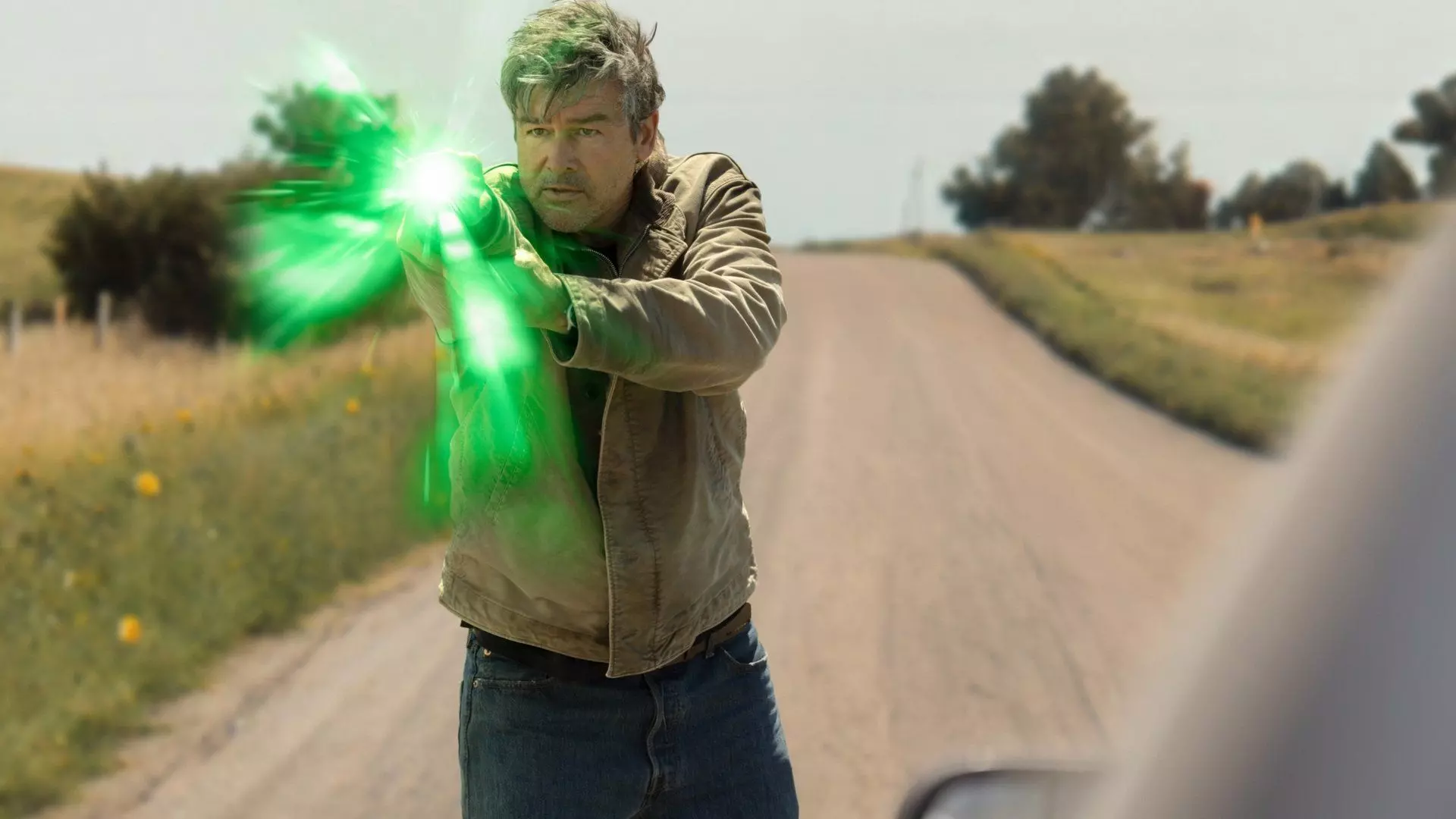
HBO Max's new series, 'Lanterns,' has brought renewed attention to the cosmic dimension of the DC Universe, particularly the storied Green Lantern Corps. The show, which references the planet-sized Green Lantern Mogo, also subtly acknowledges a long-standing comedic trope within the fandom: Hal Jordan's propensity for losing consciousness. This coincidental timing aligns with the 20-year anniversary of a notable internet phenomenon, the 'Hal Jordan Head Injury Project.' This project, initiated by an individual known as 'Sleestak,' humorously chronicles the countless instances throughout the character's almost seven-decade existence where he has sustained a blow to the head, often in surprisingly trivial or self-inflicted scenarios. The enduring online presence of this project on platforms like Flickr and Blogspot attests to its cult status among comic enthusiasts.
While many long-running superheroes inevitably suffer various forms of incapacitation, Hal Jordan's case stands out due to his traditional portrayal as a reckless and impulsive figure. Unlike his more invulnerable counterparts, Hal frequently rushes into dangerous situations with a distinct lack of foresight, often relying heavily on his power ring's healing capabilities. This characteristic is particularly evident in earlier comic eras, such as the Silver Age, and is humorously depicted in the 'Lanterns' series. The article highlights several memorable instances from the 'Hal Jordan Head Injury Project,' illustrating how the character's own impulsive decisions or bizarre circumstances have led to his temporary knockouts, reinforcing the running gag that he often proves to be his own greatest adversary.
The "Crisis in Triplicate!" Incident and Self-Inflicted Woes
The "Crisis in Triplicate!" narrative from Justice League of America vol. 1 #148 (1977) offers a prime example of Hal Jordan's peculiar predicaments. In this convoluted storyline, the Justice Society and Justice League, under demonic mind control, find themselves battling the Legion of Super-Heroes. A pivotal moment occurs when Saturn Girl, a telepath from the Legion, manipulates Hal Jordan to strike himself with his own power ring. Although not a definitive knockout, this scene serves as a potent visual metaphor for Jordan's consistent tendency to be his own worst enemy throughout his comic book career. This incident, emblematic of the wild inter-universal crossovers popular at the time, underscores how often Hal's actions, or external forces directly influencing him, lead to his incapacitation.
The Silver Age narrative "Crisis in Triplicate!" presented a chaotic inter-universal conflict, a precursor to later grand-scale events like Crisis on Infinite Earths. Penned by Martin Pasko and Paul Levitz, with art by Dick Dillon and Frank McLaughlin, this 1977 issue ingeniously wove together alternate timelines and time travel. Within this intricate plot, the Justice Society and Justice League found themselves unwilling combatants against the Legion of Super-Heroes, coerced by malevolent entities. A particularly memorable sequence involves Saturn Girl, the Legion's potent telepath, utilizing her abilities to compel Hal Jordan into self-inflicted harm with his own power ring. Though Black Canary swiftly neutralized Saturn Girl shortly thereafter, and Hal's self-punch wasn't a definitive knockout, this moment has resonated through comic history. It starkly illustrates a recurring theme: Hal Jordan's reckless nature and susceptibility to bizarre circumstances often lead to his own undoing, making him a symbol of self-sabotage, albeit in a humorous and often iconic manner.
The Infamous Road Sign and Bar of Soap Battles
Another notable and rather embarrassing incident for Hal Jordan is detailed in Green Lantern: Emerald Dawn #1 (1989). This limited series was a reboot of Hal Jordan's origin story following the universe-altering events of Crisis on Infinite Earths. In a moment of youthful indiscretion, a young and "stupid" Hal Jordan, attempting to drive home while intoxicated, crashes his car, severely injuring his brother and landing himself in the hospital with a head trauma. While still reeling from this experience, he is chosen by Abin Sur to become a Green Lantern. In a bizarre turn of events, Hal, in a display of misplaced blame and poor judgment, tries to destroy a road sign, only to knock himself out in the process. This ludicrous scenario established that post-Crisis Hal Jordan's inaugural superhero battle was against an inanimate object, and he emerged victorious.
The 1989 limited series, Green Lantern: Emerald Dawn, was conceived as a fresh start for Hal Jordan's origin story in the wake of the universe-redefining Crisis on Infinite Earths. Written by Jim Owsley (now Christopher Priest) and illustrated by M.D. Bright, the first issue introduces a younger, more impetuous Hal Jordan, who, following in his father's footsteps as a test pilot, makes a critical error. After a night of drinking, Hal crashes his car while driving home, resulting in serious injuries to his brother, Andy, and a significant head trauma for himself. Subsequently, while still recovering and mentally disoriented, Hal is selected by Abin Sur to become Earth's first official Green Lantern. In a peculiar moment of post-traumatic stress and misplaced anger, Hal attributes his misfortunes not to his own reckless behavior, but to a random road sign. His subsequent attempt to demolish the sign spectacularly backfires, leading to his own unconsciousness. This comedic yet telling event cemented his canonical first act as a superhero: engaging in a losing battle with an ordinary billboard, a testament to his often-flawed decision-making and propensity for self-inflicted injury in the early stages of his heroic career. This, along with another comical incident where he slips on a bar of soap, showcases the character's long history of falling victim to mundane, rather than epic, challenges, making him a figure of both heroic power and unexpected vulnerability.
About the author
Hideo Kojima
Auteur game designer known for the "Metal Gear" series, blending complex narratives with gameplay.