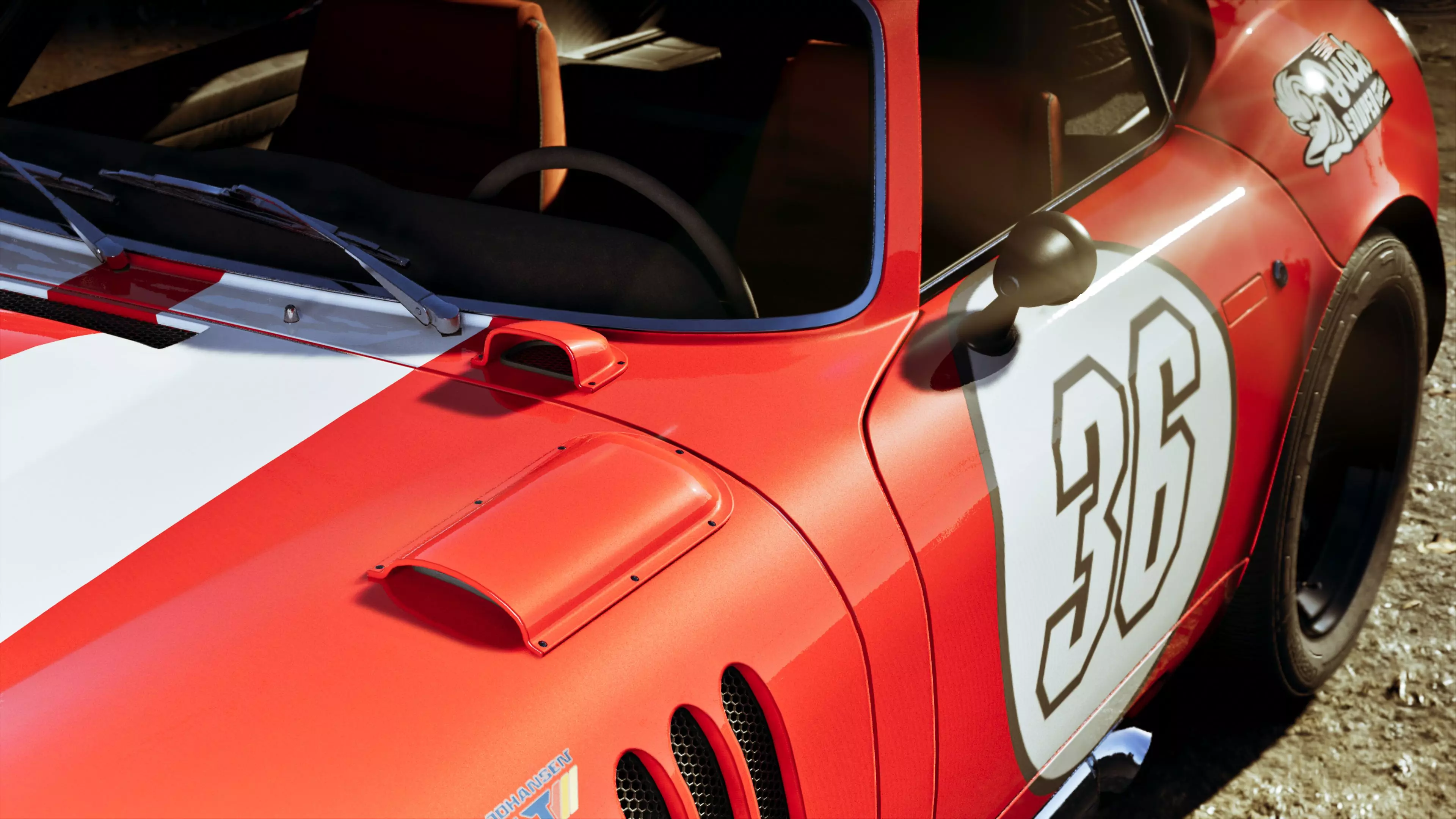
Grand Theft Auto 6's Driving Dynamics: An In-Depth Look and Comparison with Dedicated Racing Titles
ByRoberta Williams
Rockstar Games has significantly advanced the vehicular mechanics within Grand Theft Auto 6, a fact they underscore with considerable pride. The development team undertook a complete overhaul of the physics engine for every vehicle category, aiming for unparalleled authenticity and immersion. Ben Lyons, the studio's technical director for physics, shared insights into how hands-on experience in competitive racing, including victories at the Nürburgring 24 hours and rally-bike events, profoundly influenced the detailed simulation of vehicle dynamics, including realistic damage and handling characteristics under duress. This ambitious effort raises questions about whether GTA 6 could secretly rival dedicated racing simulators. However, despite its impressive driving capabilities, the title doesn't quite measure up as a top-tier racing game when held against purpose-built competitors like Forza Horizon 6. While it offers a deeply satisfying driving experience and a beautifully rendered world, its core design priorities lean towards broader gameplay rather than precision racing. The article delves into these distinctions, examining both GTA 6's remarkable achievements in driving realism and its limitations within the competitive racing genre.
The exploration of vehicular interaction in Grand Theft Auto 6 reveals several areas where it distinctly outshines many titles, particularly in its capacity as a driving simulator rather than a pure racer. A standout feature is its highly sophisticated damage modeling, which impressively renders visual deformation and directly impacts vehicle performance and handling. This level of detail, influenced by real-world automotive engineering and motorsport, provides a palpable sense of consequence to collisions, elevating the immersive quality of the gameplay. Furthermore, the game leverages advanced controller functionalities, such as the PlayStation 5's DualSense adaptive triggers, to deliver a uniquely tactile and relaxed cruising experience, a nuance often absent in genre-specific racing titles. The richly detailed and densely populated open world of Leonida, brimming with dynamic AI traffic and superior in-game radio selections, further enhances the sheer enjoyment of simply navigating its expansive landscapes. The tactile feedback from diverse road surfaces and the realistic interaction with environmental elements like mud and destructible street furniture contribute to an extraordinarily engaging driving adventure, making routine travel a genuine pleasure.
However, when the focus shifts from general driving pleasure to competitive racing, certain disparities emerge, particularly when juxtaposed with a specialized racing title such as Forza Horizon 6. GTA 6's vehicle customization options, while aesthetically pleasing, offer only superficial performance enhancements compared to the deep, impactful upgrade systems found in dedicated racing games. The absence of a manual transmission option further limits the player's connection and precise control over their vehicle, a crucial element for serious racing enthusiasts. The game's artificial intelligence for rival racers also presents a notable divergence; rather than exhibiting strategic racing lines or competitive tactics, the AI often demonstrates unpredictable, chaotic, and almost slapstick behaviors, transforming races into frenetic, unpredictable brawls rather than skill-based contests. This design choice, while perhaps aligning with the broader GTA ethos, detracts from the integrity of competitive racing.
A less obvious but equally significant factor affecting GTA 6's racing credibility is its camera system. Unlike the meticulously tuned camera perspectives in racing simulators that facilitate precise cornering and spatial awareness, GTA 6's camera angles can feel less intuitive for high-speed precision driving. The lack of an in-car or first-person driving view, combined with chase cameras that don't quite convey the necessary sense of speed, elevation, or field of view for optimal racing lines, creates a detached sensation. Players might feel as if they are guiding the vehicle from an external, elevated perspective rather than being intimately connected to the machine. This, coupled with a handling model that often leans towards understeer and insufficient audio-tactile feedback regarding tire grip, results in a less precise and "woolly" feel during competitive events, starkly contrasting with the sharp responsiveness offered by purpose-built racing titles.
Ultimately, evaluating Grand Theft Auto 6 purely as a racing game is somewhat of a misdirection, as it was never primarily conceived with that singular ambition. Its undeniable strength lies in providing an expansive, incredibly detailed driving simulation set within a vibrant open world, where casual cruising and engaging vehicular interactions take precedence. While the game incorporates racing events as enjoyable diversions, these activities do not possess the depth, precision, or competitive integrity expected from a dedicated racing simulator. The substantial resources and meticulous attention to physics detail invested by Rockstar Games have yielded an exceptional driving experience, yet this does not translate into supremacy within the specialized realm of competitive circuit or street racing. This stark difference underscores the divergent design philosophies: a generalist open-world masterpiece versus a specialist racing powerhouse.
About the author
Roberta Williams
Pioneer of graphic adventure games, co-founder of Sierra On-Line, and creator of "King's Quest."