The Future of Acting: Can AI Fully Replace Human Performers?
ByJohn Lasseter
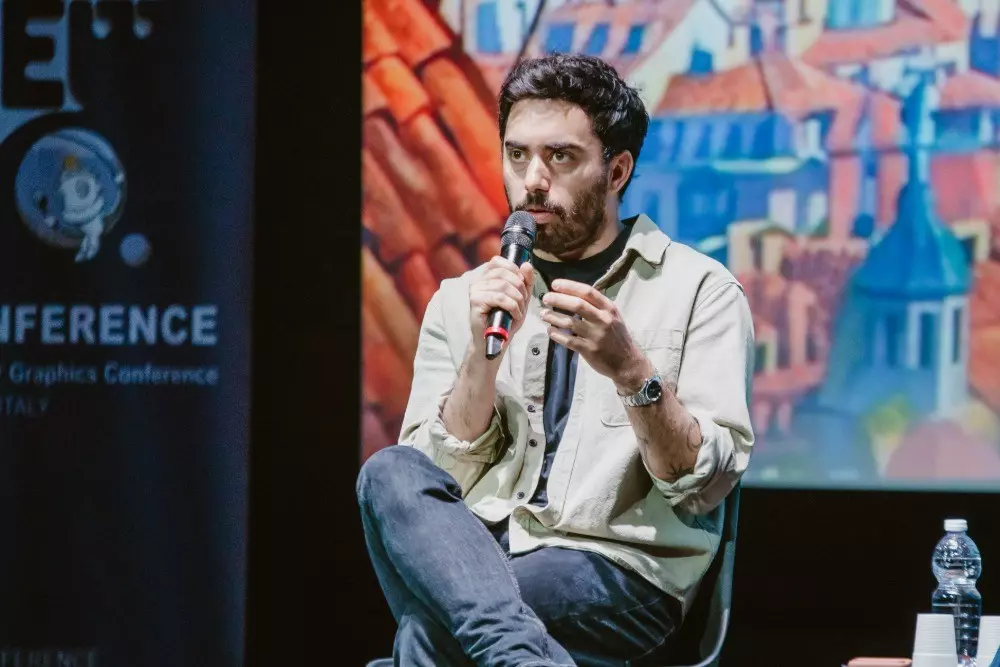
The role of artificial intelligence in the entertainment industry is rapidly evolving, prompting a critical discussion about its potential to transform traditional roles. During a recent session titled "Every Pixel Will Be Generated" at Italy's View Conference, Cristóbal Valenzuela, the CEO of the generative AI company Runway, addressed a pivotal question: could AI eventually take over the roles of human actors? His unequivocal response, "Yeah, absolutely. I think it's already happening in a way," ignited one of the most fervent debates at the prestigious VFX gathering. Valenzuela emphasized his perspective that AI represents a groundbreaking medium for both expression and narrative creation, suggesting a paradigm shift in how stories are conceived and presented.
This forward-looking perspective, however, met with a more cautious stance from other industry leaders. Richard Kerris, Vice President of Developer Relations and General Manager of Media and Entertainment at Nvidia, highlighted the irreplaceable human element in artistic collaboration. He recounted an anecdote about Marlon Brando's spontaneous improvisation on the set of "The Godfather," arguing that such organic, unscripted moments between a director and actor are beyond the current capabilities of AI. Kerris stressed the intrinsic value of human craft, expressing his belief that this aspect of filmmaking will endure. Valenzuela, while acknowledging current limitations, countered by suggesting that AI models would eventually advance to a point where they could be directed in a remarkably similar fashion to human performers. He also elaborated on his vision in essays such as "It's All About the Pixel Economy," where he posits that the cost of generating visual content is trending towards zero, envisioning a future where audiences actively create personalized entertainment as rapidly as they consume it, fundamentally altering the production and consumption landscape of media.
The discussion also delved into the broader implications of AI adoption, including concerns about training data and intellectual property. Many visual effects artists, game developers, and animation directors expressed frustration, rather than fear, regarding the proprietary material used to train generative AI models. Valenzuela addressed this by clarifying that AI models "learn from representation" rather than merely functioning as databases. This distinction is crucial, as the legal landscape surrounding AI and copyright is still taking shape, with numerous lawsuits ongoing regarding the unauthorized use of copyrighted works for AI training. Despite these challenges, industry figures like Nvidia's Jeff Kember suggest that generative AI is already widely adopted, even if many companies remain discreet about its use due to legal considerations. The consensus from AI leaders at the View Conference points to a future where the cost of creating moving images becomes negligible, leading to a fundamental restructuring of traditional production models.
The dialogue surrounding AI in creative fields is more than just a technological debate; it's a profound reflection on the essence of artistry and human endeavor. While the efficiency and innovative possibilities offered by AI are undeniable, the unique spark of human creativity—the spontaneity, the emotional depth, and the intricate nuances of performance—remains a powerful and irreplaceable force. Embracing these advancements with a thoughtful approach allows us to consider how technology can augment human potential, opening new avenues for artistic expression while preserving the invaluable contributions of human talent and ingenuity in shaping our shared cultural experiences.
About the author
John Lasseter
Former chief creative officer of Pixar, whose principles of storytelling have shaped modern animation.