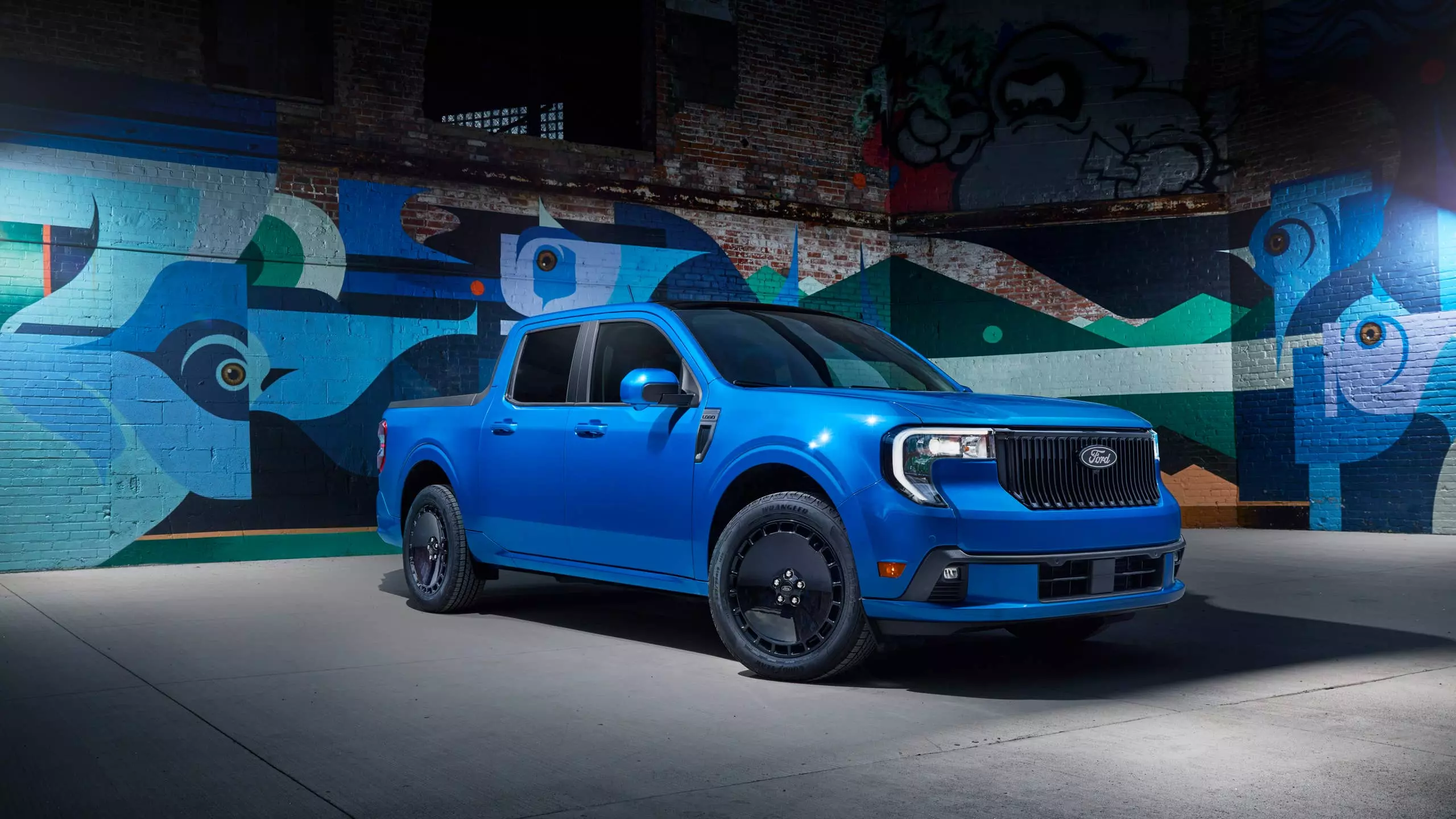
This article examines the striking sales disparity between Ford's Maverick and Hyundai's Santa Cruz pickup trucks, revealing the Maverick's overwhelming market success compared to its competitor. It delves into the underlying reasons for the Santa Cruz's struggle and Hyundai's strategic shift in its pickup truck development.
The Unstoppable Rise: Ford Maverick's Unprecedented Sales Victory
Maverick's Monthly Triumph Overshadows Santa Cruz's Yearly Performance
In a remarkable display of market strength, Ford's Maverick achieved a staggering sales figure of 13,680 units in August, marking a 14.4 percent increase from the previous year. This single-month performance by the Maverick surpassed the total sales of Hyundai's Santa Cruz for the entire year through August, which stood at a mere 13,191 units. This stark contrast highlights the significant lead Ford has established in the compact pickup truck segment. While the Maverick's overall year-to-date sales remain consistent with prior periods, it is the dramatic downturn of the Santa Cruz that truly accentuates this competitive gap.
Hyundai's Broader Success Contrasts with Santa Cruz's Decline
Interestingly, the sales struggles of the Santa Cruz do not reflect a broader issue for Hyundai as a brand. Hyundai's overall U.S. sales have experienced only a modest 2 percent dip year-to-date. Furthermore, the brand has seen a robust 33 percent increase in hybrid vehicle sales, with both the Tucson and Santa Fe models reporting record-breaking August figures. The Santa Cruz, therefore, appears to be an anomaly within an otherwise thriving product line. This isolated underperformance is reportedly a key factor in Hyundai's decision to accelerate the discontinuation of the Santa Cruz, moving its exit from the market to an earlier date than initially planned for late 2027.
Pricing and Powertrain: Key Differentiators in the Compact Pickup Market
The Maverick's competitive edge isn't rooted in superior build quality or towing capacity. In fact, comparative analyses suggest the Santa Cruz offers a more refined daily driving experience and boasts a higher towing capability of 5,000 lbs, exceeding the Maverick's 4,000 lbs. However, the Maverick's true appeal lies in its compelling value proposition, particularly its powertrain and price point. Ford's offering of a standard 191-hp hybrid engine achieving an impressive 38 mpg combined has cemented its position as the most fuel-efficient pickup in America. In stark contrast, the Santa Cruz's most economical configuration only reaches 25 mpg combined, and its more powerful turbo engine option is exclusively available in the higher-priced XRT trim, costing approximately $41,000.
Hyundai's Strategic Pivot Towards a New Truck Lineup
Instead of attempting to rejuvenate the Santa Cruz to directly compete with the Maverick, Hyundai is reportedly shifting its focus entirely. The automaker is rumored to be developing a larger, more conventional pickup truck designed to rival models like the Toyota Tacoma, rather than introducing another crossover-based contender against the Maverick. This strategic redirection implicitly acknowledges that challenging Ford in the compact segment based on efficiency and price was not a viable long-term strategy for the Santa Cruz. Hyundai's new approach aims to position itself in a different market segment, thereby avoiding direct comparisons with the highly successful Maverick.
About the author
Henry Ford
Industrialist and founder of Ford Motor Company, whose autobiography outlines the creation of the automotive era.