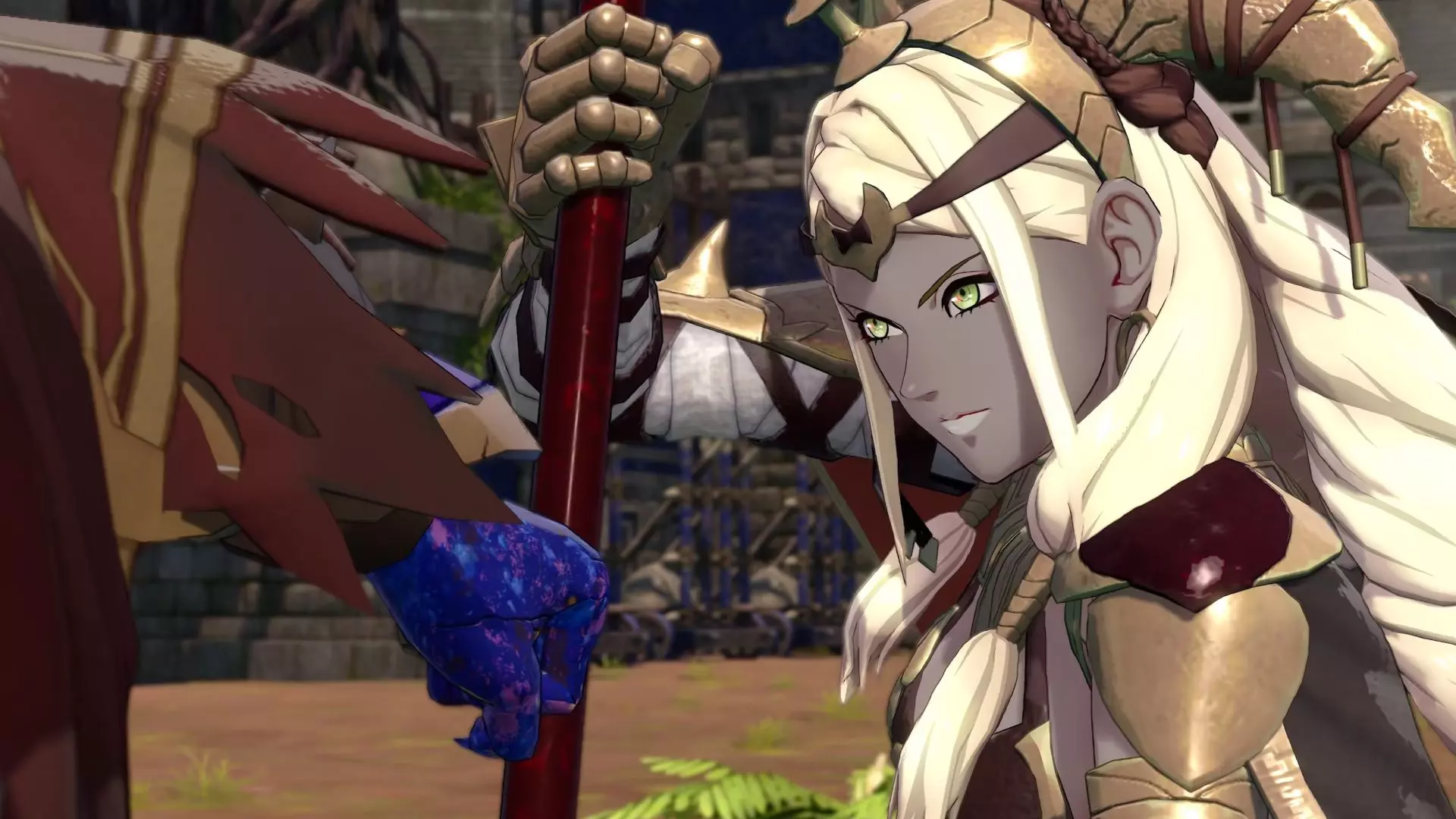
The highly anticipated Japanese role-playing game, Fire Emblem: Fortune's Weave, has quickly captivated its audience since its launch. Players are just beginning to uncover the vastness of its narrative, which promises hundreds of hours of exploration across three distinct parts and four unique paths. Beyond the game itself, fans now have an exciting new avenue to delve deeper into its lore: a manga series penned by Kazurou Kyou. This adaptation, which premiered on the Nintendo Today app just before the game's official release, not only re-tells the prologue leading up to the Heroic Games but also endeavors to rectify some perceived narrative shortcomings of the video game.
Kazurou Kyou's manga series for Fire Emblem: Fortune's Weave kicked off on September 16, a day ahead of the game's release on Nintendo Switch 2. The inaugural chapter introduces fans to familiar faces like Seteth, a character from Fire Emblem: Three Houses, and Orchel. Their journey to meet the gods in Dagsion City is dramatically interrupted by Cai, who intervenes to prevent a theft. This initial encounter serves as a prelude to the introduction of the Flame Lords—Dietrich, Leda, Cai, and Theodora—alongside their sub-lords, Talimun, Bertrand, Anatolia, and Orchel, and their respective factions. While the manga's prologue concludes before delving into the core events of the Heroic Games, it effectively establishes the intricate web of characters and alliances that will undoubtedly play a crucial role in the unfolding narrative.
One of the more prominent criticisms leveled against Fire Emblem: Fortune's Weave has been the perceived lack of substantial support conversations, which are integral to character bonding and strategic bonuses, especially among the sub-lords and their retainers. Examples include the limited interactions between Talimun and Ursula, and Orchel and Diego, leaving players with a desire for more in-depth character development. Insights from an Intelligent Systems AMA revealed that the game initially envisioned eight protagonists but streamlined this number to four, with Eshmel being introduced to bridge the paths of the selected main characters. Despite these cuts, the game's prologue still features the original eight, including Talimun, Anatolia, Orchel, and Bertrand, as Flame Lords, suggesting the developers had grander designs for these characters than what the final game could accommodate.
The manga adaptation presents a unique opportunity to flesh out these underrepresented characters and their relationships. This wouldn't be an unprecedented move; the Fire Emblem Engage manga, for instance, expanded on the backstories of characters like Yunaka, revealing her past as an assassin, which the main game only touched upon briefly. While the ultimate direction of the Fortune's Weave manga remains to be seen, it holds the potential to enrich the narrative by exploring the sub-lords and their dynamics with retainers in greater detail than the game. Fans are hopeful that Kazurou Kyou and Nintendo will seize this chance to delve into the stories of Talimun, Anatolia, Bertrand, and Orchel, providing the depth and background that the game's format might not have fully allowed, especially if no future DLC offers similar expansions.
This new manga series provides an exciting extension to the Fire Emblem: Fortune's Weave universe, promising to fill in narrative gaps and offer a richer understanding of its characters and lore. By revisiting the game's prologue and expanding on the roles of the sub-lords, it aims to satisfy fans' desires for deeper character engagement. This initiative highlights the growing trend of multimedia storytelling in the gaming industry, where supplementary content like manga can significantly enhance the player's overall experience by offering alternative perspectives and additional narrative layers.
About the author
Jane McGonigal
Game designer and author who writes about using games to improve real life and solve problems.