The Evolution of Mazda's Iconic RX-7: A Rotary Legend Reborn
BySimona De Silvestro
The automotive landscape is buzzing with the arrival of the 1993 Mazda RX-7, a vehicle poised to redefine the sports car segment. This latest iteration promises significant advancements in design, power, and handling, building upon the rich legacy of its predecessors. From its potent twin-turbo rotary engine to its meticulously crafted chassis, every aspect of the new RX-7 is engineered for an exhilarating driving experience. This comprehensive overview will explore the innovations of the third generation, while also reflecting on the evolution of this iconic model through its initial and second phases, and Mazda's unwavering dedication to rotary engine technology, famously demonstrated by its triumph at Le Mans.
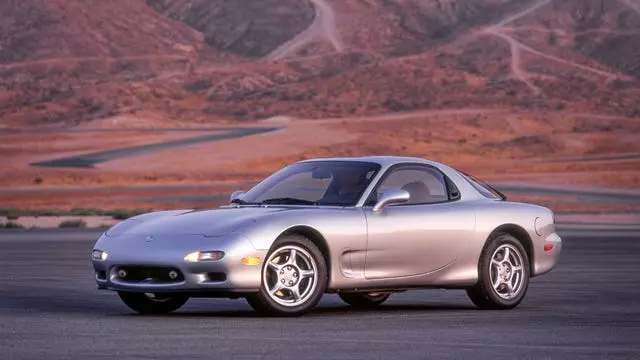
The 1993 Mazda RX-7 emerges as a formidable contender in the performance car arena. Early impressions, though based on prototype drives, suggest a vehicle that is lighter, lower, shorter, and wider than its predecessor, boasting a striking aesthetic and an aggressive stance. Under the hood, a thoroughly re-engineered twin-rotor 13B engine, now featuring a twin-sequential-turbocharger setup, delivers an impressive 255 horsepower. This substantial power increase over the previous 200 hp model is expected to propel the car from 0 to 60 mph in a mere 4.9 seconds, with a projected top speed of 156 mph. Mazda's chief operating officer, Clark Vitulli, emphasizes the car's identity as an "absolutely pure, two-seat sports car," marking a return to the model's sporting roots after the second generation leaned more towards touring. This strategic shift aims to position the RX-7 firmly in the high-performance segment, likely competing with cars like the 300ZX in the low $30,000 price range.
Beyond raw power, the new RX-7 features a comprehensively redesigned body and chassis. It rides on sticky 225/50-16 tires wrapped around eight-inch-wide wheels, complemented by large ventilated disc brakes with standard anti-lock control. The suspension system incorporates cast and forged-aluminum control arms, integrated into a stiff, compact welded-steel structure. Drivers have noted the car's predictable and engaging handling, with a direct and positive power rack-and-pinion steering system. The innovative toe-control kinematics, utilizing controlled bushing deflection for passive rear steer, significantly reduce driving drama, allowing confident exploration of adhesion limits. The car's dimensions have been refined, with a nearly inch and a half reduction in overall length and height, while overall width has increased by two and a half inches to accommodate larger tires and a wider track. Mazda anticipates a curb weight of approximately 2800 pounds, 100 pounds lighter than the '91 RX-7 Turbo, with a near-perfect 50/50 weight distribution and a lowered center of gravity. Aesthetically, the car maintains a long-hood/short-deck profile, a departure from contemporary cab-forward trends, emphasizing its front-engine architecture. While minor design elements might spark debate, the overall visual impact is undeniably appealing.
The interior of the new RX-7 is designed for a snug and comfortable experience, featuring well-formed cockpit areas and minimally adjustable but deeply bucketed seats. The instruments are clear and legible, though the thin chrome bezels around the white-on-black faces may evoke a nostalgic, or perhaps polarizing, retro feel. Mazda plans to offer two distinct equipment packages: Package A, the performance variant, includes Z-rated tires, an additional engine-oil cooler, spoilers, and stiffer anti-roll bars and shock valving. Package B, the luxury option, offers leather seating, cruise control, a sunroof, and a Bose Acoustic Wave sound system. This binary approach means buyers must choose between performance and luxury features, which might not align perfectly with individual preferences.
Tracing back to its origins, the first-generation RX-7, launched in 1978, quickly became a sensation despite an initial pricing misstep. Priced at $6995, it offered an undeniable allure that led to significant surcharges in high-demand areas. This "rotary rocket" successfully carved out a niche that other automakers had overlooked. While not the fastest or most technically groundbreaking of its era, its smooth, high-revving twin-rotor Wankel engine, combined with a well-tuned chassis that prioritized "tossability," made it an enthusiast's dream. Initial performance figures for the 100-hp, 2390-pound coupe included an 8.5-second 0-60 mph sprint and a 124 mph top speed. Mazda steadily improved the model, introducing higher trim levels, reducing drag, and enhancing engine efficiency. By 1984, the introduction of the 13B engine with fuel injection and a "six-port" induction system boosted power to 135 hp, significantly improving acceleration times and top speed while maintaining impressive fuel economy. This first generation sold over 372,000 units in the U.S. and more than half a million globally, solidifying its place in automotive history.
The second-generation RX-7, debuting in late 1985, proved Mazda's commitment to the model's sporting spirit. Despite being largely new and more sophisticated, with initial prices exceeding $18,000, it retained its core identity. The wheelbase saw a minimal increase, and overall length slightly decreased, while curb weight rose by about 100 pounds, and the interior offered more space. Noteworthy upgrades included rack-and-pinion steering, an independent rear suspension with advanced kinematics for improved stability and sharper turn-in, and available two-stage adjustable gas shocks for enhanced ride quality. The 1.3-liter rotary engine was refined, achieving a 7% power boost to 146 hp, leading to a 0-60 mph time of 7.7 seconds and a top speed of 128 mph. The introduction of an intercooled turbocharged version further elevated performance, reaching 60 mph in 6.5 seconds and a top speed of 145 mph. Mazda's clever turbo installation, featuring a variable-geometry blower, optimized the power curve and minimized lag. However, despite these advancements, sales began to decline sharply after 1986, indicating the opportune moment for the third generation.
Mazda's long-standing dedication to the rotary engine, spanning 31 years, culminated in its inspiring victory at Le Mans. The company's initial fascination with Felix Wankel's design in 1960 led to a relentless pursuit of its performance potential. The twin-rotor design first gained traction with enthusiasts through the RX-2 and RX-3 sedans, which achieved considerable racing success. While early rotary engines faced challenges with fuel consumption and seal durability, the 1978 RX-7 proved the engine's reliability and immense development capacity. The RX-7 established an impressive competitive record worldwide, securing ten IMSA GTU manufacturer's championships and numerous driver's titles between 1980 and 1990, in addition to a GTO championship in 1984. Mazda proudly claims the RX-7 as the most successful car in IMSA history, with a total of 106 GT race victories. Furthermore, the two-rotor engine garnered four titles in IMSA's International Sedan series and several championships in SCCA racing. Notable achievements also include C/D staffer Don Sherman's Bonneville speed records, reaching 184 mph in a stock RX-7 in 1978 and 238.4 mph in a turbocharged second-generation model in 1986. Recent development efforts have focused on the four-rotor racing powerplant, the 26B, a 2616-cc engine capable of producing up to 610 hp at 8700 rpm. This highly advanced and expensive unit, incorporating exotic materials and ceramic coatings, addresses the inherent challenge of a rotary engine's limited low-end torque, enabling Mazda's GTO cars to compete effectively with 800-hp V-8 rivals, even under ballast impositions.
Overall, the latest Mazda RX-7 promises a compelling blend of heritage and innovation. Its enhanced power, refined handling, and striking aesthetics position it as a serious contender in the sports car market. The journey of the RX-7, from its revolutionary inception to its current sophisticated form, underscores Mazda's unwavering commitment to the distinctive rotary engine and its pursuit of pure driving exhilaration.
About the author
Simona De Silvestro
Professional racing driver who provides expert insight into performance and vehicle dynamics from a driver's perspective.