Embracing Witchcore: A Guide to Mystical Home Decor
ByTim Gunn
This article explores the burgeoning "witchcore" trend in interior design, delving into its philosophical underpinnings and practical applications for transforming living spaces into enchanting, personality-rich environments. It highlights how this aesthetic, drawing from ancient practices and a desire for empowerment, offers a captivating alternative to conventional decor.
Transform Your Dwelling into a Bewitching Sanctuary with the Enchanting Allure of Witchcore
The Renewed Appeal of Esoteric Practices: Beyond the Seasonal Spectacle
The practice of witchcraft is experiencing a profound resurgence, transcending its typical association with autumnal festivities. This renewed interest, particularly among younger generations, positions ritualistic magic not merely as a pastime but as a comprehensive way of life. This contemporary embrace of the craft diverges significantly from its historically stigmatized perception, fostering instead a sense of positive empowerment and connection.
Finding Solace in the Mystical: An Antidote to Modern Disarray
In an increasingly chaotic world, where traditional religious affiliations are declining, the allure of mystical forces offers a compelling refuge. For a global population with a growing number of individuals not adhering to organized religions, as reported by Pew, magic presents a tempting sanctuary. Moreover, amidst the pervasive presence of social media and artificial intelligence, there's a magnetic draw to the enigmatic, favoring the warm glow of candlelight over constant screen illumination.
Reclaiming Authority: The Feminist Roots of the Witchcraft Revival
A deeper impulse fuels the current resurgence of witchcraft: the powerful act of reclaiming agency in a society that frequently marginalizes women's voices, bodies, and fundamental rights. As articulated by the creators of the new feminist periodical, Witch Magazine, the term "witch" has historically served as a weapon, wielded to silence and suppress those who dare to challenge established norms.
Witchcraft's Pervasive Influence in Contemporary Culture and Design
Even in its more subtle manifestations, the essence of witchcraft has permeated popular culture. Recent examples include the cinematic return of 'Practical Magic 2,' the reinterpretation of Slavic folklore in the television series 'Yaga,' and the anticipated reboot of 'The Blair Witch Project.' Concurrently, fashion collections exhibit a distinctively witchy aesthetic, interest in tarot readings is escalating, and online artisans offering spell-casting services for various life aspirations have become a widespread phenomenon.
Defining Witchcore in Interior Design: More Than Just a Seasonal Trend
When considering home decor, the term "witchcore" signifies an aesthetic inspired by the ethos and symbolic associations of witchcraft, moving beyond the "whimsigoth" label often applied to eclectic, cozy, and fall-themed interiors. This trend embraces concepts of magic, pagan rituals, tarot, astrology, folklore, ancient crafts, and gothic drama, emphasizing a serious, rather than cute, approach to its unique charm.
Cultivating an Unconventional Home: The Core Principles of Witchcore Decor
Translating the witchcore aesthetic into interior design ultimately encourages eccentricity and earnestness in expression. It's about celebrating individuality, embracing the peculiar, and welcoming the unknown. Incorporating a touch of medieval flair can help create a personal gothic castle, transforming a living space into a truly unique sanctuary.
The Imposing Four-Poster Bed: A Medieval Foundation for Witchcore
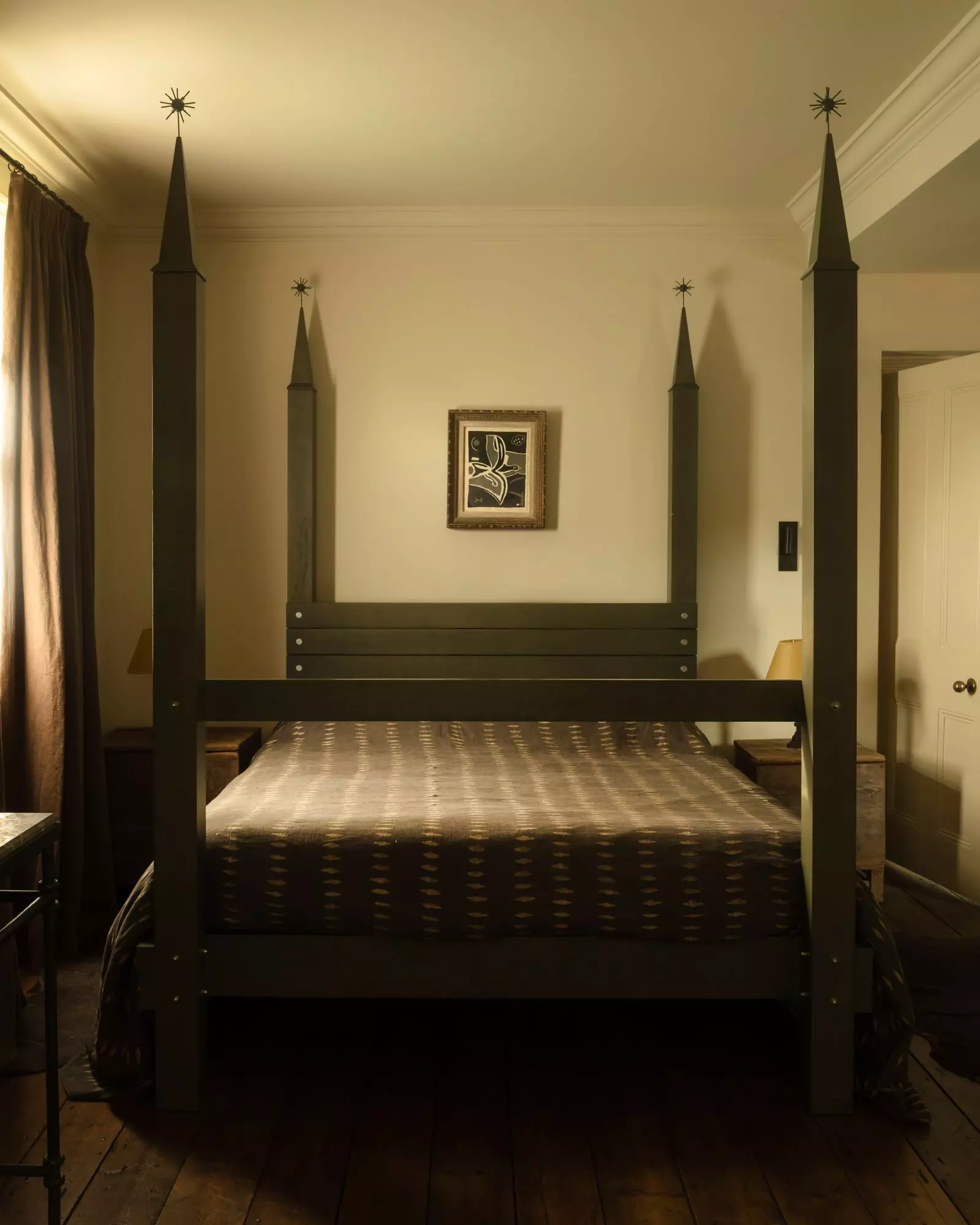
With its historical roots tracing back to the Middle Ages, a four-poster bed serves as an excellent starting point for a witchcore-inspired bedroom. Interior designer Hollie Bowden's project in Winchester, England, showcases a captivating example: a dramatic, dark green bed designed by John Hejduk, featuring castle-like turrets and metal spires crowning each post. Bowden emphasizes how such an unexpected element can profoundly alter a room's atmosphere, infusing it with a gothic, edgy, and slightly strange character.
Chainmail's Resurgence: Adorning Modern Spaces with Ancient Armor
Medieval-style chainmail is also witnessing a significant surge in popularity, bringing a distinctive witchcore element to interiors. Mexico City's Panorammma design studio ingeniously incorporates this historical armor material into chairs, lighting, and decorative vases. Their Chainmail Cobweb Chandelier, designed to evoke a spider's web in gleaming silver metal, is particularly emblematic of the witchy aesthetic.
Wretched Flowers: Weaving Chainmail into Ethereal Decor
The New York-based studio Wretched Flowers further utilizes chainmail as delicate, decorative coverings for walls, lamps, and windows, even garnering celebrity appreciation. Their SoHo showroom exemplifies this approach, creating a moody interior that also features vintage molds for Frankenstein masks and a striking, spiky metal light fixture known as the Crown of Thorns, achieving a balance between the eerie and the elegant.
Candles: Bridging the Physical and Spiritual in Witchcore Interiors
When it comes to illumination, candles are undeniably the most potent witchcore choice. Historically central to pagan rituals and spell-casting, often placed on altars, candles symbolize a conduit between the material and spiritual realms. Perhaps as a counter-reaction to our hyper-digital existence, candlesticks and candelabras are currently highly sought after in interior design.
Crafting a Gothic Ambiance: The Allure of Candlelight
Erica Sellers, principal of Studio SII in Brooklyn, notes that candles are instrumental in establishing a "gothic mood." She explains that Gothic aesthetics appeal to our inclination for romantic, deeply sensual, and poetic environments. In a black-themed bathroom of an SII penthouse project, a twin candlestick sits contemplatively on the sink, its reflection mirroring in a corner, enhancing the dark and mysterious atmosphere.
The Home as a Sacred Space: Objects for Rituals
Arianna Bavuso, co-founder of Lisbon-based AB+AC Architects, believes that homes are evolving into sanctuaries, providing not only physical but also psychological and spiritual shelter. Her practice designs "objects for rituals," including altar-like steel candelabras. Bavuso finds candles fascinating, contrasting them with modern technology; their primitive, temporary nature requires engagement, a small analogue gesture that re-grounds individuals in their bodies and the present moment.
Infusing Spaces with Symbolic Power: Mystical Decor from AB+AC
AB+AC's 'Ring' candelabra was showcased at the "La Casa Magica" exhibition in Milan's Nilufar Gallery, alongside other furniture and homeware imbued with mystical qualities. Bavuso aims to reintroduce magic into the home, designing objects with significant symbolic and sensory power that can subtly influence behavior, even for brief moments.
Astrology and Folklore in Contemporary Home Furnishings
The iconography and motifs linked to magic and mysticism—such as tarot, folkloric figures, the moon, and zodiac signs—are increasingly integrated into interior design. Dolce & Gabbana Casa's 'Zodiaco Collection,' launched in October, exemplifies this with deep-blue tableware, home accessories, and textiles adorned with medieval map-style illustrations of celestial bodies and astrological symbols.
Briar Lighting Collection: Thorny Foliage and Grimms' Fairy Tales
London-based 2LG Studio, co-founded by Russell Whitehead, a tarot practitioner, collaborated with North South AD to launch Briar, a sculptural lighting collection. Inspired by imagery from Grimms' Fairy Tales, these lights mimic thorny bushes like blackthorn and rose, both plants historically significant in witchcraft, bringing a touch of dark enchantment to spaces.
Sonia Górecka's Textural Folklore: Weaving Ancient Beliefs into Modern Art
Polish artist and designer Sonia Górecka often draws inspiration from folklore for her ethereal textile creations. She blends traditional pagan figures and motifs into sheer curtains and vibrant jacquard weavings. Górecka is fascinated by how familiar surroundings can retain vestiges of ancient beliefs and magic, using textiles to explore the home as a liminal space where everyday life converges with the mysterious, and where Slavic folklore, pagan imagery, and forgotten traditions find contemporary expression.
Textiles as Portals: Connecting Worlds through Organic Fibers
For Górecka, textiles act as a "membrane between worlds." Weaving, in particular, has long been associated with witchcraft. By working with organic fibers, this practice fosters a deep connection to the natural world, a fundamental aspect of neopaganism and the witchcore philosophy.
Imogen Bright Moon: The Home as a Sacred Reflective Space
In England, practicing witch and artist Imogen Bright Moon crafts evocative tapestries from wool, silk, and linen. Her home serves as a vital reflective space. Above a wood-burning stove, her mantelpiece acts as a focal point for what she calls "magical objects and liminal artworks," including shells, dried plants, paintings, a ceramic candle sconce, a horseshoe, and one of her own textile pieces.
The Witch's Wisdom: Ancestral Lineage and Natural Connection
Imogen Bright Moon describes being a witch as being intricately connected to a vast network of wisdom. She emphasizes the dual connection to a lineage of ancestral grandmothers and a continuous, dynamic relationship with the natural world, engaging with landscapes, seascapes, and all elemental forms.
Beyond October: Infusing Your Home with Year-Round Enchantment
While October is often regarded as the season of the witch, the essence of witchcore can extend throughout the year. Whether by introducing more candles, a gothic bed, folkloric textiles, or simply embracing natural elements, anyone can imbue their home with a touch of captivating enchantment, creating a space that feels uniquely magical and deeply personal.
About the author
Tim Gunn
Fashion consultant and TV personality known for "Project Runway" and his ethos of "make it work."