Dominic Sangma's 'Veil of Dust' Explores Unregulated Stone Mining at Busan Asian Project Market
ByGuillermo del Toro
Dominic Sangma's upcoming film, 'Veil of Dust,' promises a powerful narrative stemming from the detrimental impact of unregulated stone mining, a deeply personal and pervasive issue in his homeland. This project, currently in development and seeking collaborators at the Busan International Film Festival's Asian Project Market, extends Sangma's artistic exploration of his community's struggles, following the critical acclaim of his previous works like 'Ma'ama' and 'Rapture.'
'Veil of Dust': A Deep Dive into Exploitation and Resilience
In the heart of the Busan International Film Festival's Asian Contents & Film Market, filmmaker Dominic Sangma unveiled his latest ambitious project, 'Veil of Dust.' This drama courageously addresses the grim realities of uncontrolled stone mining through the story of Nengsal, a 35-year-old villager who loses a leg in a mining explosion. His devoted wife, Ajin, 32, embarks on a desperate quest for compensation, only to confront a deeply flawed system riddled with exploitation. Local leaders are compromised, humanitarian organizations have their own agendas, and the mine owner brazenly admits Nengsal was never officially employed, leaving him disenfranchised in his own ancestral land. As hope dwindles, the narrative intertwines with the mystical, seen through the eyes of their children, 12-year-old Kasanchi and 10-year-old Miklu. A local healer, Rengin, leads Miklu through a disturbing ritual to symbolically transfer his father’s injury. The tragedy escalates when another blast claims a young boy’s life, leading village elders to accept hush money, further complicating Ajin's fight for justice. With Nengsal's suffering intensifying and traditional avenues for redress closed off, Ajin contemplates a grim solution using potent herbs from her garden, capable of both healing and inflicting harm.
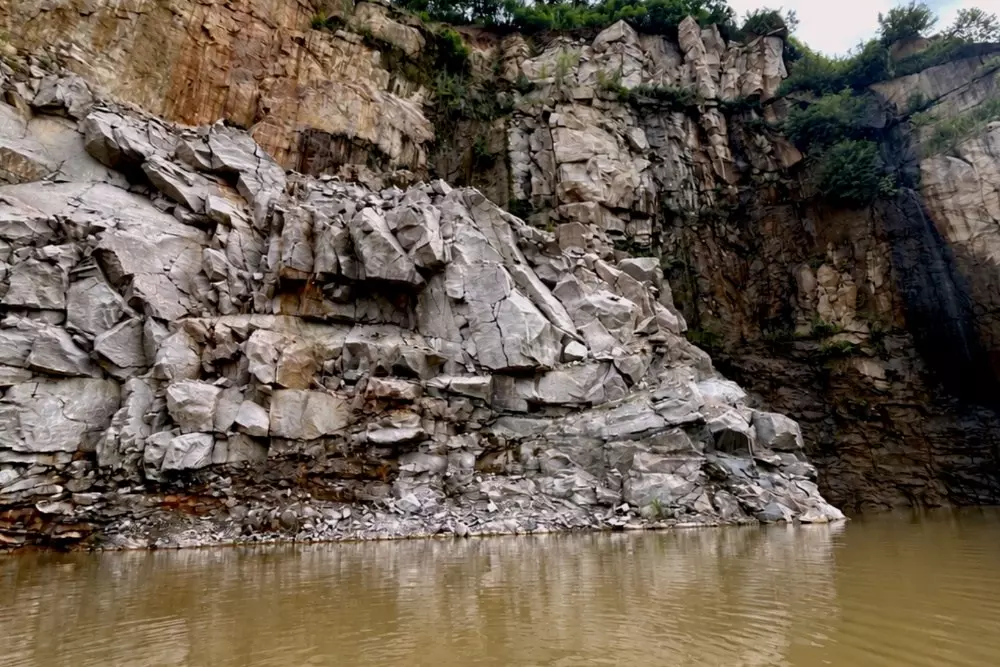
Sangma revealed that stone mining has always been a backdrop in his films, but its escalating urgency prompted him to make it the central theme of 'Veil of Dust,' even postponing the final installment of his village trilogy. His childhood memories are punctuated by the sounds of explosions, tremors shaking the earth, the ruin of homes and farmlands, and countless lives lost to mining accidents. It was during a recent return to his village that he witnessed the alarming progression of landslides, crumbling structures, and mines encroaching perilously close to residential areas, compelling him to shed light on this ignored crisis. Sangma emphasized that for an outsider, unregulated mining might appear to be solely an environmental concern, but for those living under its shadow, it erodes not just the landscape but the very spirit of the community. As a father himself, he hopes his voice will contribute to creating a safer future for his daughter. Producer Xu Jianshang, who also backed Sangma's acclaimed 'Ma'ama' and 'Rapture,' lauded the director's dedication to exposing his community's suffering, noting that these deeply local issues resonate globally. 'Rapture' premiered to acclaim at Locarno in 2023, while 'Ma'ama' garnered awards at the Shanghai International Film Festival and Jogja-Netpac Asian Film Festival. Currently, 'Veil of Dust' is actively seeking financial backing and international co-production partners at Busan.
This film serves as a crucial lens into the ethical dilemmas presented by unchecked industrial expansion and its impact on vulnerable communities. It compels us to reflect on the silent struggles unfolding in resource-rich areas and question the complicity of individuals and systems that allow such exploitation to persist. Sangma’s work is a poignant reminder that genuine change often begins with the courageous voices that dare to challenge the status quo, pushing audiences to confront uncomfortable truths and consider their own role in environmental stewardship and social justice.
About the author
Guillermo del Toro
Oscar-winning filmmaker and author whose work and commentary explore fantasy, horror, and cinema.