Democratic 'Blue Wave' Impact on Hollywood and Media
ByStephen King
The recent Democratic electoral victories, widely seen as a public statement against the current presidential administration, will usher in a new political landscape that extends its influence to the entertainment and media sectors. This shift raises significant questions for Hollywood studios, broadcasting companies, and their lobbying efforts in Washington, D.C.
Democratic Election Reshapes Washington, Impacts Entertainment Industry
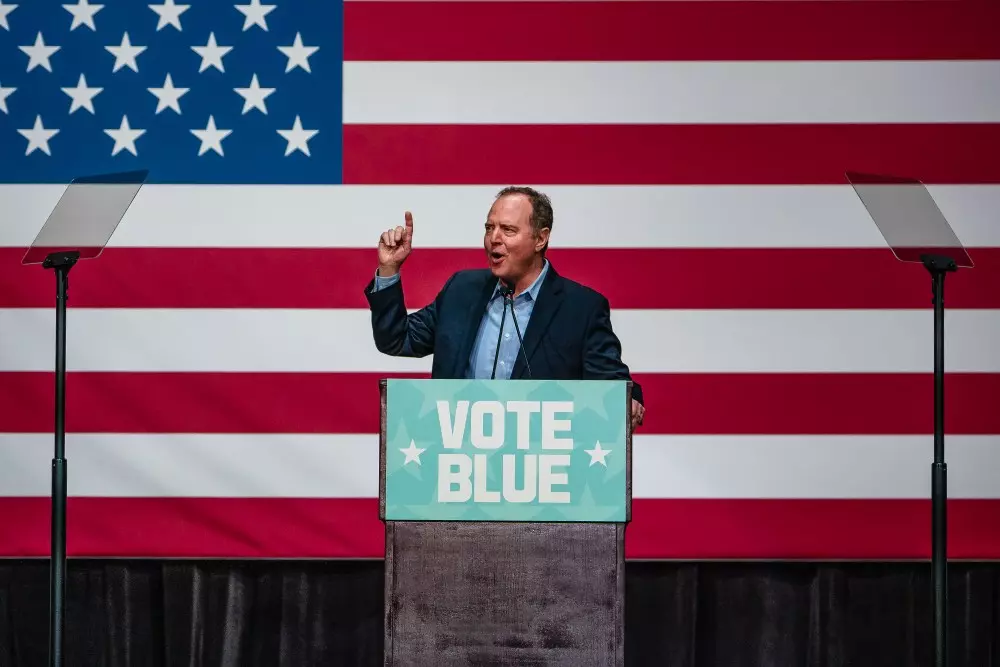
On November 4, 2026, the Democratic Party secured a significant sweep in the midterm elections, signaling a notable shift in the political power balance. This outcome, largely interpreted as a public referendum on President Trump's administration, has far-reaching implications, particularly for the vibrant worlds of Hollywood and media. Senator Adam Schiff of California, a prominent Democratic voice, was seen addressing supporters at the Hollywood Palladium on November 1, 2026, underscoring the growing political momentum. This new 'blue reality' in Washington is expected to influence several key areas over the remaining two years of Trump's presidency.
One critical area is the push for federal tax incentives for the entertainment industry. While a bipartisan bill, supported by figures like Adam Schiff and even, at times, President Trump, was under consideration, the recent electoral disruption casts a shadow of uncertainty. President Trump's wavering stance, as expressed at a recent rally, further complicates the path forward. Although the industry holds onto hope, the immediate focus of Congressional Republicans on internal leadership struggles may delay progress. Conversely, House Democrats, anticipating greater leverage in the upcoming Congress, might choose to postpone any bipartisan agreements until they can exert more influence, potentially necessitating a complete restart of legislative efforts. With a more supportive Democratic presence, the prospects for these incentives could improve in the 120th Congress, though maintaining the current sense of urgency for immediate action might prove challenging.
The Federal Communications Commission (FCC) is another institution poised for change. While Democratic control of Congress won't directly alter the FCC's composition, it will undoubtedly intensify oversight of Chairman Brendan Carr. Congressional Democrats view Carr's recent actions, including inquiries into political commentary and interactions with broadcasters over perceived comedic transgressions, as indicative of an attempt to suppress dissenting voices. This could lead to congressional investigations utilizing subpoena power, creating a potentially contentious environment.
Public broadcasting, including PBS and NPR, also faces a potential resurgence. Following the previous year's defunding of the Corporation for Public Broadcasting (CPB), which stripped $1.1 billion and severely impacted local stations, Democrats' return to power offers a glimmer of hope for restoring funding. However, this effort would likely reignite cultural debates, as conservative factions often criticize NPR and PBS for perceived left-leaning biases. Advocates, such as Rima Dael, CEO of the National Federation of Community Broadcasters, are calling for a modernized approach to federal support, one that moves beyond traditional broadcasting and addresses contemporary community needs, including access to reliable, fact-based information in an era of uneven internet access and pervasive misinformation.
Finally, the House Oversight Committee is expected to launch a series of extensive investigations. These inquiries could delve into media companies' interactions with the former president, potentially examining past dealings, documentary agreements, and lawsuits. The committee might also scrutinize the Ellison family's pursuit of presidential approval for major media mergers. Such investigations could lead to protracted disputes over executive privilege but, if successful, could unveil internal communications revealing the intricate dynamics between major media entities and the executive branch during a period of significant political influence.
The recent Democratic electoral success marks a pivotal moment for Washington and, by extension, the interconnected worlds of Hollywood and media. This shift underscores the intricate relationship between politics and creative industries, highlighting how changes in government can directly influence policy, funding, and oversight. As the new political landscape takes shape, it presents both challenges and opportunities for stakeholders in the entertainment and media sectors. It also reinforces the importance of informed civic engagement and continuous dialogue between government and industry to navigate these evolving dynamics. The coming years will undoubtedly be a period of significant adjustment and strategic maneuvering for all involved.
About the author
Stephen King
Prolific author of horror and suspense, who also writes extensively on the craft of writing and pop culture.