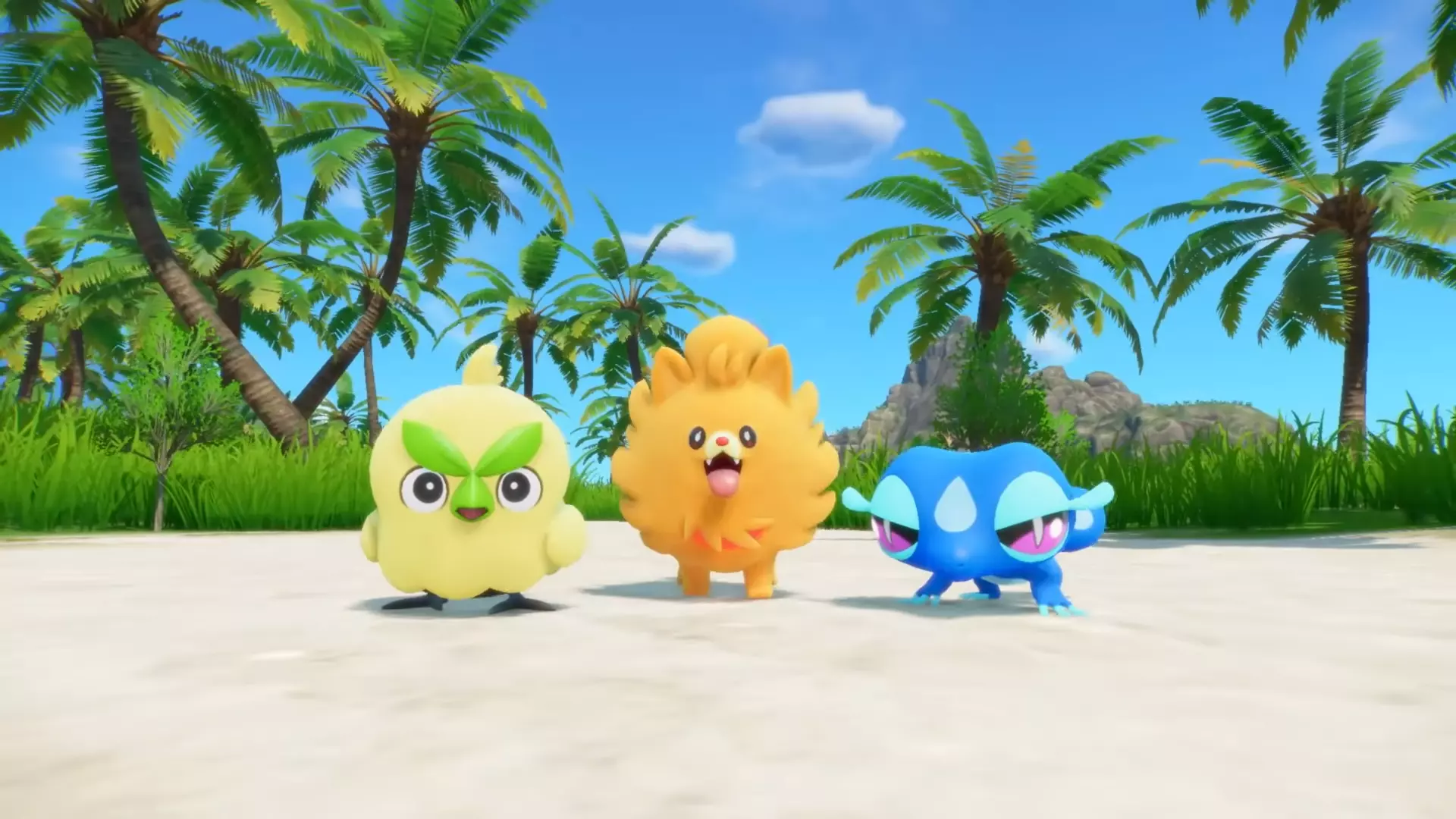
The Debate Over 300 New Pokémon in Upcoming Titles
ByHideo Kojima
Recent speculations indicate that the forthcoming Pokémon installments, rumored as 'Winds' and 'Waves,' might unveil an astonishing 300 fresh Pokémon. This potential expansion dwarfs all previous generations and has ignited a fervent discussion among fans and critics alike regarding the franchise's future direction. The debate centers on whether such a substantial addition would revitalize the creature-collecting experience or lead to an unwelcome overabundance.
Upcoming Pokémon Generation: Unpacking the 300-Creature Rumor
In the realm of Pokémon, a seismic shift may be on the horizon. Reports emerging this summer, linked to the unconfirmed titles 'Pokémon Winds' and 'Pokémon Waves,' point towards an introduction of approximately 300 new Pokémon. If these whispers hold true, this would mark the most significant single-generation expansion in the franchise's history. To put this into perspective, previous generations have typically added between 72 and 156 new species. The first generation, for example, introduced 151 Pokémon in 1998, while the most recent ninth generation in 2022 brought 120. This rumored figure of 300 would fundamentally redefine the scope of new creature introductions.
The community's response to this potential development is largely divided. Some enthusiasts welcome the prospect of a vast new roster, envisioning fresh strategic possibilities and extended gameplay. Others express trepidation, fearing that such a large number could lead to creature design fatigue and an oversaturation of the Pokédex. A key clarification within these leaks suggests that the 300 creatures might not all be entirely novel species; the count could encompass regional variants and alternate forms alongside completely original designs. This distinction, however, is often considered moot by players, as regional forms like the Alolan Ninetails offer distinct visual, elemental, and combat characteristics that set them apart from their original counterparts, demanding unique tactical considerations.
Furthermore, the implications extend to gameplay mechanics. Historically, Pokémon games emphasized a core party of six creatures, fostering deep bonds and strategic decision-making. However, recent titles, beginning with 'Let's Go Pikachu!' and 'Let's Go Eevee!' in 2018, have increasingly liberalized the party management system, allowing for more flexible, on-the-fly swaps. This trend was further amplified in 'Legends: Z-A.' An influx of 300 new Pokémon would likely accelerate this shift, making the traditional six-Pokémon party concept less central to the gameplay experience.
Concerns also surface regarding the originality and quality of creature designs. With ten generations already established, some critics argue that the well of innovative Pokémon concepts is running dry, citing examples like a Pokémon based on a set of keys or an ice cream cone. While acknowledging the subjective nature of design preferences and the adage that 'every Pokémon is someone's favorite,' a 2025 survey involving over 26,000 respondents revealed that more than 50 Pokémon received no votes, with only one of these being from the original 151. This suggests that while some recent designs, like Dragapult, are highly praised, others, such as Applin or Flamigo, face more mixed reactions. The challenge for Game Freak, should the 300-Pokémon rumor prove true, would be to consistently deliver engaging and distinct designs on an unprecedented scale.
Ultimately, without concrete details about the overarching structure of 'Winds' and 'Waves'—including the name of their tropical setting—it remains difficult to definitively assess the ideal number of new Pokémon. However, the prospect of 300 new additions raises significant questions about maintainability and the feasibility of 'catching them all,' a long-standing mantra for many trainers.
The potential introduction of 300 new Pokémon in the upcoming 'Winds' and 'Waves' titles prompts a fascinating contemplation on the evolving nature of the Pokémon franchise. While the sheer volume promises an expanded universe, it also highlights the delicate balance between innovation and saturation. This development challenges long-held gameplay conventions, particularly the strategic significance of the six-Pokémon party, pushing players towards a more fluid and adaptable approach to team building. Moreover, it places immense pressure on creature designers to consistently deliver imaginative and compelling concepts, ensuring that quality isn't sacrificed for quantity. As a dedicated fan, I find myself torn between the excitement of discovering a vast array of new companions and the apprehension that the essence of careful selection and deep connection with a chosen few might be diluted. It's a reminder that even in established franchises, growth brings both exhilarating possibilities and the responsibility to preserve the core magic that captivated us from the beginning.
About the author
Hideo Kojima
Auteur game designer known for the "Metal Gear" series, blending complex narratives with gameplay.