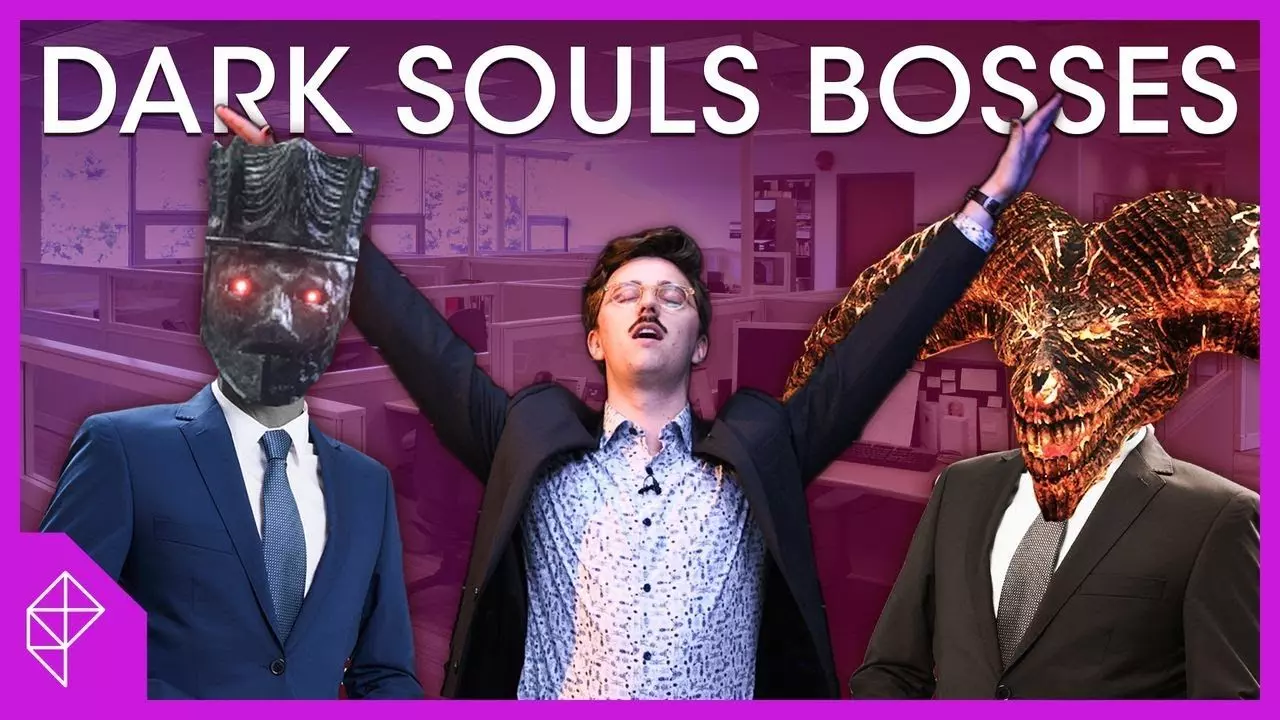
This analysis delves into the hypothetical scenario of Dark Souls antagonists navigating the complexities of modern corporate leadership, humorously assessing their potential as business managers. It provides a unique lens through which to view these formidable characters, moving beyond their combat capabilities to evaluate their organizational and strategic talents within an office setting. The objective is to determine which boss possesses the optimal attributes for excelling in a corporate environment, considering factors like decision-making, team motivation, and overall strategic vision.
Evaluating Dark Souls Bosses for Corporate Roles
The premise of evaluating Dark Souls bosses as corporate managers offers an amusing and insightful thought experiment. Brian David Gilbert's unique perspective reimagines the skills and traits that make these bosses formidable adversaries on the battlefield into qualities that might define effective, or comically ineffective, corporate leaders. This approach moves beyond the traditional understanding of these characters, inviting a re-evaluation of their inherent characteristics—such as their imposing presence, strategic attack patterns, and the sheer challenge they represent—through the filter of business acumen. The goal is to determine which of these iconic figures could genuinely thrive, or at least survive, in the often-cutthroat world of business, turning their destructive tendencies into productive managerial tactics.
In this unconventional assessment, each Dark Souls boss is subjected to a satirical yet thought-provoking analysis of their managerial potential. Factors such as their ability to command respect, their strategic approach to combat (which could translate to business planning), their resilience in the face of adversity, and even their aesthetic, are all considered in a corporate context. For instance, a boss known for their relentless pursuit might be seen as a highly driven project manager, while one employing complex, multi-stage attacks could be lauded for their elaborate strategic planning. This exercise not only provides entertainment but also subtly encourages a deeper appreciation for the diverse character designs and narrative depth within the Dark Souls series, by forcing us to imagine them in a radically different, utterly mundane, yet equally challenging environment.
The Best Boss for Business Leadership
Identifying the top candidate among Dark Souls bosses for business leadership requires a careful, albeit humorous, examination of their inherent traits and how these could manifest in a corporate setting. The ideal managerial boss would likely possess a combination of strategic foresight, unwavering determination, and perhaps a touch of intimidating charisma to keep their subordinates in line. Such a figure would not only be capable of making tough decisions under pressure but also inspire a peculiar form of loyalty or fear that ensures productivity. The analysis humorously highlights that while some bosses might excel in niche roles, only a select few demonstrate the holistic qualities necessary for effective, albeit unconventional, corporate governance. This playful ranking offers a fresh perspective on power dynamics and leadership styles, filtered through the dark fantasy world of Dark Souls.
Ultimately, the quest to crown the best Dark Souls boss for business leadership reveals a fascinating blend of humor and character analysis. The chosen boss, through this unique framework, would embody traits such as the ability to adapt to changing market conditions (like evolving combat phases), the capacity to motivate a team (even if through sheer terror), and a clear, albeit often brutal, vision for success. This exercise transcends mere game lore, venturing into a creative space where the formidable challenges presented by these bosses are reinterpreted as complex business problems. The conclusion, while satirical, encourages a deeper understanding of leadership qualities, suggesting that even in the most unexpected places—like the dark, desolate world of Dark Souls—one can find fascinating examples of managerial potential, albeit often steeped in dark humor and fantasy.
About the author
Sid Meier
Pioneering game designer known for the "Civilization" series and his philosophy on game design.