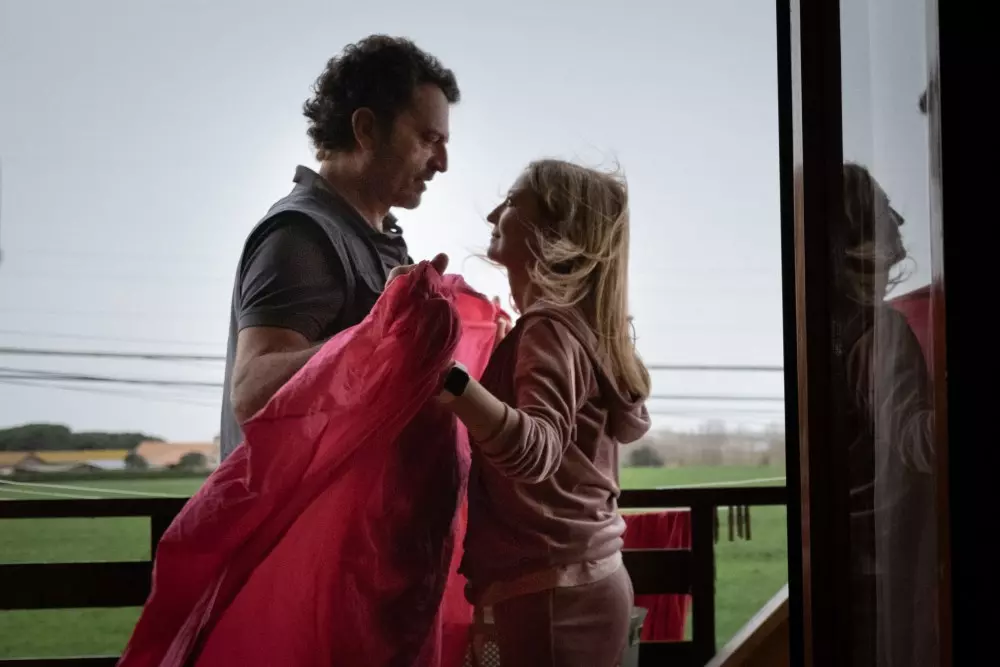
A Common Story: A Poignant Exploration of Unspoken Emotions in Relationships
ByGuillermo del Toro
'A Common Story' is a profound film that delves into the intricate emotional landscape of a couple confronting a significant life transition. Directed by Anna Foglietta and featuring stellar performances from Alba Rohrwacher and Guido Caprino, the movie skillfully navigates the unspoken struggles within a long-term relationship. It portrays how the inability to verbalize deep-seated feelings can lead to emotional detachment and a crisis of identity, particularly for the female protagonist. The narrative highlights the power of silence and non-verbal communication in conveying profound human experiences, making it a compelling study of modern relationships and personal introspection.
Unveiling the Quiet Cracks in a Couple's Foundation
The Silent Struggle: When Words Fail
In cinematic portrayals of romantic entanglements, the eruption of verbal conflict often serves as a dramatic centerpiece. However, Anna Foglietta, in her inaugural directorial endeavor, opts for a more subdued yet equally impactful approach. She illustrates that the absence of articulate expression can be far more potent than any heated exchange. 'A Common Story' distinguishes itself within Italian cinema, which frequently leans on vociferous disputes, by emphasizing the emotional chasm that opens when individuals struggle to convey their innermost thoughts. The exceptional acting by Alba Rohrwacher and Guido Caprino, arguably their finest to date, elevates this exploration of emotional reticence.
Echoes of Emptiness: The Departure and Its Aftermath
The film's opening sequence, a series of desolate university corridors, powerfully symbolizes the void experienced by Erika (Rohrwacher) and Mauro (Caprino) as their only daughter, Irene (Ksenia Borzak), embarks on her collegiate journey. This visual metaphor perfectly encapsulates the 'empty nest' phenomenon. While their daughter's pursuit of higher education fills them with pride, her absence leaves a significant vacuum in their daily lives. Upon returning home, they fall back into their accustomed routines: Mauro immersed in the construction business with his father Marcello (Elio De Capitani), and Erika resuming her role as a supermarket cashier.
A Life Defined by Nurturing: Erika's Shifting Purpose
Erika's existence had always been anchored by a sense of purpose rooted in caring for her family. Her mornings began with baking, followed by errands to check on her mother Altea (Caterina Casini), meticulous housework, and meal preparation. These domestic duties provided a tangible sense of value and meaning. Now, as her daughter is grown and her mother increasingly independent, Erika finds herself adrift, lacking the self-awareness to comprehend her evolving emotional state. Approaching 45, the bedrock of her identity begins to crumble without the familiar responsibilities that once defined her.
The Unspeakable Burden: Erika's Descent into Disorientation
Erika's fundamental need to feel indispensable is severely tested by Irene's departure and Altea's self-sufficiency. A crucial turning point lies in her inability to confide in Mauro about her feelings. Despite their profound affection, they lack a history of deep psychological discourse. Unequipped with the language to articulate her emerging depression, Erika's emotional state deteriorates, leaving Mauro to observe her decline with a sense of helpless confusion. This narrative thread speaks to countless women whose self-worth, tied to their nurturing roles, diminishes when those roles change, yet they lack the tools to process these profound shifts.
Mauro's Dilemma: The Fixer Who Cannot Mend
As a man, Mauro perceives his role as the steadfast provider and problem-solver. His work in construction reinforces this identity, but he finds himself utterly unprepared to 'fix' Erika's internal struggles. His father Marcello's constant criticisms further erode his sense of self-worth. When he discovers Marcello has sold their family business without his knowledge, Mauro's perception of his foundational role within the family shatters. A pivotal argument between Erika and Mauro, following a humiliating family gathering, is filmed with striking intimacy. Initially, Foglietta positions the camera at a distance, viewing them through the car windows, before gradually moving closer as Erika's emotional dam breaks. This rare outburst underscores their profound inability to articulate vulnerability, highlighting a shared need for connection that they struggle to express.
The Quest for Identity: Consumerism's False Promise
Alone at home, stripped of her domestic routines, Erika finds herself calling a telemarketer after watching an infomercial for face cream. The saleswoman's questions about her skin type, a concept Erika has never considered, leave her bewildered. Her initial excitement about the product's transformative promise quickly dissolves into disillusionment. This scene powerfully illustrates Erika's broader identity crisis: unable to fulfill her traditional roles as a daughter and mother, she also finds herself incapable of conforming to the ideals of a consumer-driven society that promises external solutions to internal voids.
The Eloquence of Silence: A Couple's Unspoken Connection
The film culminates in Rohrwacher's tender portrayal of Erika's inner turmoil, a vacuous yet agitated state marked by profound perplexity. Caprino mirrors this with Mauro's subtle rendering of incomprehension, showcasing a couple on the precipice of emotional collapse. Through their glances, gestures, and the potent silences between them, these actors masterfully convey a deep affection and an intense, albeit unarticulated, yearning for mutual understanding. Their performances suggest that even when words fail, a shared history and an underlying love can offer a glimmer of hope for reconciliation and healing.
About the author
Guillermo del Toro
Oscar-winning filmmaker and author whose work and commentary explore fantasy, horror, and cinema.