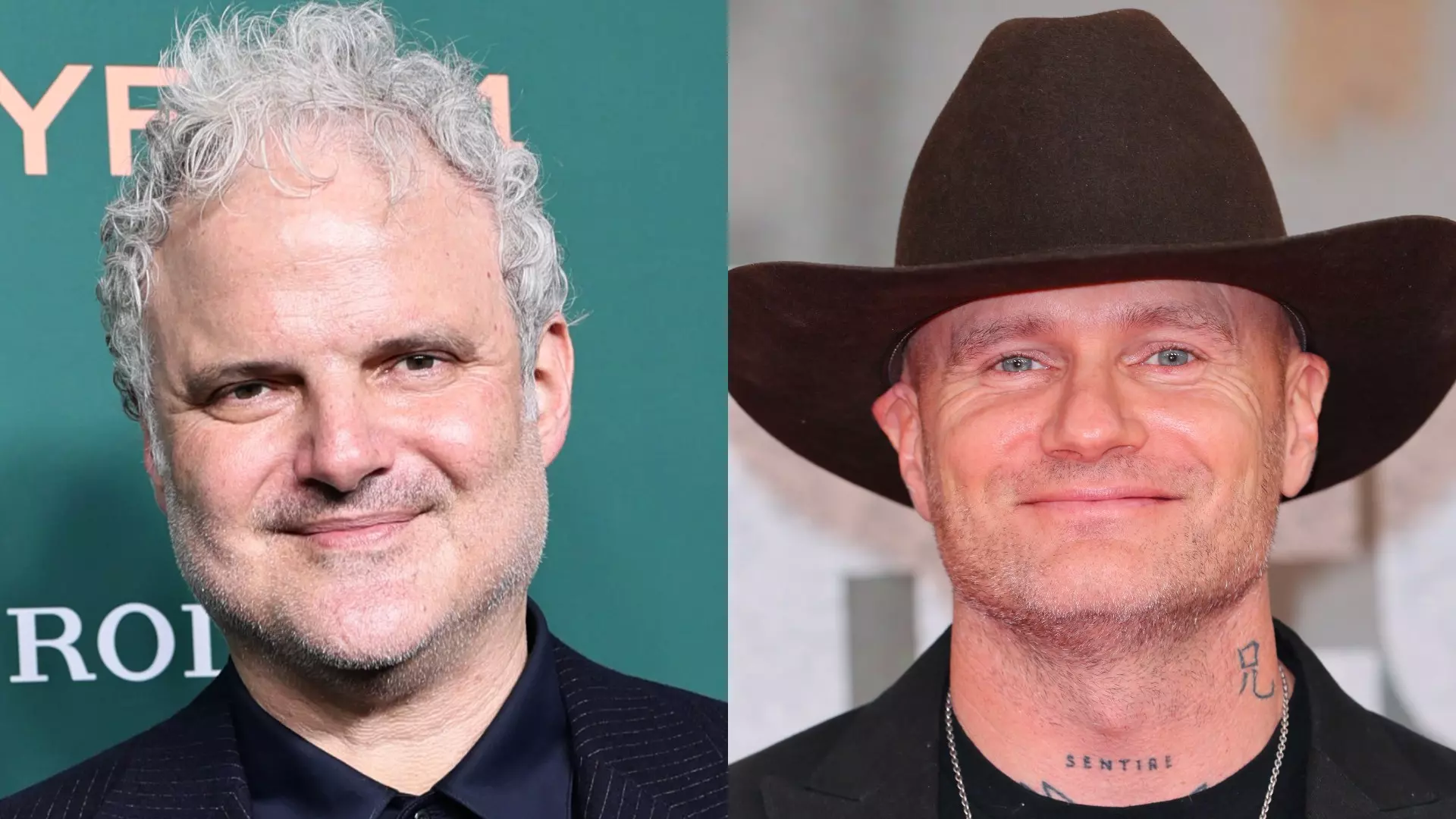
Cinematographers Sam Levy and Jamie Ramsay Share Insights at Camerimage
ByTa-Nehisi Coates
At the Camerimage festival, renowned cinematographers Sam Levy and Jamie Ramsay provided valuable perspectives to emerging filmmakers, underscoring the significance of intuition and a personal touch in their craft. Despite their contrasting professional paths and artistic approaches, both artists converged on the idea that cinematography extends beyond technical mastery, focusing instead on the deeper 'why' behind visual storytelling. Their discussions illuminated the formative experiences that shaped their careers and offered timeless advice to those embarking on their own cinematic journeys, emphasizing dedication and the lasting impact of their visual contributions.
The Diverse Paths of Cinematic Visionaries
Sam Levy and Jamie Ramsay, two cinematographers with vastly different backgrounds, recently shared their journeys at the Camerimage festival. Levy, who initially pursued comparative literature and considered a career in diplomacy, transitioned into film after assisting Harris Savides. His collaborations with directors like Noah Baumbach and Greta Gerwig have established him as a distinctive voice in American independent cinema. Ramsay, on the other hand, describes himself as a 'punk' who found his calling at the Academy of Film and Dramatic Art in Johannesburg. His career took an international turn after working on films like 'District 9' and with director Oliver Hermanus, making a name for himself in British and global cinema.
Levy's visual style tends to be more observational and fluid, exemplified in films such as 'The Only Living Pickpocket in New York,' where he employed vintage lenses to capture an analog feel despite shooting digitally. Ramsay's aesthetic, as seen in Sian Heder's 'Being Heumann,' leans toward a deliberately composed visual narrative. Their discussion at Camerimage transcended technical jargon, focusing on the personal motivations and intuitive aspects of filmmaking. Both cinematographers stressed that the core of their work is not merely about lenses and lighting, but about understanding the emotional resonance and underlying purpose of their visual choices. Levy's mentorship under Savides taught him the chaotic yet creative nature of filmmaking, while Ramsay's experiences, often marked by confrontations over time and budget, solidified his rebellious spirit and determination to overcome challenges.
Intuition, Mentorship, and Lasting Legacies in Cinematography
At Camerimage, both Levy and Ramsay emphasized the critical role of intuition in cinematography, advocating for a deeper understanding of the 'why' rather than solely focusing on the 'how.' Levy shared how his mentor, Harris Savides, taught him that filmmaking is a messy process, like a moving train that never stops. He recounted an anecdote of shooting without permits in the New York subway for a commercial directed by Gus van Sant, where Savides advised him to claim it was a 'student film'—a story that amusingly backfired when their cover was blown by Van Sant's involvement. This experience, among others, reinforced Levy's belief in adapting and relying on one's innate sense, rather than strictly adhering to technical rules. His choice of Bausch & Lomb Super Baltar prime lenses for 'The Only Living Pickpocket in New York' to evoke an analog feel for a character out of sync with modern times perfectly illustrates his emotional approach to visual storytelling.
Ramsay, with his self-proclaimed 'rebel' attitude, highlighted that his most significant breakthroughs often stemmed from confronting and overcoming perceived negatives. He noted that he is most challenged when told he cannot achieve something, which ignites his rebellious spirit. His main conflicts on set typically revolve around 'time and money,' which he views as the two most crucial resources for a cinematographer. Despite their divergent methods—Levy's diplomatic approach versus Ramsay's confrontational style—both cinematographers conveyed the same fundamental message: trust your instincts and collaborators, and do not allow technicalities to overshadow the artistic essence. They urged young cinematographers to recognize the immense and lasting impact of their work, encouraging them to dedicate themselves to perfection, as "what you guys do lives forever."
About the author
Ta-Nehisi Coates
Author and journalist whose work on culture, race, and history includes writing for Marvel's "Black Panther."