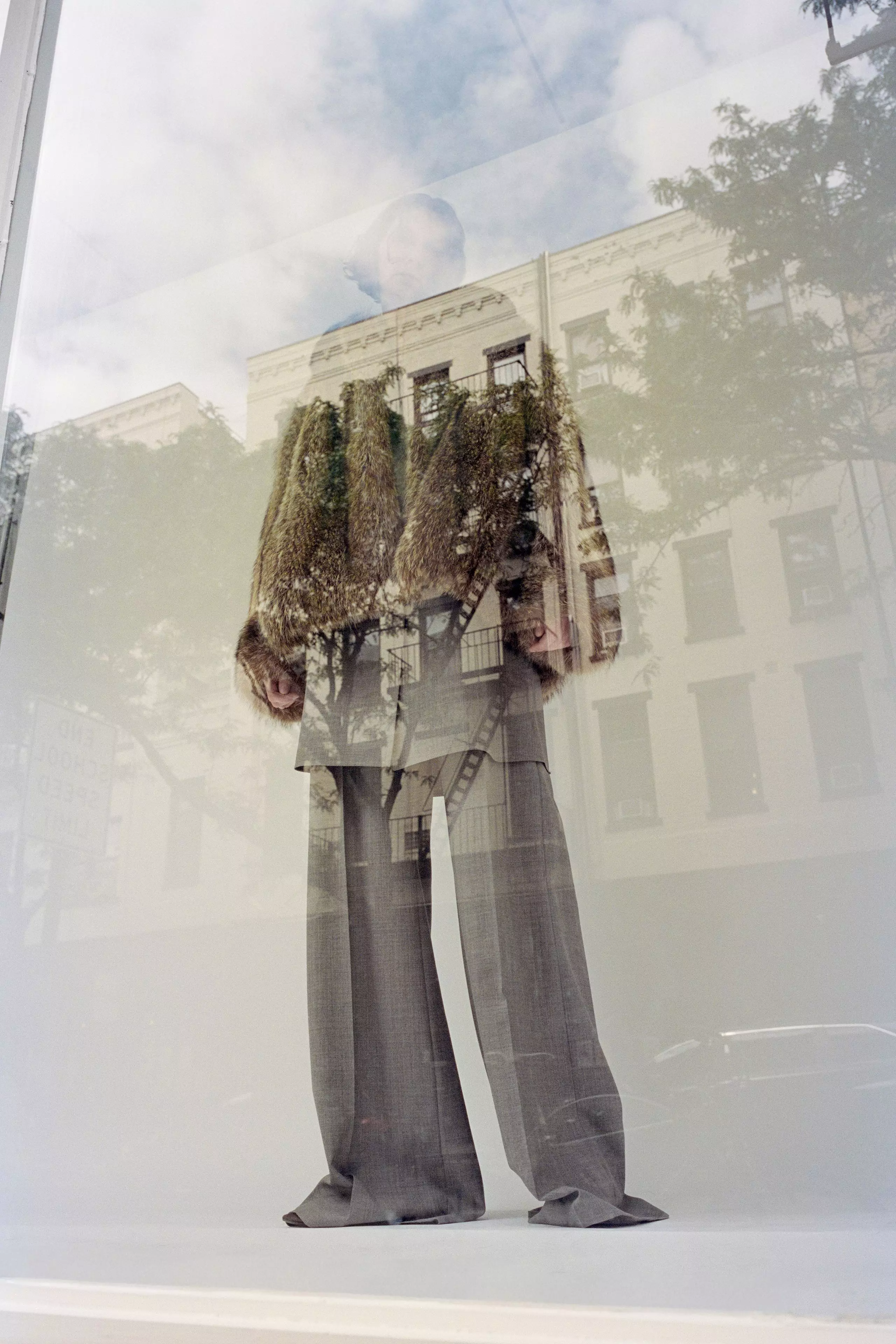
Chris Peters's brand, CDLM, stands as a testament to independent vision in a rapidly changing fashion landscape. Moving beyond conventional industry structures, CDLM operates on its own terms, offering a unique blend of creativity, sustainability, and a refreshingly rebellious spirit. This review delves into the brand's philosophy, its latest collection, and its distinctive presentation style, highlighting how CDLM carves its own path in the contemporary fashion world.
Redefining Fashion: Individuality, Innovation, and Independent Spirit
The Unconventional Philosophy of CDLM: A Visionary's Journey Beyond Traditional Fashion Boundaries
Chris Peters's fashion house, CDLM, appears to be a direct response to the turbulent state of the contemporary fashion scene. Having previously operated within established industry frameworks with his former label, Creatures of the Wind, alongside Shane Gabier, his current endeavor feels distinctly free-spirited, resistant to classification, and unbound by conventional rules. For instance, collections are numerically identified rather than being assigned to specific seasons, showcasing apparel suitable for any time of the year. He releases them when he deems them complete, and the same applies to their distribution. His creations utilize a diverse range of materials, incorporating both repurposed deadstock and newly sourced fabrics. Essentially, he dictates his own creative and operational terms.
Exploring the Latest Collection: A Fusion of Uniformity, Versatility, and Sartorial Reinvention
During a summer visit to a photoshoot for his most recent collection, Peters outlined the foundational tenets of his brand: a deep appreciation for uniforms, garments designed for multi-functional wear, and the concept of sartorial gestures—reimagining familiar items in novel ways. An example of this is a pair of shrunken woolen tights, wearable as traditional undergarments, or as standalone trousers. The collection showcased military-inspired outerwear, extended-length shirts, generously cut trousers, T-shirt dresses with subtle asymmetric cuts, and coats meticulously crafted from upcycled and pieced-together remnants of deadstock fur. Each piece is imbued with a distinctive eccentricity and a delicate sense of nostalgia, subtly evoking the intellectual anti-glamour aesthetic popularized by Margiela.
A Revolutionary Presentation: CDLM's Non-Traditional Showcase and Its Provocative Commentary
The collection's unveiling also deviates from the norm, presented as a "non-show show." Models are photographed within glass-enclosed retail windows, devoid of a live audience, with the reflective panes capturing the camera's flash or the photographer's silhouette. In essence, these images stand in stark contrast to conventional lookbook photography, which typically aims for clarity and optimal garment display. Interpreted from a particular viewpoint, this could be seen as an outsider's playful critique of the incessant cycle of fashion shows and social media imagery, further amplified by the fragmented state of the retail sector. Much like the collection itself, these visual presentations possess an unusual allure and boldly defy established norms.
About the author
Ruth E. Carter
Oscar-winning costume designer for films like "Black Panther," authoring works on the intersection of fashion, culture, and history.