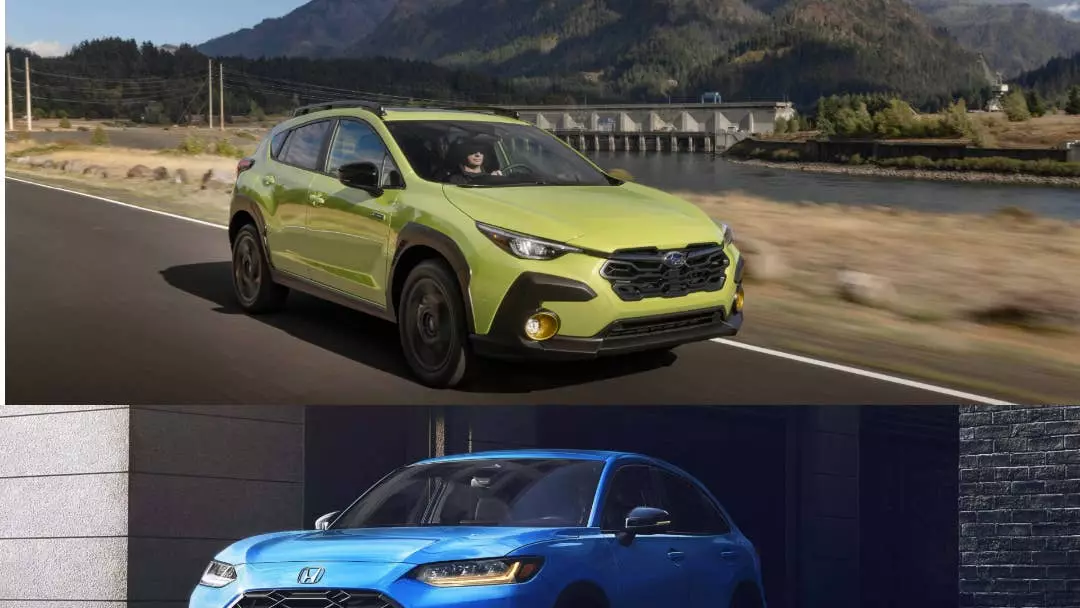
When evaluating subcompact crossovers, discerning the nuances of cargo space can be a crucial factor, subtly distinguishing one model from another. The Honda HR-V and Subaru Crosstrek represent two distinct philosophies within this segment; Honda prioritizes expansive interior volume and urban practicality, whereas Subaru focuses on robust all-weather traction and adventurous capabilities.
A detailed examination of their specifications reveals that while both vehicles are similarly priced, their core missions diverge significantly. The HR-V, with its 2.0-liter four-cylinder engine delivering 158 horsepower, offers a smooth yet unhurried driving experience, ideal for city and suburban commuting. Its composed handling and quiet cabin contribute to a refined ride that feels more akin to a tall hatchback. In contrast, the Crosstrek provides engine options, including a more potent 2.5-liter flat-four generating 182 horsepower, paired with standard symmetrical all-wheel drive. This setup, combined with its impressive 8.7 inches of ground clearance and X-Mode system, positions the Crosstrek as a more capable choice for light off-road excursions and challenging winter conditions. Although both vehicles prioritize efficiency, achieving fuel economy in the high 20s to around 30 mpg combined, the Crosstrek's larger engine option offers a noticeable boost in acceleration for highway driving.
The critical difference in cargo utility lies in the space available with the rear seats in use. The HR-V boasts 24.4 cubic feet behind the second row, a substantial advantage over the Crosstrek's 20.0 cubic feet. This additional four cubic feet in everyday configuration makes the HR-V considerably more practical for transporting groceries, luggage, or gear with passengers onboard. However, when the rear seats are folded flat, the maximum cargo capacities become remarkably similar: the HR-V offers 55.1 cubic feet, closely followed by the Crosstrek's 54.7 cubic feet. The HR-V also provides a slightly more spacious rear passenger compartment, while the Crosstrek's squarer rear design better accommodates bulky outdoor equipment. Ultimately, the choice hinges on individual priorities: the HR-V caters to those who value interior roominess and urban comfort, while the Crosstrek appeals to buyers seeking standard all-wheel drive and off-pavement readiness, demonstrating that a vehicle's value is best measured against its intended purpose and the lifestyle it supports.
About the author
Akira Maruta
Fictional representative of journalists deeply knowledgeable about JDM (Japanese Domestic Market) tuning and technology.