Bringing Doom to the Commodore 64: A Modern Programming Marvel
ByMark Rosewater
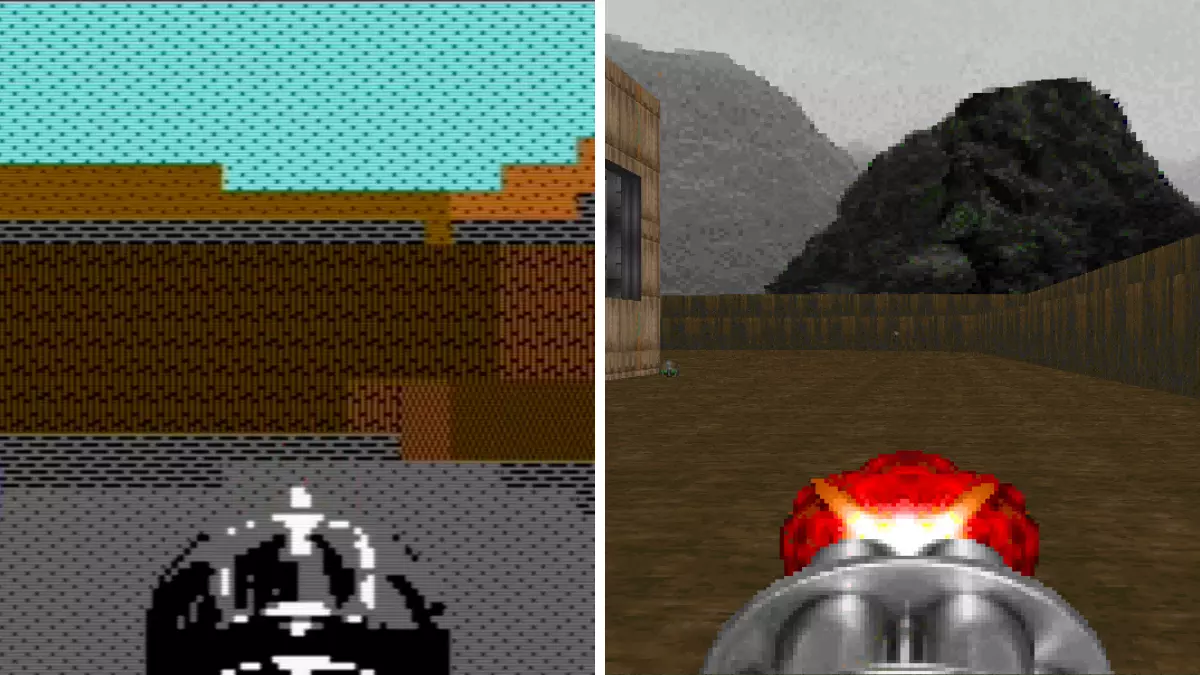
This article explores the remarkable achievement of a programmer who successfully adapted the iconic game Doom to run on the Commodore 64, a vintage 8-bit computer. It delves into the technical challenges and innovative solutions employed to bring a modern 3D game to a platform far predating its original release, highlighting the dedication and ingenuity involved in such a retro-computing endeavor.
Reimagining the Impossible: Doom on a Classic Console
The Unlikely Marriage: Doom and the Commodore 64
While the classic game Doom is known for running on virtually any device, from unexpected gadgets to nested within itself, its compatibility with the Commodore 64, an 8-bit computer released just a year before Doom's 1993 debut, presented a unique challenge. This venerable machine, despite its groundbreaking capabilities for its era, was not inherently designed to handle the demands of a first-person shooter.
The Visionary Behind the Port: Steve McCrea's Endeavor
Steve McCrea, an accomplished engineer and programmer with a portfolio that includes contributions to Metroid titles and the virtual reality adaptation of Resident Evil 4, has now undertaken an arguably even more significant project: creating a functional version of Doom for the Commodore 64.
Technical Prowess: Ray Casting on the C64
This endeavor is far from a simple conversion; it involves a complex technical approach. McCrea revealed on social media that his C64 Doom rendition utilizes a ray casting technique within a tile-based grid, drawing inspiration from his previous work on "The Keep," a first-person dungeon crawler developed for the Commodore VIC-20, an earlier system with even more constrained specifications.
Exceeding Expectations: Advanced Features in C64 Doom
Unlike "The Keep," which operated within a more rigid, grid-like environment reminiscent of early 3D games, McCrea's Commodore 64 Doom introduces several sophisticated features. These include dynamic floor and ceiling elevations, operational elevators, and the innovative inclusion of visible weapons, features that significantly enhance the immersive experience compared to its predecessors.
A Glimpse into the Future: Progress and Potential
The project's progress is genuinely impressive, with recent work-in-progress footage showcasing dynamic lighting and a skybox, elements previously thought impossible on the platform. McCrea has successfully implemented the first eight levels (E1M1 through E1M8) and is currently seeking a composer to create original music for the game.
Industry Recognition: A Testament to Innovation
The achievement has not gone unnoticed. Scott Miller, the founder of Apogee Software and publisher of Wolfenstein 3D, expressed his astonishment and a touch of wistfulness, recalling how id Software had deemed a Commodore 64 version of Wolfenstein impossible. McCrea's project stands as a powerful testament to the enduring spirit of innovation in game development, pushing the boundaries of what is conceivable on retro hardware.
About the author
Mark Rosewater
Head designer for "Magic: The Gathering" and author of long-running insights on game design.