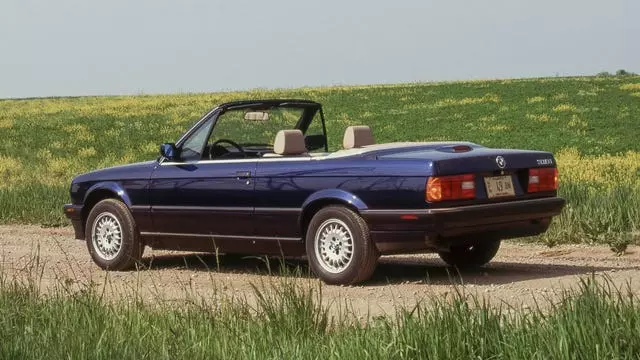
BMW 318i Convertible: Balancing Image and Performance in 1991
ByBrock Yates
This analysis delves into the characteristics of the 1991 BMW 318i convertible, offering a contemporary perspective from its debut. The piece critically evaluates the vehicle's design and mechanical attributes, contrasting its perceived image with its actual driving capabilities. It highlights the trade-offs made in this model, particularly concerning performance and convenience features, suggesting a strategic positioning within BMW's lineup at the time.
Vintage Drive: Unpacking the 1991 BMW 318i Convertible's Appeal
In August 1991, the automotive world turned its attention to BMW's latest offering, the 318i convertible. This two-door, four-passenger vehicle, mechanically mirroring its 318is sedan counterpart, was driven by a robust 134-horsepower twin-cam four-cylinder engine paired exclusively with a five-speed manual transmission. Despite sharing a powertrain, the convertible model carried an additional 250 pounds, a consequence of extensive chassis bracing and reinforced doorsills designed to maintain structural integrity. This added mass, however, contributed to a noticeable decrease in acceleration, with the convertible reaching 60 mph in 9.7 seconds, a full second slower than the sedan. Priced at a substantial $29,060, it commanded nearly $7,000 more than the 318is, positioning it as a premium option primarily for those valuing aesthetics and the BMW badge. The engine's smooth power delivery and the meticulously spaced gear ratios were lauded, providing a continuous surge of power from a standstill to its top speed of 119 mph. However, the convertible's handling betrayed a lack of the crispness found in the hardtop, exhibiting a distinct wiggling and twisting sensation over uneven roads, a surprising trait given that BMW's advanced Wackersdorf plant manufactured it specifically as a convertible, suggesting a dedicated structural design. Despite this, the car offered an enjoyable open-air experience, with minimal wind noise when the top was down, complemented by a superior six-speaker stereo system. Raising and lowering the unpadded soft-top was a manual affair, requiring the driver to exit the vehicle. While lowering was straightforward, raising it was notably less convenient, hinting at the entry-level positioning of this particular model. For an additional $7,500, a more powerful six-cylinder 325i convertible with a power-operated top was available, an option BMW projected would outsell the 318i convertible two to one, underscoring the market's preference for enhanced convenience and performance at a higher price point.
This historical review of the 1991 BMW 318i convertible offers a fascinating glimpse into the automotive priorities of the era. It underscores the perpetual balancing act manufacturers face between luxury, performance, and cost. While the 318i convertible may not have delivered the uncompromised driving dynamics enthusiasts expected from BMW, its emphasis on brand image and the allure of open-top motoring at an accessible (for BMW) price point resonated with a significant segment of buyers. It serves as a reminder that sometimes, the emotional appeal and prestige of a vehicle can outweigh purely objective performance metrics, shaping its success in the marketplace.
About the author
Brock Yates
Legendary automotive journalist who created the Cannonball Run and wrote for Car and Driver.