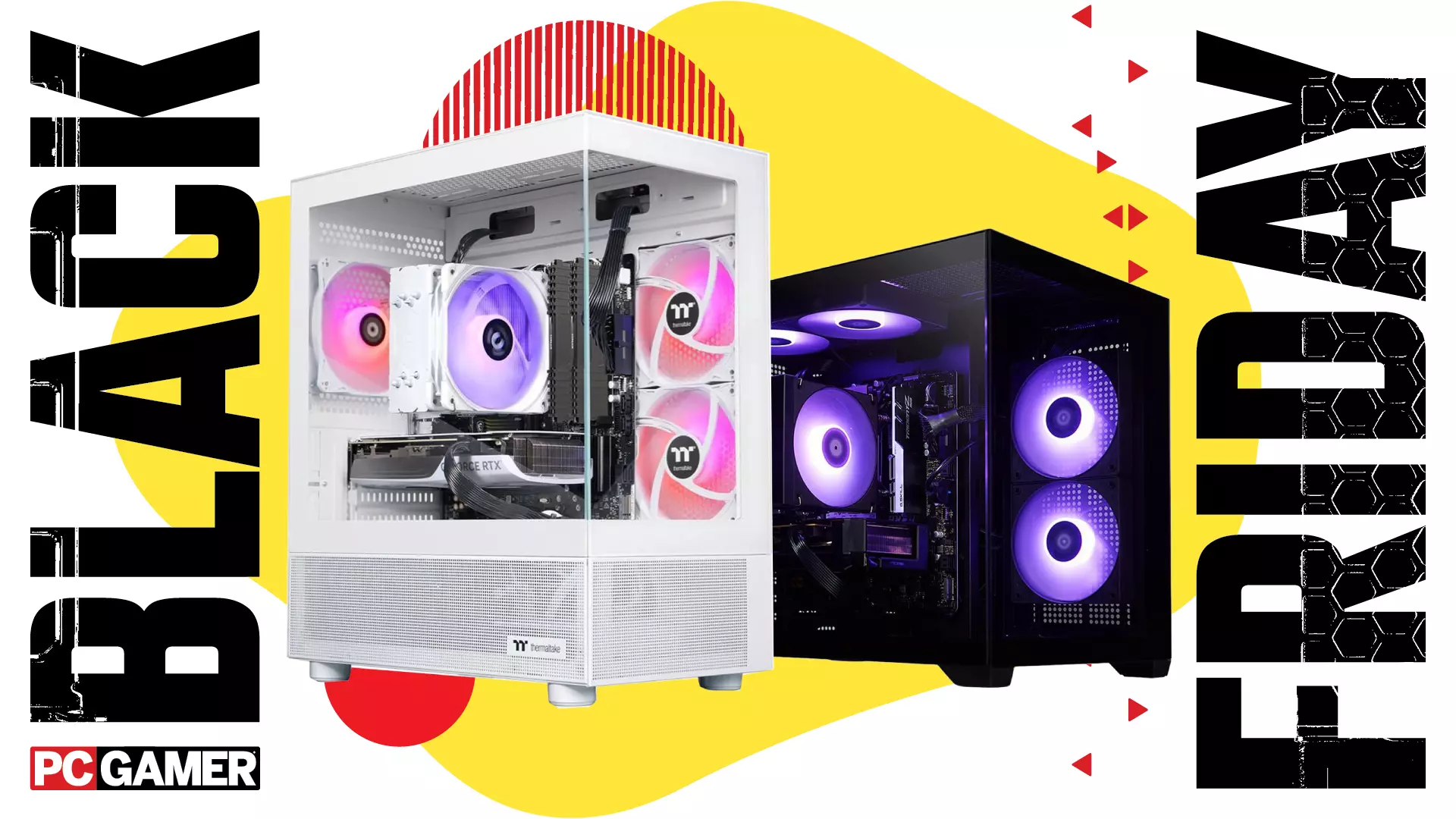
Black Friday Unleashes Appealing Mid-Range Gaming PC Deals: Navigating the RAM Compromise
BySid Meier
This Black Friday season marks a significant shift in the gaming PC market, with attractive mid-range desktop deals finally emerging, a welcome change from earlier observations of high-end only discounts. Despite a challenging market due to a global memory shortage, two specific pre-built systems, one with an RX 9070 and another with an RTX 5070, are presented as good value propositions. A key discussion point revolves around the compromises necessitated by current pricing, particularly concerning RAM configurations—whether to prioritize faster, smaller DDR5 modules or larger capacity, slightly slower DDR4. The piece emphasizes that while these deals might not match historical lows, they offer the best current opportunities for acquiring a capable gaming machine given market conditions.
A critical aspect of these mid-range deals is the inherent compromise in memory configurations, primarily driven by the elevated costs of RAM. Potential buyers must weigh the advantages of 16GB of faster DDR5 memory, often in single-channel setups, against 32GB of slightly slower, but more capacious, DDR4 memory. While single-channel DDR5 might show a slight performance dip in some scenarios, its impact on overall gaming frame rates, especially with modern CPUs, is less severe than commonly believed. For those prioritizing multitasking and productivity alongside gaming, the 32GB DDR4 option offers a compelling balance, despite a potential long-term upgrade path limitation due to the shift towards DDR5 platforms. Ultimately, selecting the right system involves assessing individual needs for gaming prowess versus general computing demands, within the constraints of current component availability and pricing.
Black Friday's Mid-Range Gaming PC Opportunities
This year's Black Friday sales have brought forth a surprising array of mid-range gaming desktop computers, contrasting with earlier market trends that predominantly featured high-end configurations. This shift is particularly beneficial for consumers looking to invest in a capable gaming setup without the premium price tag. Despite the ongoing global scarcity and elevated costs of computer memory, retailers are actively promoting systems that deliver substantial performance for their cost. Specifically, two configurations stand out: one powered by AMD's RX 9070 graphics card and another utilizing Nvidia's RTX 5070, both attractively priced in the mid-$1,000 range. These offerings are seen as timely solutions for gamers aiming for solid 1440p performance across a broad spectrum of titles, acknowledging that while these prices might not be historic lows, they represent the best current value in a challenging market.
The availability of these mid-range gaming PC deals during Black Friday represents a crucial window for consumers amidst an otherwise tough hardware landscape. The market has been significantly affected by a widespread memory shortage, which has pushed up prices for essential components like RAM and SSDs. However, the current discounts signal a strategic effort by retailers to make gaming technology more accessible. For instance, the RX 9070-equipped system offers excellent rasterization performance, often on par with or even exceeding the RTX 5070 in many games, making it a strong contender for raw gaming power. Meanwhile, the RTX 5070 build provides advantages in ray tracing and a more mature upscaling and frame generation ecosystem. Both systems are positioned to comfortably achieve over 60 frames per second at 1440p resolution in most contemporary games, even without relying heavily on performance-enhancing technologies. Given the persistent memory supply issues, these Black Friday promotions might very well be the most advantageous deals available for mid-range gaming PCs for an extended period, underscoring the importance of seizing these opportunities.
Navigating the RAM Trade-Offs in Current PC Builds
A central consideration when evaluating these Black Friday gaming PC deals is the inevitable compromise concerning Random Access Memory (RAM), largely influenced by its current high cost. Buyers are faced with a choice between smaller, faster DDR5 memory modules, frequently configured as a single stick, or larger quantities of DDR4 memory, which operates at a slightly lower speed but offers greater capacity. While single-channel RAM might lead to a marginal decrease in gaming performance compared to dual-channel setups, particularly with certain CPUs, extensive testing has indicated that this impact is often less significant than anticipated, preserving a respectable gaming experience. The decision ultimately hinges on individual priorities: whether raw gaming frames are paramount, or if a balance with enhanced multitasking capabilities and overall system responsiveness for non-gaming applications is preferred.
The choice of RAM configuration is perhaps the most nuanced aspect of purchasing a mid-range gaming PC in today's market. Many systems, like the AMD RX 9070 option mentioned, come with 16GB of DDR5 RAM, sometimes configured in a single stick. While this offers high speeds, the single-channel setup and lower capacity can be a limiting factor for heavy multitasking or future-proofing. Conversely, the Intel Core i5 and RTX 5070 system provides 32GB of DDR4 RAM. Although DDR4 is technically a generation older and slightly slower, its larger capacity is often more beneficial for users who frequently run multiple applications, engage in content creation, or simply prefer more headroom. Research suggests that for many games, the speed difference between fast DDR5 and DDR4, especially when comparing 16GB single-channel versus 32GB dual-channel, is less critical than the overall capacity for system stability and responsiveness. The long-term upgrade potential also plays a role; while a DDR4 system might require a full platform overhaul to transition to modern DDR5 components, the immediate benefit of 32GB of memory for a well-rounded computing experience can outweigh this future consideration, especially if the current budget is stretched. This decision highlights the balancing act between raw gaming performance, everyday usability, and future upgradeability dictated by current component pricing.
About the author
Sid Meier
Pioneering game designer known for the "Civilization" series and his philosophy on game design.